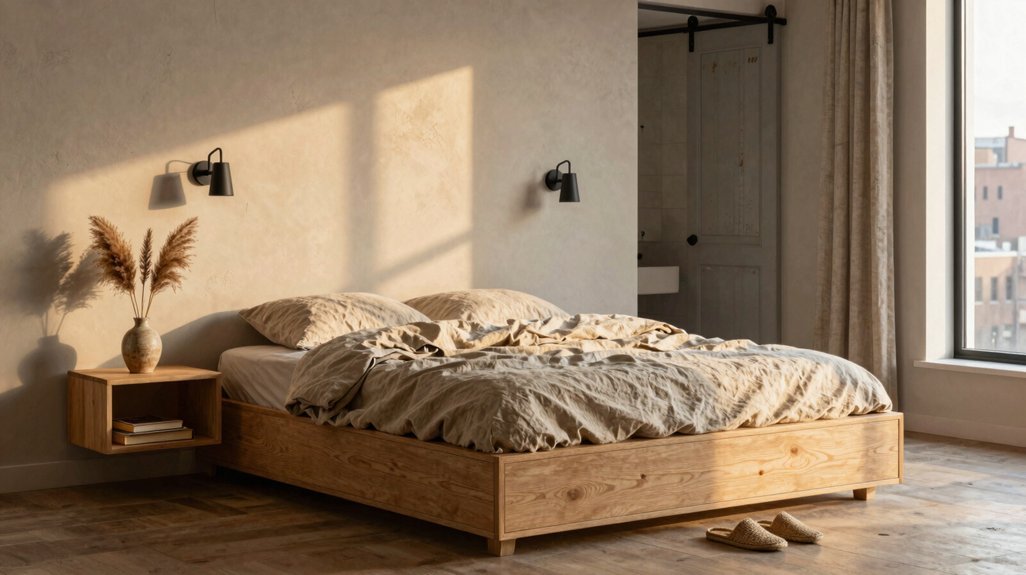
Like fitting a ship into a bottle, you’ll need patience and the right plan to make your small bedroom work.
Seven tested layouts can change your cramped space into something functional, starting with a centered bed on your longest wall and just 24 inches of clearance on each side.
You’ll swap bulky nightstands for wall-mounted shelves, corner placements, or a single shared table between you and a partner.
The real magic happens when you stop fighting the square footage and start stacking upward: think 72-inch closet rails, 18-inch deep storage benches, and beds with 12-inch drawers underneath.
But here’s the catch: one wrong measurement, and you’ll be bumping your shin every morning for years.
Center Your Bed for a Small Bedroom Layout That Feels Balanced
Positioning your bed against the longest uninterrupted wall that’s visible when you first enter the room can instantly make a small bedroom feel more put together, since your eye naturally travels to that spot anyway. When you center your bed on that wall, you create a space-saving layout that keeps circulation clear on both sides.
Leave about 24 inches of space around each side for making the bed comfortably, or 36 inches if you need a true walkthrough. This arrangement helps you arrange furniture in a small space without crowding.
Use a medium-sized bed to maintain equal visual weight, making it easier to add matching wall shelves or slim lighting without awkward gaps. Mount fixtures on wall space rather than using bulky floor lamps. Place heavier anchor furniture, like a chest of drawers, on the opposite wall for symmetry. This keeps your centered bed as the main focus, giving your small room a balanced and intentional feel.
Recommended Products

Modern Style: The floating nightstand has a hand-painted geometric design, and the small but sophisticated utility organizer is suitable for all styles of bedrooms and living rooms.

Space-Saving Wall Mounted Design – Designed to free up your valuable counter space. This small wall fan can be easily mounted on the wall or used as a desk fan. It is the perfect cooling solution for tight spaces like a crowded kitchen, bathroom vanity, college dorm bunk bed, or camper tent, providing a refreshing breeze right where you need it.
Use One Bedside Table to Keep Two-Sided Bed Access
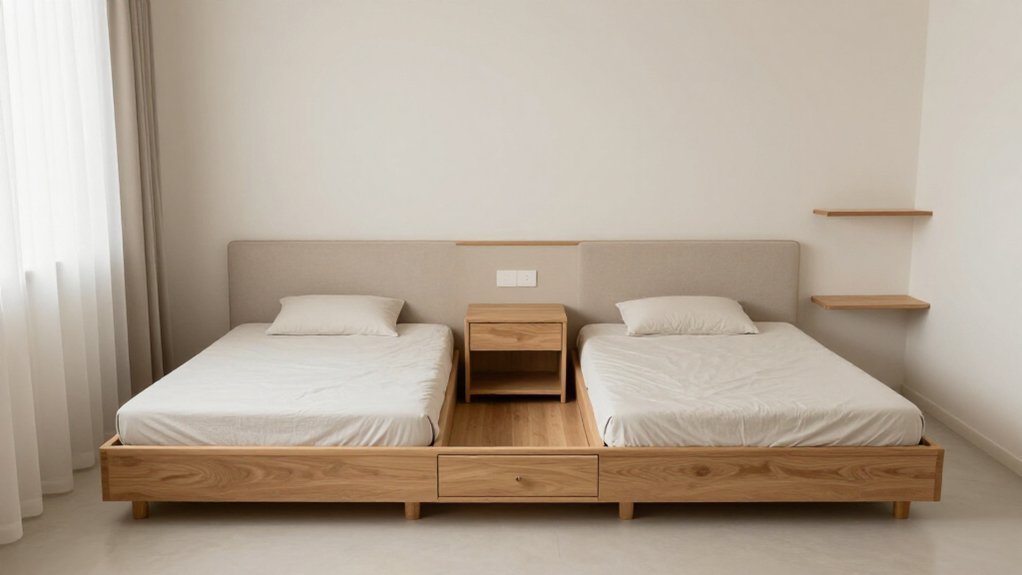
You can keep both sides of your bed reachable even with just one nightstand, which sounds tricky but works great when you plan it right. Center your bed under the window or on the main wall, then place your single table, about 24 inches wide with drawers for hidden storage, on the side you’ll use most.
Leave the opposite side open with at least 30 inches of clearance so you can still make the bed easily and reach for items without bumping into furniture. Mount a wall sconce above the table, and you’ve got light on both sides without sacrificing floor space.
Recommended Products

Night Stand with Charger Station: This bedside table features 2 AC outlets, 1 Type-C port, 1 USB port making it perfect for charging phones, lamps, and more. The 4.92ft cord stretches to awkward sockets. No more crawling behind furniture – everything stays within reach!

Versatile Charm: Use this narrow bedside table in your living room or bedroom as a sofa side table, nightstand, or accent table for a touch of rustic elegance

Versatile Charm: Use this narrow bedside table in your living room or bedroom as a sofa side table, nightstand, or accent table for a touch of rustic elegance
Two-Sided Bed Access
Since you don’t want to climb over your partner every morning, keeping both sides of the bed open is a great choice, even in a tight room. You can achieve two-sided bed access in a small space by placing your bed for a small bedroom layout with the headboard against a wall, leaving enough room at the foot for making the bed.
Skip matching bedside tables, and use just one side table where you need it most. Pick a narrow nightstand with drawers instead of open shelves to cut visual clutter while holding your lamp, charger, and essentials. For the empty side, mount wall lights or add a small shelf at mattress height so you don’t lose function.
Check that you’ve left about 24 inches beside the bed for sliding in, and keep main walkways closer to 36 inches where your floor plan allows.
Single Nightstand Balance
In a tight bedroom, one nightstand can actually work better than two, as long as you’re strategic about placement. Small bedrooms gain breathing room when you skip the matching pair. You keep two-sided bed access by centering the bed enough to reach both sides under the covers.
Pick a nightstand that hits roughly mattress height, so your lamp and phone stay within easy reach. Place it on one side, the one nearest your outlet or where you naturally drop your book, and leave the other side open for walking. In a small room, you don’t want to squeeze past furniture just to pull the sheets back.
Skip the second table, but add a wall sconce or slim shelf above the empty side. This keeps the space feel balanced without blocking your path. You can also mount a hanging rail or slide a narrow chest of drawers elsewhere for extra storage. Even with the bed against the wall on one side, you’ll maintain that 24-inch clearance you need to move freely.
Asymmetrical Storage Solution
When you’re working with a tight footprint, committing to just one bedside table actually keeps your room more functional than forcing in a pair. This asymmetrical storage solution lets you keep two-sided bed access while freeing up valuable floor space for moving around your furniture in a small room.
Position your single bedside table on the side with the clearest path to your closet space, so the drawers don’t block you when you’re getting dressed in the morning. Match the nightstand top roughly level with your mattress height; it keeps the look intentional rather than unfinished.
Balance the visual weight with a matching chest of drawers at the foot of the bed or an overhead shelf on the opposite wall. This works well for small bedrooms that need symmetry without extra furniture.
Mount an Overhead Shelf to Replace Both Nightstands
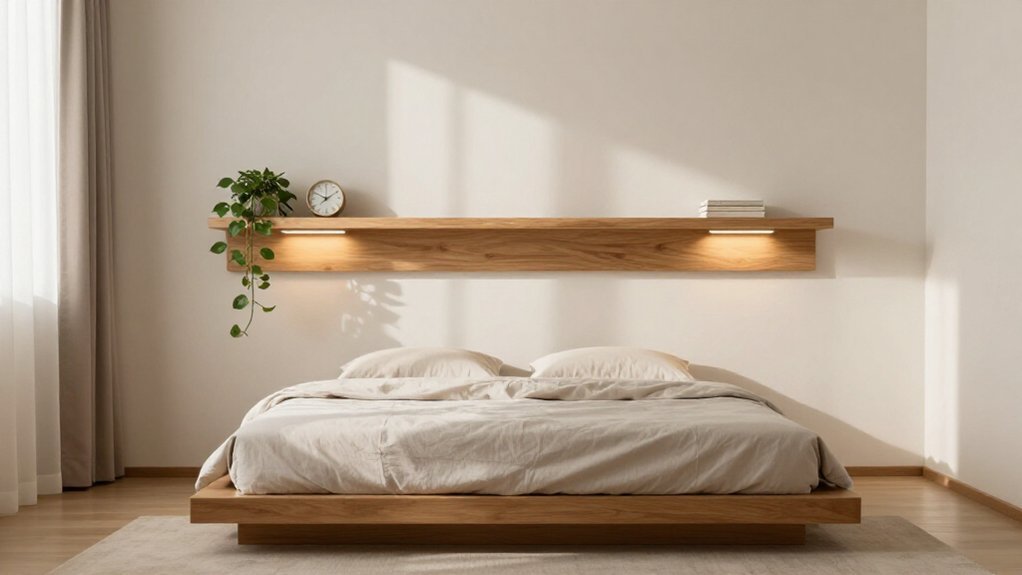
Instead of squeezing two nightstands into a cramped bedroom, you can mount a single overhead shelf above your bed and reclaim that floor space entirely. This storage solution anchors your bedroom furniture visually while creating extra space for movement beside your bed frame.
You’ll want to position the shelf 36 to 48 inches above your mattress top, which clears your head when sitting up. Install wall lighting beneath it, maybe a pair of sconces or one directional reading light, so you keep that nightstand-style glow without bulky tables below.
Choose a shallow shelf for books or a small tray, since deep designs feel heavy and block bed access. Match your brackets to existing hardware, and anchor into wall studs for solid daily use. It’s a great choice for space saving layouts, and it’ll make the room feel instantly larger.
Recommended Products

BENCH WITH STORAGE: Our Ottoman Bench is a stylish storage solution for pillows and blankets in any room of your home | Perfect for holding accessories when guests visit, our elegant Storage Bench is a great accompaniment to any living room or bedroom furniture

Tons of Storage: Sized at 15.7"D x 39.4"W x 18.3"H, this large storage bench boasts a spacious compartment to stow your blankets, pillows, clothes, and books away for an organized living space

BENCH WITH STORAGE: HomePop modern storage bench is a versatile and stylish furniture piece that serves multiple purposes. With dimensions of 60 inches wide x 18 inches deep x 21 inches high, it provides ample storage space while adding a contemporary touch to your home
Tuck Your Bed Into a Corner: A Small Bedroom Classic
That overhead shelf setup works well, but you’ll see even more square footage open up when you push your bed right into a corner. Tuck your bed into a corner, ideally under a window, and you’ll keep the longest clear wall free for circulation. This classic move frees up floor space for furniture storage without cramping your walkways.
Push your bed into a corner, ideally under a window, to keep the longest wall free for circulation and open up valuable floor space.
Here’s how to maximize the setup:
- Mount wall storage or a slim bedroom table beside the bed, using the window ledge as your compact nightstand replacement
- Add a chest of drawers at the foot of the bed or tall corner drawers, keeping 24–30 inches of clearance for easy movement
- Install a wall sconce near the bed in a corner, eliminating the need for surface lamps that clutter your space-saving layouts
With your bed in a corner against two walls, you’ll make the room feel spacious and functional.
Recommended Products

3-Temperature Wall Sconces Set of 2: Enhance your home’s ambiance with this stunning set of two wall sconces. Offering three adjustable color temperatures—3000K for a warm, cozy glow, 4500K for a balanced, inviting atmosphere, and 6500K for a crisp, focused brightness—these wall lights are perfect for any activity. Whether you’re reading, working, entertaining, or unwinding, these wall sconces set the mood just right.

【Wireless & Easy to Install】NIORSUN wall sconces set of two battery operated comes with two 300 lumen, 10400 mAh E26 rechargeable bulbs. It can work 25H for highest brightness, 72H for low brightness fully charged. Our rechargeable wall sconce redefine convenience with their easy installation, no wiring required. They are not simply stuck on the wall but mounted securely with minimal effort—just drill two small holes for installation. With a sleek and contemporary design, these sconces effortlessly blend into any indoor space, providing both functionality and style.

【Modern Metal Wall Lights 】After several optimizations by our professional research team, we got this 2-light Plug in vanity fixture . Our black bathroom vanity light fixture is high quality baking varnish metal, durable, built in sturdy lamp body with transparent glass shades. This matte black vanity light not only can be installed downwards but also upwards, face up to cast more light, and face down to make the light on the bathroom cabinet more pleasing
Use a Hall Closet to Reclaim Bedroom Floor Space
The hall closet sitting just outside your bedroom door can handle more than you think, and that’s great news if you’re tired of squeezing past a bulky wardrobe every morning. Move your clothing storage into that hall closet, and you’ll instantly free up floor space in your small room.
Install a high hanging rail to maximize vertical space, and add shelves above and below for folded items. Keep the closet door opening at least 30 inches clear so daily access stays smooth. Route a small internal light or wall switch into the closet, making it function like a built-in wardrobe without extra bedroom lamps.
Replace bulky bedroom dressers with a narrow chest or wall-mounted shelves. This space saving layout keeps your bed area functional, maintains airflow on both sides, and makes the whole room feel lighter.
Recommended Products

✅HEAVY DUTY – Between the 32mm diameter (which is just a hair under 1 5/16") and the thick .050 side walls, this rod can handle just about anything you can throw at it

·Industrial Vintage Design: This industrial pipe clothing rack are made of strong iron pipe, come along with pipe flange, Exposed pipes and joints create a bold steampunk aesthetic which is can transform your space with it, not only that, but this rack blends function and style
✅CUSTOM CUT – We do the hard part so you don't have to! Just give us the size you want and we'll take care of the rest!
Stack a Clothes Rail Above Drawers for Extreme Space Saving
When you’re working with barely enough room to turn around, stacking your storage upward beats spreading it outward every time. Mount a clothes rail high on the wall, about 70 to 80 inches up, so you can slide slim drawers underneath without blocking your hanging shirts and pants.
This setup turns a single wall into a full closet replacement, which is exactly what you need in a master bedroom where every square inch counts. Choose drawers only 16 to 20 inches deep, so they don’t jut out past your rail and snag sleeves when you open them.
Keep the drawer tops clear except for one small basket, since the rail already fills your eye-level space. Run your storage wall-to-wall when possible, hugging three walls to free up floor area for moving around.
This furniture in a small room trick gives you hanging and folded storage without the bulk of a wardrobe, so you recover precious floor space for other needs.
Recommended Products
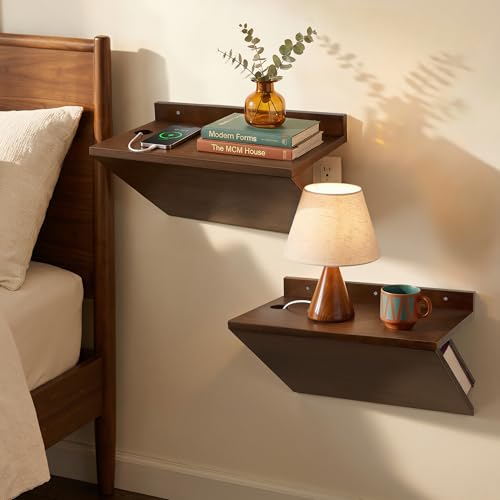
SPACE-SAVING FLOATING DESIGN – This wall mounted nightstand keeps the floor clear and your bedside looking neat. Its floating design and compact 15.7 x 8.7 in size add practical storage without taking up ground space. Ideal for small bedrooms, apartments, dorms, and tight bedside areas

[Premium Metal Construction] This bedside wall organizer is made of thickened cold-rolled steel, far sturdier and more durable than flimsy plastic organizers. It resists bending, cracking and fading, serving as a long-lasting wall organizer for bedroom that keeps your daily items neat. Designed as a practical wall mounted bedside shelf, it holds phones, remotes, cosmetics, small gadgets and more, perfectly solving clutter troubles for bedrooms and compact spaces.

【Cute Cat-Shaped Wall Holder for Bedside】 Keep your eyeglasses and sunglasses always within reach right by your bedside. This wall-mounted eyeglass holder features a charming cat silhouette, bringing a warm, lovely vibe to your bedroom. Perfect for glasses wearers who want a tidy nightstand and a cute decor touch.
Pick Small Bedroom Furniture That Works Twice as Hard
If you’re tired of shuffling sideways between your bed and dresser, it’s time to stop buying furniture that only does one job. Choosing furniture that multitasks changes how you make a small room work, so every piece earns its keep.
Start with a storage bed, where you’ll stash bedding or off-season clothes under the mattress, freeing space without every inch feeling cramped. Add tall narrow storage, like a 60-inch high chest, to keep width clear while gaining surface and hanging space. Swap bulky wardrobes for high-hanging rails to reclaim floor area.
Pick nightstands with drawers, or wall shelves plus sconces, to reduce clutter and regain bedside space. A bench with hidden compartments at the foot of your bed offers seating plus organized storage, a solid choice when you want small bedroom furniture that truly delivers.
Recommended Products

Versatile Charm: Use this narrow bedside table in your living room or bedroom as a sofa side table, nightstand, or accent table for a touch of rustic elegance
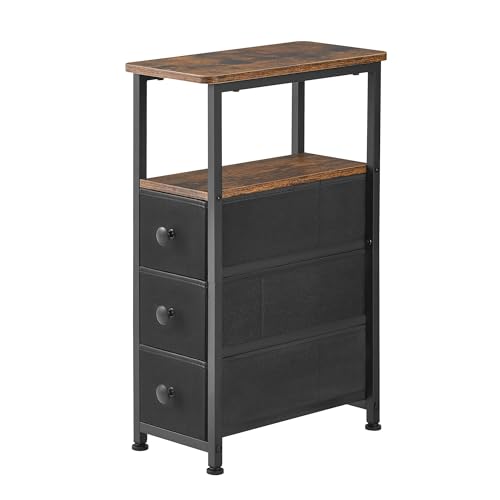
[Large Storage for Small Spaces] Maximize your storage without sacrificing floor space. This narrow end table is cleverly designed with 3 private drawers and open shelves, providing generous room for your books, plants, decorative accents, and daily essentials, keeping your space tidy and organized

Versatile Charm: Use this narrow bedside table in your living room or bedroom as a sofa side table, nightstand, or accent table for a touch of rustic elegance
Leave a Reply