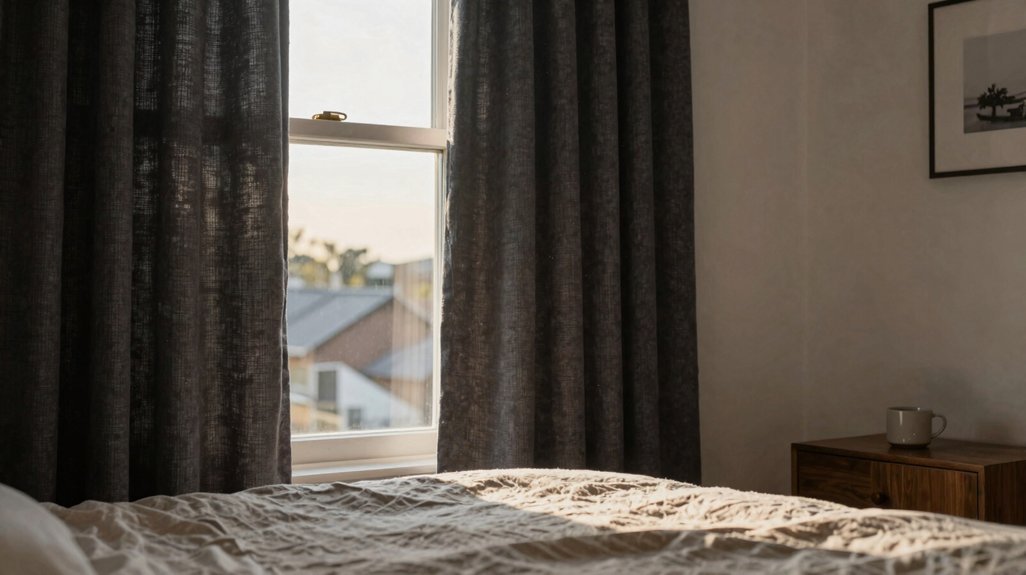
You’ll spend anywhere from $75 to $433 per window for decent blackout curtains, though you’ll find basic single panels starting at just $13. Full sets of two panels typically run $30 to $80, while standalone liners add $20 to $80 each. Prices jump to $150 or more for thermal fabrics and custom sizing, with premium made-to-measure panels reaching $2,500.
The real question isn’t just what you’ll pay upfront.
Blackout Curtain Costs: $75–$433 Per Window Explained
When you’re looking to block out light and get better sleep, blackout curtains run about $75 to $433 per window, though you can dial that up or down depending on what you actually need.
You’ll find single-panel Blackout Curtains starting around $13, with basic one-layer acrylic at the low end. A standard set of two acrylic panels typically costs $30–$80, which works great for most bedrooms. If you want heavier constructions, Plush Velvet and similar materials push you toward higher price tiers.
Don’t forget hardware: rods run $5–$125, and brackets, rings, or clips add another $5–$50 per set. For maximum light control, you’ll want panels extending past your window frame, which might mean buying wider sizes. Blackout liners alone cost $20–$80 per panel if you’re adding them to existing drapes.
Recommended Products
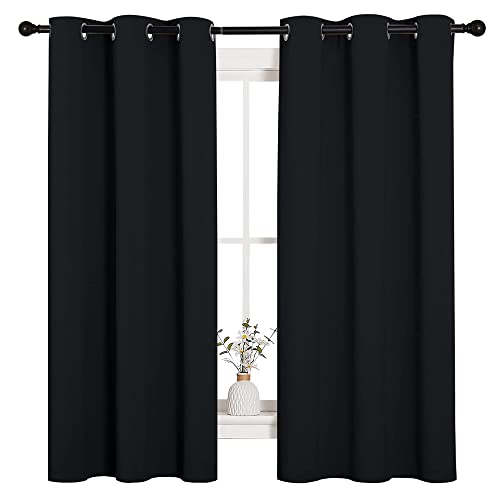
READY MADE: Set includes 2 BLACKOUT CURTAINS PANELS of 42" wide x 63" length with 6 grommets top each. Quality fabric without liner feels soft and heavy.

100% Total Blackout & UV Blocking: Achieve perfect darkness with these blackout curtains! The dedicated liner blocks 100% sunlight and UV rays, ideal for any bedroom or living room. This blackout curtain protects furniture from fading and helps regulate room temperature year-round.

MULTIPLE HANGING: Sold per pair, including 2 window panels – Panel measures: 52 x 84 – inches | Set measures: 104 x 84 – inches, with 3 curtain top hanging options (Back tab & Rod pocket & Pleated) for your personalized style. Each panel sewn with 4" rod pocket (7 back loops), 2" bottom hem and 0.8" side hem, specialized fitting the curtain rods up to 3
Why Some Blackout Drapes Cost 5x More Than Others
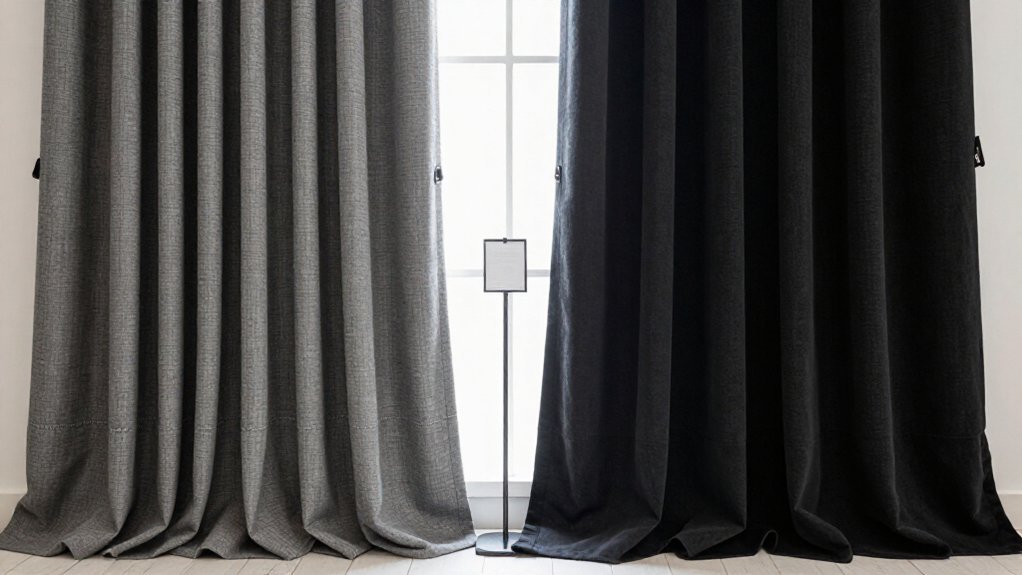
You’ll notice a $13 basic panel blocks light differently than a $2,500 custom silk drape with triple-layer construction and hand-finished pleats. Budget options usually rely on single-layer acrylic coatings around 84 inches long, while premium made-to-measure versions span up to 177 inches wide with 4-pass hotel-grade lining that eliminates every trace of light.
The gap comes down to material grades, like velvet versus polyester, and labor intensity, since complex headers and interlining add hours of skilled sewing per panel.
Recommended Products
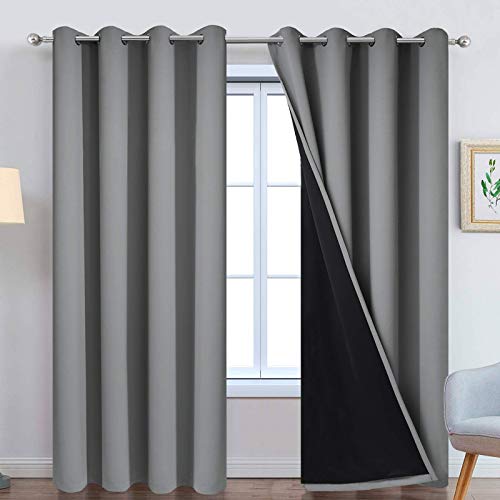
PACKAGE MADE:2 panels per package. Each Lined Curtain measures 52" wide x 84" long. 8 Silvery Grommets per panel. This silvery grommet (1.6 inch inner diameter) fits many rods. Easy to hang and smooth to slide. The simple design gives people a sense of ease.

SET DETAILS: 340GSM blackout curtains per panel, 60% heavier than ordinary blackout curtains, with an excellent sens of pendant. Each curtain measures 52 inch wide by 84 inch long with 8 silver metal grommets (1.6 inch inner diameter) on top, available in a variety of stylish colors. Easy to install and slide.

Ready Made: 2 panels per package. Each curtain measures 37 inches wide x 63 inches long (total width is 74 inches). Due to handmade craftsmanship, size may vary by 1 inch. The unique design of the silver grommets (1.6 inch inner diameter) creates a casual elegance for your home, making the curtains easy to install and slide. For best fit, please measure your window before ordering.
Material Quality Differences
The gap between a $13 panel and one that runs $2,500 comes down to what you’re actually getting in the fabric itself. You’re looking at one-layer acrylic blackout panels on the budget end, which typically run $13 to $100 and give you basic light control. Step up to heavier textiles like velvet or polyester, and you’re blocking 90% to 100% of light, but you’ll pay more for that performance.
Premium options layer materials like faux silk, velvet, or damask with interlining, and that’s where prices climb toward $2,500. These multi-layer constructions deliver “100% Hotel Blackout Opacity” rather than the 90-95% you’ll see on standard linings. You’re also getting structured headers and back-tab designs that seal out top light, something cheaper panels rarely manage.
Construction Complexity Levels
Material quality only tells part of the price story, because how a blackout curtain is built matters just as much as what’s inside it. You’ll find basic one-layer acrylic panels running $13–$100, but made-to-measure designs with multiple layers, silks, velvets, and detailed pleating can hit the highest price at around $2,500 per panel.
Complexity drives these jumps. Multiple layers and interlining add fabrication steps and boost thermal performance. Pleating sophistication, like structured pinch pleat or other custom header styles, demands more construction work than simple builds.
You’ll also need to factor in blackout liners, typically $20–$80 per panel, for added effectiveness. These layered elements, combined with your choice of curtain rod and installation needs, stack up fast. A great choice for serious light control, but your wallet will feel the difference.
Budget Blackout Panels: What $30–$75 Actually Gets You
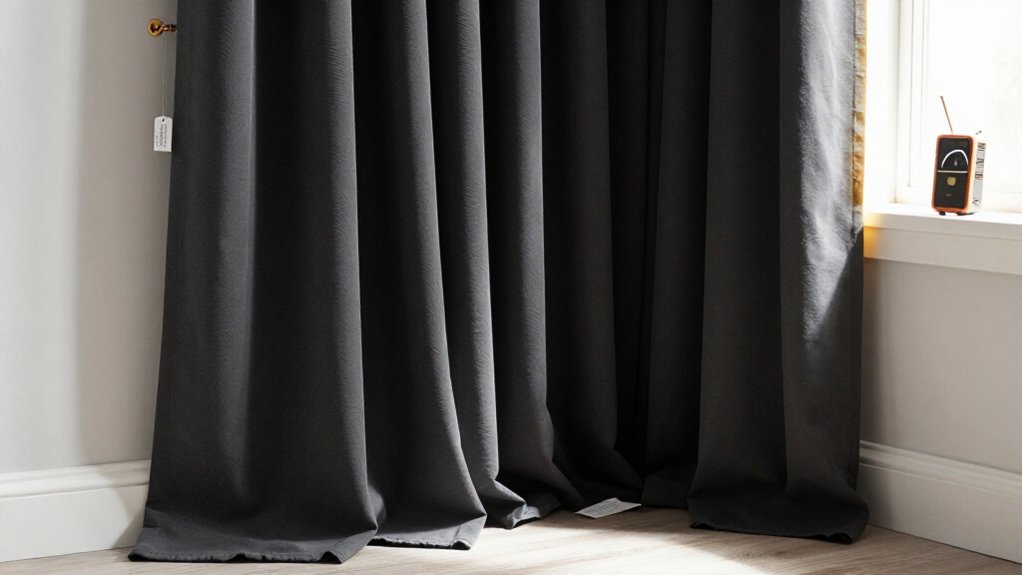
Most budget blackout panels in the $30–$75 range give you a single-layer acrylic design, or sometimes a pair of standard-sized panels if you catch the right deal. You’ll find simple back tab or rod pocket constructions, nothing fancy, but they get the job done.
These entry-level options typically block 85% to 100% of light, though they won’t match hotel-grade systems with proper installation. You’re trading multi-layer silks, velvets, and heavy interlining for straightforward function.
Watch out for hidden costs. Most panels don’t include rods, clips, or rings, so you’ll need to budget extra for hardware unless your listing specifically bundles it. For basic window sizes, though, this range covers your needs without breaking the bank. It’s a practical, no-frills choice that works.
Recommended Products

WELL MADE: Each pack contains one (1) blackout functional double wide curtain panel. Panel mesures 100"W x 84"L(8.3'W x 7'L), Thread trimmed and wrinkle free, constructed with 16 anti rust grommets top, fit well up to 1 1/2 inches curtain rods

100% Blackout & Privacy: With a dual-layer, heavy-duty design, these curtains block 100% of sunlight and UV rays, providing complete darkness and privacy. Ideal for bedrooms, nurseries, and home offices that need a peaceful, undisturbed environment
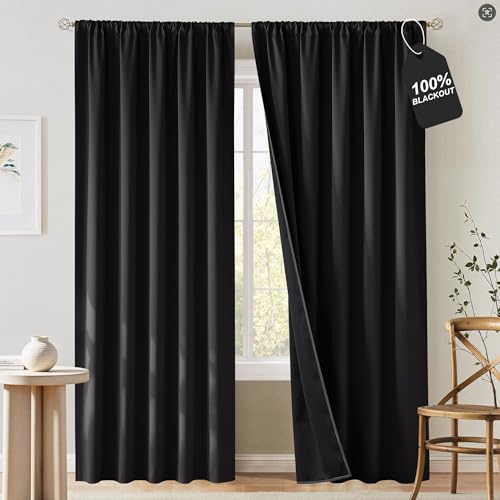
100% ABSOLUTE BLACKOUT: Picture yourself enjoying uninterrupted, deep sleep even at high noon. Engineered with an innovative high-density woven technology, these panels physically block 100% of harsh sunlight and UV rays. Say goodbye to annoying screen glare and create the perfect pitch-black sanctuary for night shift workers, nurseries, or your home theater.
Mid-Range Blackout Drapes: $75–$150 Options Worth Considering
At this price point, you’re stepping into premium fabric choices like velvet, faux silk, and textured linen weaves that block 90–100% of light while looking way more polished than basic polyester.
You’ll want to pay attention to smart hardware selection too, since back tabs and pleated headers help eliminate those annoying light gaps that cheaper panels leave around the edges. With single panels often discounted 37% or more, you can grab designer-level drapes for $75–$150 that actually cover your windows properly when you size them floor-length and a few inches past the frame.
Recommended Products

Size & Quantity: Each pack contains 2 pieces, each 50" wide and 80" long. Each panel with 8 tabs, total 16 tabs. 17 pieces binder rings included(inner diameter 1.6 inch).
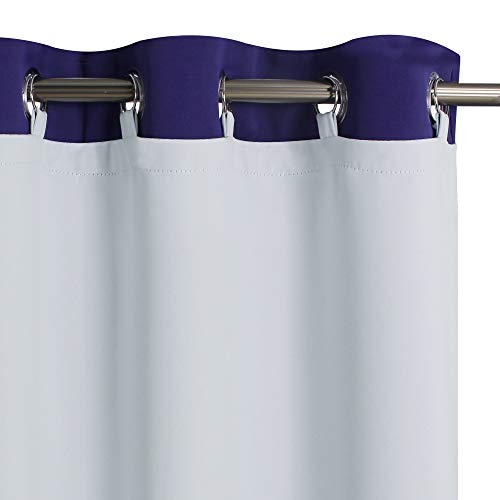
EFFECTIVE BLACKOUT: 2 panels per package, W50 x L80 each. The thick triple weaved fabric can enhance your curtain blackout effect about 50%, block the light and UV rays, offer a real dark environment for the night shift worker who has to sleep during the day.
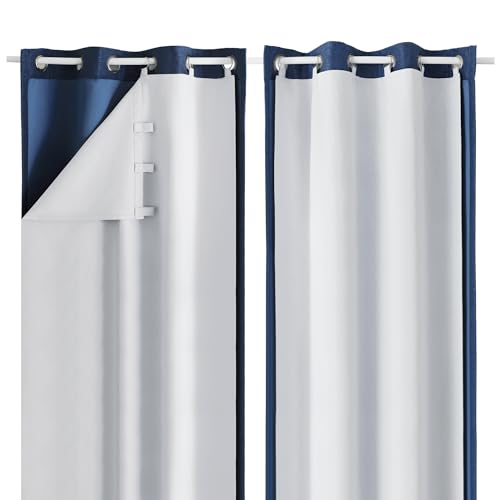
Sold as 2 Panels: Each Package contains 2 pieces: 40"Wide x 92"Long. Each panels has 8 back tabs, back tabs 16 totally. 17 drapery Rings included(1 for backup). The rings inner diameter 1.5 inch, easy to install.
Premium Fabric Choices
When you’re ready to move past basic acrylic panels, the $75 to $150 range opens up some great choices in premium fabrics that still won’t break your budget. You’ll find velvet, faux linen, faux silk, and cotton blends here, all promising 90 to 100% light blockage without jumping to designer multi-layer prices that can hit $2,500 per panel.
To make sure you’re getting your money’s worth, keep these three things in mind:
- Look for 100% opacity ratings or proper blackout linings, not just dark colors
- Choose floor-length panels for maximum coverage and a polished look
- Compare construction details, since some blends block better than others
This tier sits comfortably above the $30 to $80 acrylic sets, giving you upgraded textures and finishes that feel substantial without crossing into luxury pricing territory.
Smart Hardware Selection
Since you’ve already narrowed your fabric choice to the $75–$150 range, you’ll want to pay just as much attention to how these panels hang as you do to what they’re made of. Look for 90–100% opacity here, with true 100% usually tied to specific “Hotel Blackout” claims.
Your header choice matters more than you’d think. Skip loose rod pockets, which let light leak through the top, and grab back tabs or pinch pleats instead. These tighter hangs sit closer to your frame and seal gaps better.
Grommets work too, though they can leave small openings at each ring.
Double-check whether you’re buying a single panel or a pair, since listings vary. Measure so your panels extend past the frame on all sides, a smart move for blocking that edge light.
Premium Blackout Treatments: When $150–$433 Makes Sense
If you’re ready to move past basic options, the $150–$433 range is where you’ll find blackout treatments that actually deliver on their promises. You’re paying for higher-end materials like velvet, plus construction aimed at stronger light control. This band often features designer-quality options with 90–100% light blocking claims, especially when panels use effective blackout linings.
The $150–$433 range delivers on blackout promises with higher-end materials like velvet and construction built for true light control.
Here’s what you’re getting for the money:
- Better materials, such as heavyweight velvet that blocks light and insulates your room
- Smarter construction details, including back tabs or pleated headers to reduce those annoying top light gaps
- Guidance on proper fit, like extending panels past your frame for full coverage
Many premium sets still come as single panels, so you’ll need to check whether you’re buying one panel or two for complete coverage. Compared to the full range of $13 to $2,500 per panel, this price point hits a sweet spot: great choice for quality without jumping to custom designer pricing.
Recommended Products

【100% Blackout Material】RUseeN portable blackout curtains are made of thick, sturdy but soft fabric materials which can block 100% sunlight and UV ray.Thanks to the special silver-grey coating behind the blackout blind; blocking off all sunlight and reducing heat, creating a cozy pitch-dark sleeping atmosphere for you, Improve your sleep quality

Size & Quantity: Each pack contains 2 pieces blackout panels for behind curtains, each 50" wide and 80" long. Each panel with 8 tabs, total 16 tabs. 18 pieces binder rings included(inner diameter 1.5inch).
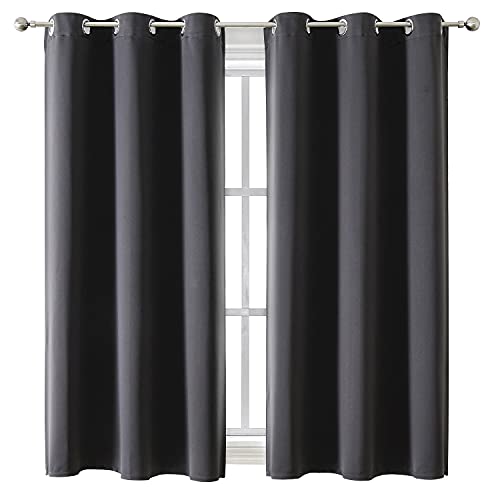
SET DETAILS: 2 charcoal gray curtains per package. Each panel measures 42 inch wide by 63 inch long with 6 silver metal grommets (1.6 inch inner diameter) on top, easy to install and slide.
How Size, Hardware, and Custom Measurements Add Up
Although you might find a basic panel for $13, what you actually end up paying depends heavily on how big your window is and what you’re hanging it from. Standard panels usually top out around 84 inches long and 30-plus inches wide.
If your windows are oversized, you’ll need made-to-measure options ranging from 30 to 177 inches wide and 15 to 124 inches long. Those custom sizes, especially with multi-layer fabrics and complex pleating, can push a single panel to $2,500.
Don’t forget the hardware, either. Most panels don’t include rods or clips, so you’ll spend $5 to $125 on a rod and another $5 to $50 on brackets, finials, or rings. Your header style and fullness choice, like 1.5x or 2.5x, also changes how much fabric you need.
Recommended Products

PAIR SOLD: 2 panels in package. Each panel measures 52"W x 84"L| Pair measures 104"W x 84"L. Thread trimmed and wrinkle free, panel is constructed with 8 anti rust grommets which fit well up to 1 1/2 inches curtain rods

Pair Sold: Each package includes 2 panels of blackout curtains. Each panel measures 40"W x 63"L, with a pair measuring 80"W x 63"L. Each panel has 6 anti-rust silver grommets(1.6 inch inner diameter) which would fit most standard curtain rods
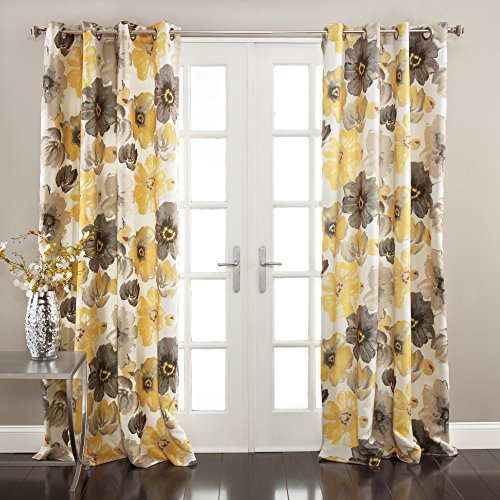
Bold Florals: The charming design of our Leah Light Filtering Curtains feature large, colorful blooming flowers that will brighten any room in your home with the feeling of spring. Add to your bedroom, dining room, home office or living room decor.
Where to Shop: Retailer Comparison and Sale Timing
When you’re ready to buy, you’ve got plenty of places to look, and each retailer stacks up a little differently on price, selection, and timing. You’ll find simple one-layer acrylic panels starting around $13, while designer made-to-measure styles can hit $2,500 per panel. A standard set of two basic panels usually runs $30 to $80, and blackout liners add $20 to $80 per panel if you’re upgrading existing curtains.
Here’s how to compare smartly:
- Check major sale events for 15% off sitewide or extra discounts on $1,000+ orders
- Factor in rods ($5 to $125) and hardware ($5 to $50) if your setup needs replacing
- Consider blackout shades at $30 to $140 each as an alternative to curtains
Timing your purchase around seasonal promotions can drop your total meaningfully, so it pays to watch retailer calendars before you commit.
Recommended Products

Pair Sold: Each package includes 2 panels of short blackout curtains. Each panel measures 40"W x 63"L, with a pair measuring 80"W x 63"L. The curtains blackout have 2 hanging options (Rod pocket & Clip Style) with a 3-inch rod pocket to fit standard or decorative curtain rods. Don't worry if this blackout curtain is a few inches shorter than your window. Hang with rings & hooks for easy 3-4" height adjustment.

3 LAYERS – Package includes 2 panels total width 104 inch. 1 layer in front (grey), 1 layer in back(grey) & 1 detachable felt fabric lining in the middle. No Toxic & formaldehyde.

2 PANELS SET: Sold pair(set) of 100% blackout curtains, each window panels measuring 52 inches wide and 84 inches long with 8 grommets. The unique design of silvery grommet (1.6 inch inner diameter) creates fashion for your house, which makes the curtains easy to install and slide.
How to Stack Discounts and Save 20–40% on Your Order
You can layer sale percentages by combining sitewide promos like “15% off” with threshold deals such as “20% off $1,000+,” and you’ll want to check if your checkout allows both codes to apply at once.
Apply extra codes when you spot stackable markdowns, like a base “63% OFF” paired with “Extra 10% OFF,” since these can compound for deeper cuts on your total. Time your purchase around limited-time events with countdown timers, where flash “20% OFF” offers push your combined savings into that 20–40% sweet spot.
Recommended Products

WELL MADE: Each pack contains one (1) blackout functional double wide curtain panel. Panel mesures 100"W x 84"L(8.3'W x 7'L), Thread trimmed and wrinkle free, constructed with 16 anti rust grommets top, fit well up to 1 1/2 inches curtain rods

MULTIPLE HANGING: Sold per pair, including 2 window panels – Panel measures: 52 x 84 – inches | Set measures: 104 x 84 – inches, with 3 curtain top hanging options (Back tab & Rod pocket & Pleated) for your personalized style. Each panel sewn with 4" rod pocket (7 back loops), 2" bottom hem and 0.8" side hem, specialized fitting the curtain rods up to 3"

Ready Made: 2 panels per package. Each Classic Lined Curtain measures 52" wide x 63" long (Total width is 104"). 2.7-inch rod pockets are recommended with no greater than a 1.7-inch rod for maximum movement. Create pleats easily, adding decorative style.
Layer Sale Percentages
Because retailers often run multiple promotions at once, you’re looking at real opportunities to stack discounts and drop your final price by 20–40%. You’ll want to pay attention to how different configurations trigger different savings.
Here’s how to spot the best combinations:
- Check if your item shows “Extra 10% OFF” or “Extra 5% OFF” language, which often appears on pair options rather than single panels.
- Look for sitewide promos like “15% off sitewide” that layer on top of product discounts.
- Compare the regular price versus sale price for your specific choice, single or pair, since extra discounts apply selectively.
Velvet blackout curtains demonstrate this well: a single panel might show 33% off at $89.10, while the pair includes that extra 10% bump. With curtains ranging from $13 to $2,500 per panel, higher-priced sets give you more room to capture those stacked percentages.
Apply Extra Codes
Although stacking discounts sounds complicated, it’s actually pretty straightforward once you know what to look for on the product page. You’ll spot “Extra 10% OFF” or “Extra 5% OFF” tags right alongside baseline markdowns like “70% OFF” or “51% OFF,” and these stack together at checkout.
You can also layer sitewide deals, such as 15% off everything or 20% off orders over $1,000, with those product-specific extras. Watch for listings where the “extra” language changes by option: single panels might show different savings than pairs, and some pair listings include additional 10% or 5% off on top.
Budget shoppers should target steep sale categories. You’ll find single panels like “Social Silver” blackout curtains at $32.70 with 70% off, while other listings run 37% to 53% off.
Even with stacking, standard single-layer acrylic panels cost about $13 to $100, pairs run $30 to $80, and custom multi-layer designer panels can hit $2,500.
Time Your Purchase
During major sale events, you’ll often find the deepest discounts on blackout curtains when multiple promotions overlap at checkout.
You’ll want to watch for stacked promotions, like 15% off sitewide plus 20% off orders over $1,000, and limited-time offers like 20% off. These can combine for roughly 20–40% total savings. Timing matters, so plan your purchase around extra coupons that appear alongside markdowns.
Here’s what to look for:
- Listings showing steep discounts, like 70% off or 63% off, plus extra 10% or 5% off
- Pair pricing on 2-panel sets, which often include additional discount language
- High-end designer or made-to-measure panels, running up to $2,500 each, where stacking saves even more
Since panels range from about $13 to $2,500, buying during the best window significantly cuts your per-panel cost.
Long-Term Value: Energy Savings and Sleep Quality Returns
A smart purchase like blackout curtains pays you back in two ways you’ll actually notice: lower energy bills and better sleep. You’ll block summer heat and reduce winter heat loss, which helps your HVAC work less over time. That efficiency adds up month after month.
You’ll also sleep deeper when you block 90–100% of light with heavier fabrics like velvet or polyester. Better rest is a return you feel every morning.
You can spend $13–$100 per panel for basic acrylic, or invest up to $2,500 for custom, multi-layer designs. Adding a $20–$80 liner boosts performance appreciably. For the best value, install panels that extend past your window frame with tight headers like back tabs. This minimizes gaps, so you keep the comfort you’re paying for.
Recommended Products

100% blackout fabric,very soft and smooth – Ready to Hang- Fit for 84" length grommet curtain, 16 metal rings included

EFFECTIVE BLACKOUT: 2 panels per package, W50 x L92 each. The thick triple weaved fabric can enhance your curtain blackout effect up about 50%(black works better than white), block the light and UV rays, offer a real dark environment for the night shift worker who has to sleep during the day.

READY MADE: Package includes 2 panels Blackout Curtain Liners, bonus drapery hooks. Each panel measures 45" wide when it is flat. It is recommended to choose the closest and smaller size according to the size of the curtain. The same material back as of front makes it appear more elegant.
Quick Checklist: Choosing the Right Blackout Curtains for Your Windows
Now that you’ve seen how blackout curtains pay off over time, it’s time to pick the right ones for your actual windows. You’ll want to start by measuring carefully, then decide between standard panels, which typically run up to 84″ long and 30+” wide, or made-to-measure options spanning roughly 30–177″ wide and 15–124″ long. For maximum darkness, look for 90–100% blackout performance, with true 100% only when properly installed, often labeled “100% Hotel Blackout Opacity” or featuring 4-pass hotel blackout lining.
For maximum darkness, look for 90–100% blackout performance, with true 100% only when properly installed.
Here’s your quick checklist:
- Choose back-tab or pleated headers to minimize top light gaps, since rod-pocket styles tend to leak more light around the top.
- Size past your window frame by several inches on both sides, arranging panels to meet or overlap at center for proper sealing.
- Match your budget to the build: basic acrylic panels run $13–$100 each, sets of two often $30–$80, liners add $20–$80 per panel, and designer custom pieces can reach ~$2,500 per panel.
Recommended Products

Pair Sold: Each package includes 2 panels of blackout curtains. Each panel measures 40"W x 84"L, with a pair measuring 80"W x 84"L. Each panel has 6 anti-rust silver grommets(1.6 inch inner diameter) which would fit most standard curtain rods

Ready Made: One package includes 2 panels, each panel measures 24" width by 20" length(Total width is 48"). And 3" rod pocket slot top with 1" header,universal fit to most of rods.

PACKAGE INCLUDES – 2 panels in package. Each panel measures 52" wide x 95" long. Total measures 104" wide. Each panel contains 8 silver grommets on the top, fitting standard curtain rod (with 1.6 inch inner diameter).
Leave a Reply