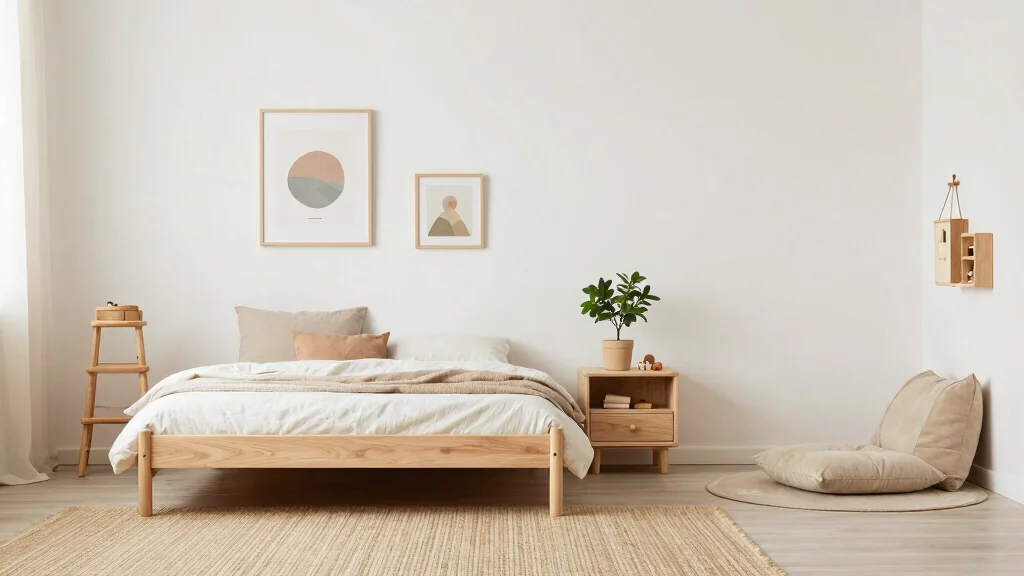
Creating a serene and functional space for your child is a journey filled with excitement and challenges. As the trend of Japandi design merges the cozy warmth of Scandinavian aesthetics with the sleek minimalism of Japanese influences, it’s no wonder that parents are drawn to this style for their kids’ bedrooms. This post is here to inspire you, offering creative ideas that embrace minimalist magic while maximizing small spaces.
If you’re a parent or caregiver who values simplicity and beauty, you’re in the right place. You might be looking for ways to create a tranquil haven for your little ones that encourages play, learning, and relaxation all at once. You’ll find that Japandi kids’ bedroom design captures all these elements, making it an ideal choice for children’s spaces.
In this post, you’ll discover 20 unique design ideas that blend functionality with style. From neutral color palettes to smart storage solutions, each idea is meant to help you create a calming environment that your child will love. Let’s dive into the world of Japandi design and explore how you can transform your child’s bedroom into a minimalist masterpiece.
Key Takeaways
– Neutral Color Palette: Focus on soft, earthy tones to create a calming atmosphere that promotes relaxation and creativity.
– Multifunctional Furniture: Choose furniture that serves multiple purposes, like a bed with storage or a desk that doubles as a play surface, perfect for small spaces.
– Natural Materials: Incorporate wood, linen, and cotton to add warmth and texture while maintaining a clean aesthetic that feels inviting.
– Smart Storage Solutions: Use shelves, bins, and under-bed storage to keep toys organized and accessible, making cleanup easy and efficient.
– Personalized Touches: Add unique elements that reflect your child’s personality, like custom wall art or a cozy reading nook, to make the space truly theirs.
1. Neutral Color Palette
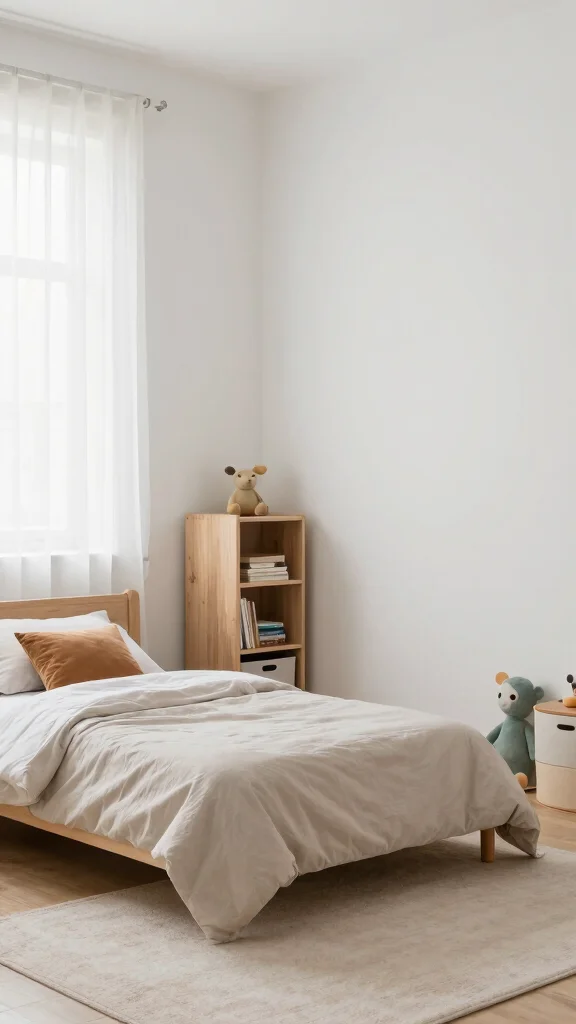
A neutral color palette captures the essence of Japandi style, offering a serene backdrop that grows with your child. Shades of creamy whites, soft greys, and earthy tones evoke a calming atmosphere, allowing for playful pops of color to shine through. This combination not only creates visual harmony but also makes small spaces feel more open and inviting.
To make the most of a neutral palette, focus on incorporating various textures that add depth. Think about using cozy woolen blankets alongside wooden decor to create a layered look without overwhelming the senses. Bright toys or vibrant wall art can introduce personality without compromising the minimalist feel.
Consider these tips for enhancing your neutral scheme:
– Pair soft grey walls with warm wooden accents for balance.
– Install jute rugs to add texture underfoot.
– Use colorful cushions to bring in playful elements.
This approach fosters a tranquil sanctuary that encourages creativity while remaining a peaceful retreat for relaxation.
2. Multifunctional Furniture
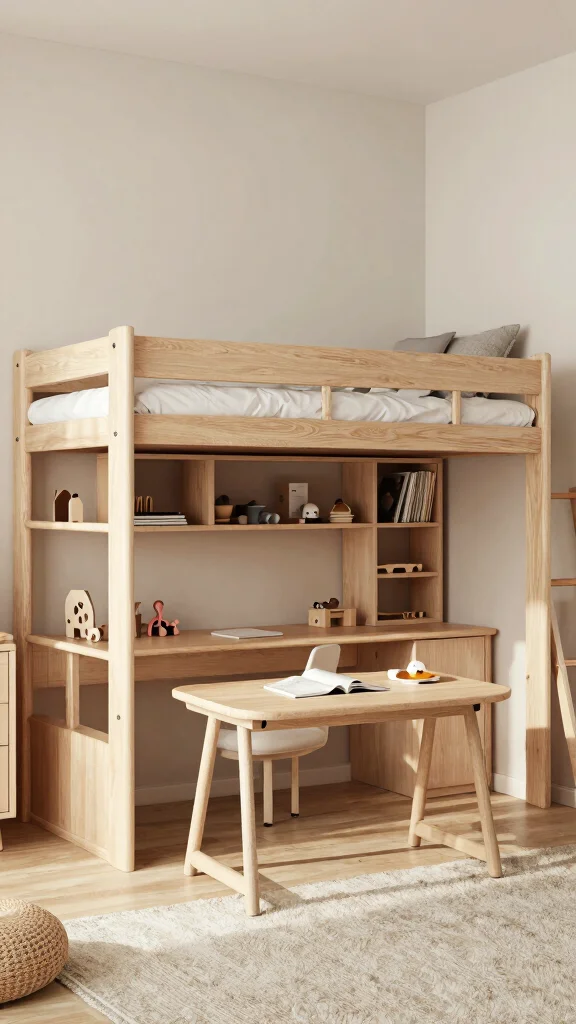
Multifunctional furniture is a brilliant solution for small bedrooms, especially in Japandi-themed spaces. Pieces that serve dual purposes maximize the area while providing essential functionality. Think about beds with built-in storage or stools that can serve as both seating and storage options for toys.
When selecting furniture, prioritize designs that adapt as your child grows. For example, a lofted bed with a desk underneath can free up valuable floor space for play. A foldable table can transition from homework station to craft area seamlessly, and modular shelving can adjust to accommodate books and toys.
Implement these strategies for multifunctional pieces:
– Use a lofted bed to create a play zone underneath.
– Incorporate a foldable desk for flexible workspaces.
– Install adjustable shelving to grow with your child’s needs.
These smart solutions ensure your child’s bedroom remains versatile and functional, catering to both relaxation and active play.
3. Natural Materials
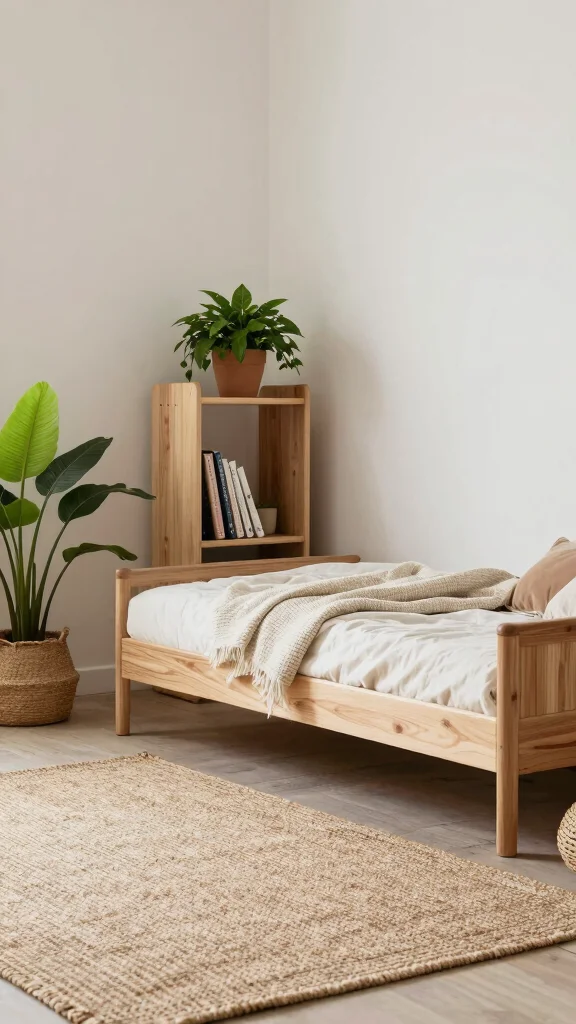
Embracing natural materials is vital for a Japandi-inspired kids’ bedroom, fostering a connection to nature that enhances well-being. Incorporating wooden furniture, bamboo accents, and organic cotton bedding creates a warm and inviting space that supports a healthy living environment.
To infuse natural elements into the design, start with a sturdy wooden bed frame that offers timeless appeal. A jute rug can provide a grounding texture underfoot, while strategically placed plants can purify the air and add life to the room.
Here are some ideas to incorporate natural materials:
– Select a wooden bed frame for timeless style.
– Use a jute rug for added texture and warmth.
– Decorate with easy-care plants for vibrant touches.
This focus on natural elements nurtures a soothing atmosphere, inspiring creativity while keeping the design beautifully simple.
4. Smart Storage Solutions
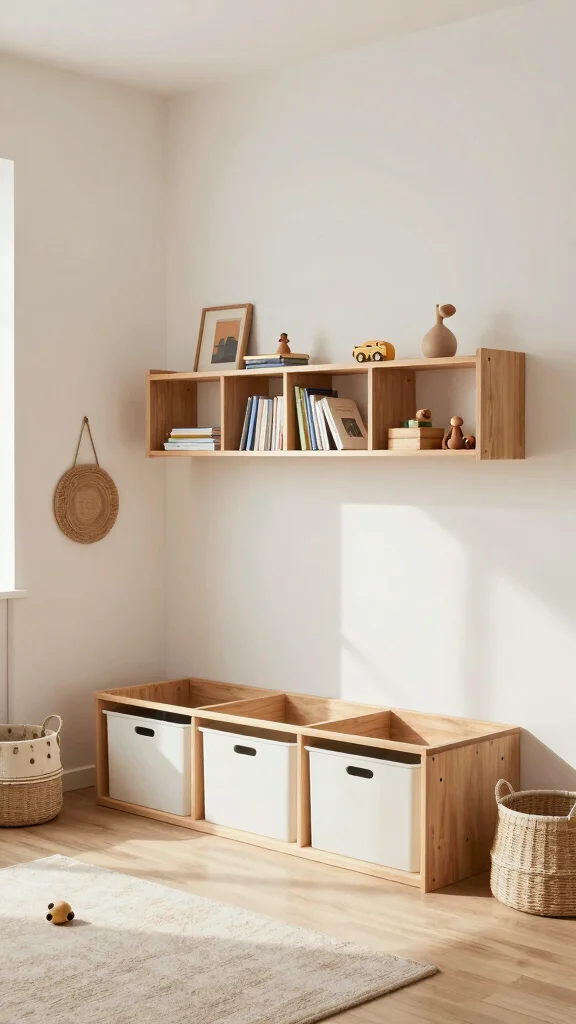
Efficient storage solutions are essential for maintaining a clean and functional kids’ bedroom, especially in a minimalist Japandi design. By incorporating clever storage options, you can keep toys and clothes organized, helping to create a clutter-free environment.
Consider using under-bed storage bins to tuck away seasonal items and toys. Wall-mounted shelves can display books and decorative items while freeing up floor space, and decorative baskets can serve as attractive storage that fits seamlessly into the overall decor.
Explore these smart storage ideas:
– Use under-bed bins to maximize space.
– Install wall shelves for books and decor.
– Choose stylish baskets for toy storage.
These strategies not only help keep the bedroom tidy but also instill good organization habits, making it easier for kids to learn how to care for their belongings.
5. Cozy Reading Nook
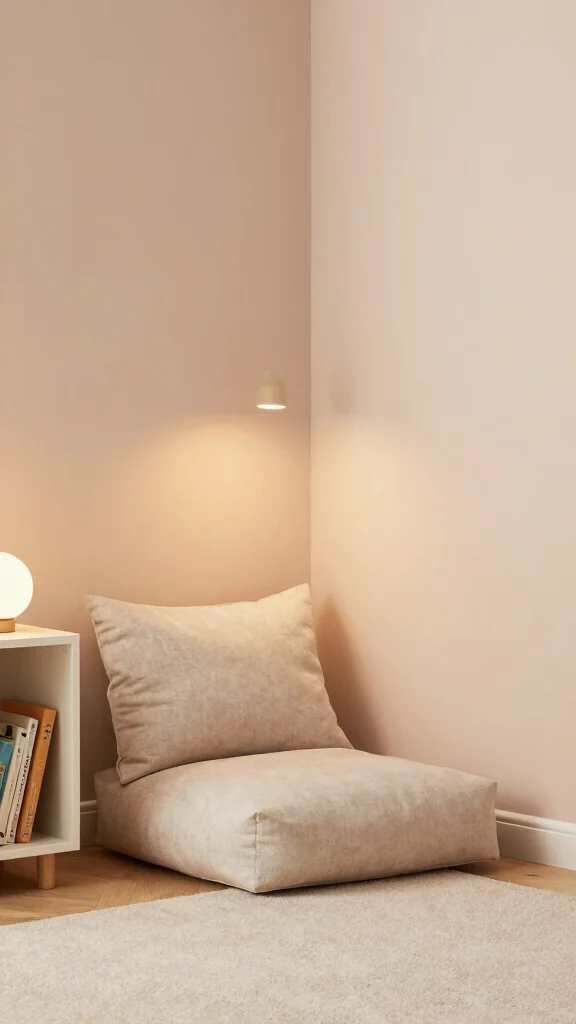
Designing a cozy reading nook in your child’s room fosters a love for books and nurtures their imagination. A dedicated corner with cushions or a soft rug can transform any space into an inviting retreat for storytelling and quiet time.
To create this special nook, consider using a comfortable floor cushion or beanbag that can be easily moved around. A small bookshelf nearby filled with their favorite stories makes the space functional, while soft lighting, like fairy lights, adds a magical touch.
Here’s how to set up a reading nook:
– Use a comfy cushion or beanbag for seating.
– Place a small bookshelf nearby for easy access.
– Add soft lighting to enhance the cozy atmosphere.
With this charming addition, your child will have a delightful space to escape into their favorite stories, enhancing the room’s overall aesthetic appeal.
6. Playful Wall Art
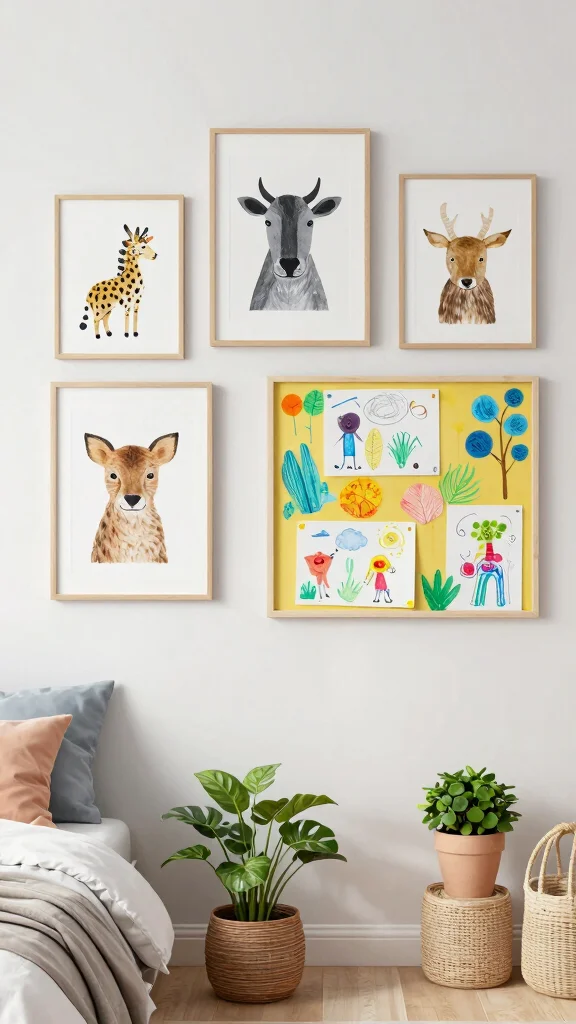
Incorporating playful wall art is a fantastic way to showcase your child’s personality while maintaining the minimalist ethos of Japandi design. Simple yet impactful decor can be easily updated as your child’s interests evolve, allowing for a dynamic environment.
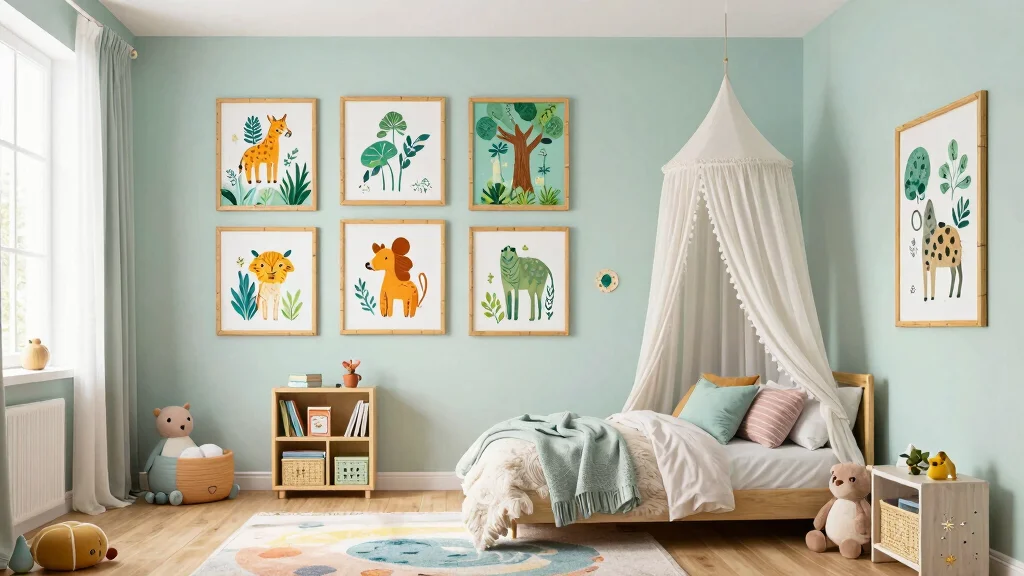
Consider using framed prints featuring their favorite animals or landscapes to add character. A bulletin board can become a canvas for their own artwork or achievements, while removable wall decals provide a fun, temporary option for personal expression.
Explore these ideas for playful wall art:
– Hang framed prints of beloved animals or themes.
– Create a bulletin board for personal artwork.
– Use removable decals for flexible decor.
Artful touches in the room can inspire creativity and joy, all while adhering to a clean and minimalist aesthetic.
7. Layered Textures
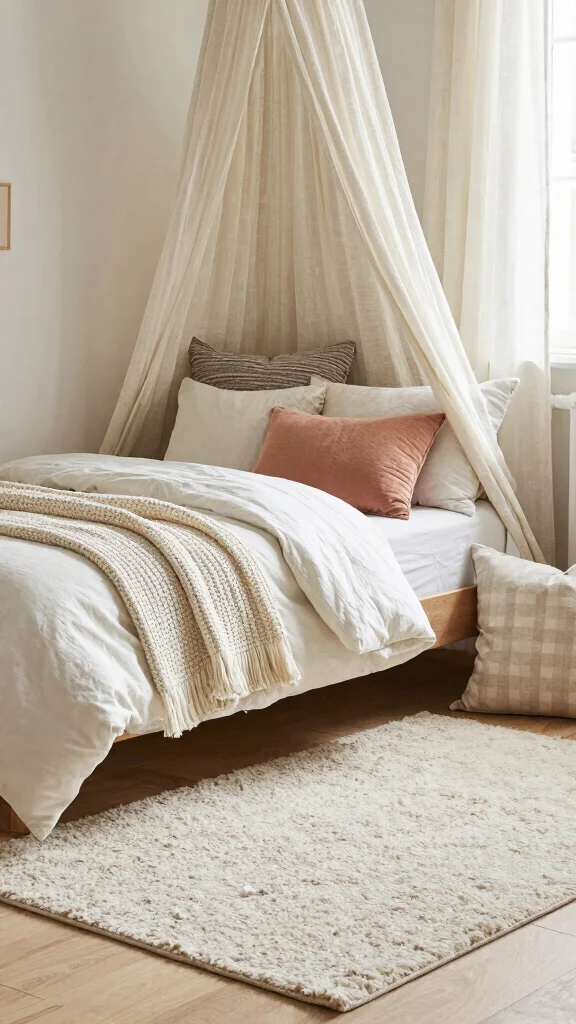
Layering textures is an effective strategy to enhance the warmth and comfort of a Japandi kids’ bedroom without sacrificing minimalism. This approach adds depth and coziness, creating a welcoming environment for your child.
To achieve this layered look, mix different fabric types, such as soft cotton bedding combined with a knitted throw and airy linen curtains. A plush rug over wooden flooring can create a warm play area, while varying finishes can provide visual interest.
Consider these techniques for layering textures:
– Combine cotton bedding with knitted throws for depth.
– Use a plush rug over hardwood for comfort.
– Mix matte and shiny finishes for visual appeal.
Thoughtful layering creates a rich sensory experience, making the room feel inviting and warm.
Did you know layering textures can boost perceived warmth by up to 30% in a small japandi kids bedroom design? Mix soft cotton, knitted throws, and linen curtains for cozy minimalism that still fits a compact space—practical and stylish.
How To Choose the Right Japandi Kids Bedroom Design
Choosing the perfect Japandi kids bedroom design requires careful thought. You want a space that is both functional and aesthetically pleasing. Here are some key factors to consider when making your selection:
1. Color Palette:
Start with a neutral color palette. Soft whites, greys, and earthy tones create a calm atmosphere. These colors are not only soothing but also versatile. They can easily be complemented with colorful accessories, giving flexibility as your child grows.
2. Furniture Size:
Select furniture that fits the room scale. In small spaces, compact and multifunctional furniture works best. Look for beds that can double as storage or desks that can transform into play areas. This maximizes space while maintaining a clean look.
3. Material Choices:
Focus on natural materials for a warm, inviting feel. Wood, bamboo, and organic textiles are excellent options. They not only contribute to the Japandi aesthetic but also ensure durability. Plus, natural materials are safer for your child’s environment.
4. Storage Solutions:
Effective storage is essential in any kid’s bedroom. Opt for smart storage solutions that keep toys and clothes organized. Consider built-in shelves, under-bed drawers, or wall-mounted storage. This keeps the room tidy and functional while enhancing the minimalist look.
5. Personal Touches:
Incorporate personalized elements that reflect your child’s personality. This could be through wall art, bedding, or decorative items. Personalized touches create a sense of ownership for your child and make the space feel more comforting.
6. Functional Zones:
Designate areas for different activities. A cozy reading nook, a play area, or a study corner can enhance functionality. Use rugs or furniture arrangements to define these spaces. This not only makes the room more organized but also encourages your child to engage in various activities.
Pro Tip: Before you finalize your design, create a mood board. Collect images, colors, and materials that inspire you. This visual guide will help you stay focused on your Japandi theme and ensure a cohesive look throughout the room.
By considering these factors, you’ll be able to create a beautiful and functional Japandi kids bedroom design that fosters creativity and tranquility. Enjoy the process of designing a space that your child will cherish for years to come!
8. Playful Rug Designs
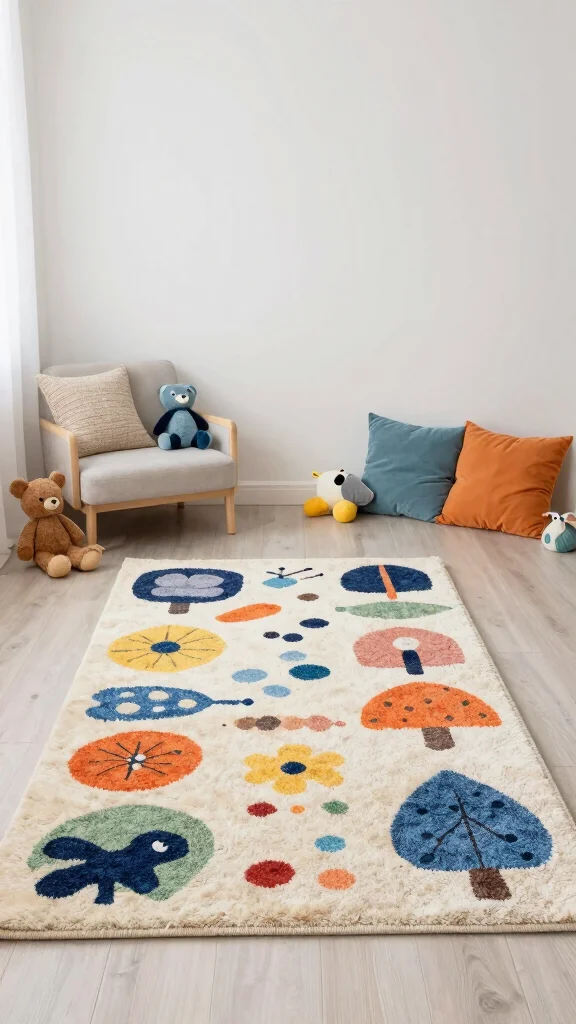
Rugs play a pivotal role in defining the spaces within a Japandi kids’ bedroom. They add comfort and visual interest, helping to create distinct zones for various activities while keeping the overall design clean.
Selecting playful rug designs can enhance the room’s charm. A large, soft rug can anchor the play area, while patterned rugs that harmonize with existing decor can introduce color without overwhelming the space. Smaller accent rugs can designate specific areas like reading nooks or study zones.
Consider these rug design ideas:
– Choose a large rug for a cozy play zone.
– Select patterns that complement the room’s color scheme.
– Use accent rugs to define specific areas.
With carefully chosen rugs, you can infuse personality and warmth into the decor, maintaining a stylish yet functional environment.
You might also like
9. Thoughtful Lighting Choices
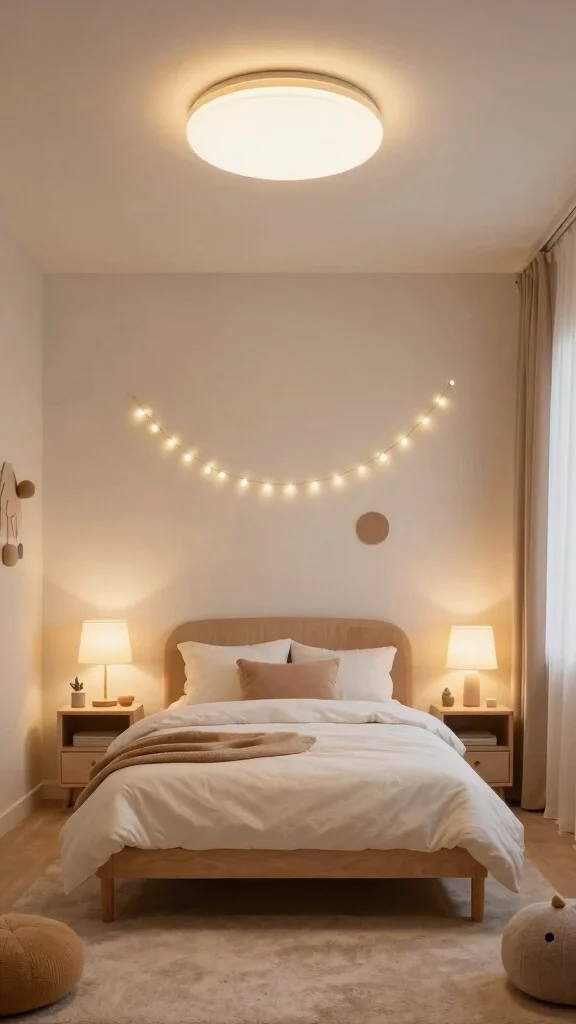
Lighting is a crucial aspect of any space, especially in a minimalist Japandi kids’ bedroom, where a sense of lightness and airiness is essential. Thoughtful lighting can enhance both mood and functionality, creating a cozy ambiance.
Layering different light sources is key—opt for a central ceiling fixture for overall brightness, paired with bedside lamps for reading. Soft, warm bulbs can foster a calming atmosphere, while string lights add whimsy without cluttering the design.
Implement these lighting tips:
– Layer lighting with a central fixture and bedside lamps.
– Choose warm bulbs for a cozy glow.
– Include fairy lights for a magical touch.
The right lighting creates a serene environment, encouraging both relaxation and playfulness, making it the perfect space for your child.
10. Personalized Touches
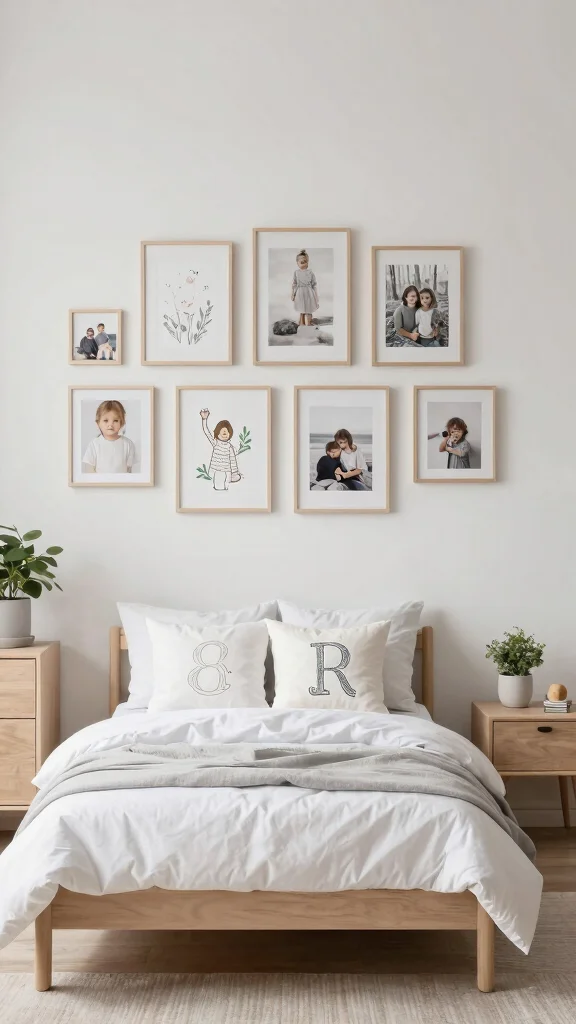
Personalizing your child’s bedroom is vital for making them feel special and involved in their space. Japandi design allows for subtle touches that reflect your child’s interests while preserving a minimalist vibe.
Incorporate monogrammed bedding or cushions that resonate with your child’s personality. A gallery wall showcasing their artwork or family photos adds a personal touch, while letting them choose a few decorative items can foster their connection to the room.
Explore these personalization ideas:
– Include monogrammed cushions or bedding.
– Create a gallery wall with their artwork.
– Let them select a few decorative pieces.
These personal elements create a unique environment that reflects your child’s identity, all while maintaining the serene and functional aesthetic of the space.
11. Simple Canopy Beds
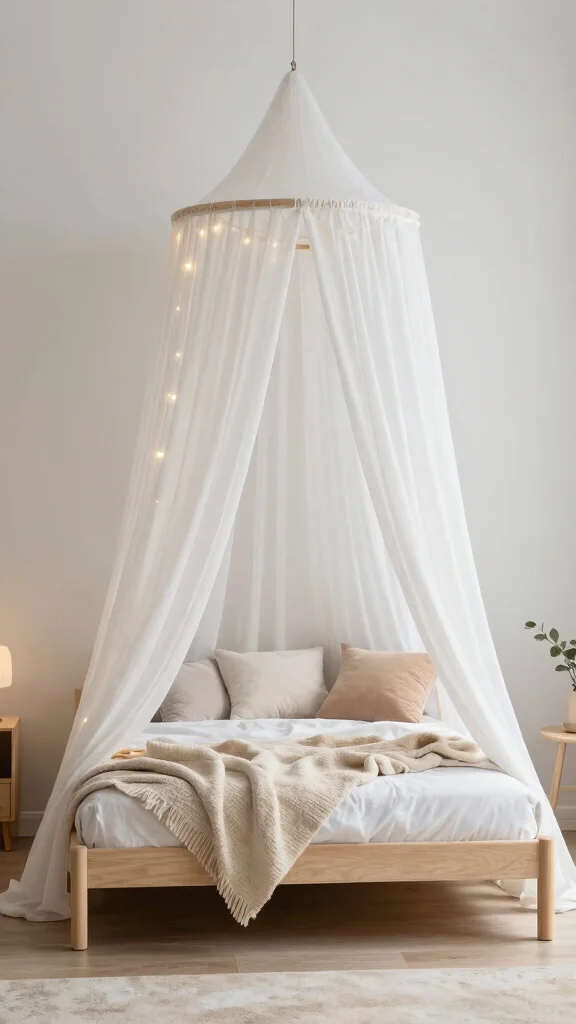
A simple canopy bed can act as a stunning focal point, enhancing the design of a Japandi bedroom. A lightweight, airy canopy adds a cozy feel without overshadowing the minimalist aesthetic, while introducing an element of playfulness.
To incorporate a canopy bed, select soft, sheer fabrics that allow natural light to filter through, creating a cozy nook. Keep the bed frame sleek and uncomplicated to align with Japandi principles, and consider adding fairy lights to the canopy for a magical nighttime ambiance.
Here are ways to include a canopy bed:
– Choose sheer fabrics for a light and airy feel.
– Keep the bed frame simple and elegant.
– Hang fairy lights to create a whimsical atmosphere.
Canopy beds add a touch of whimsy while enhancing comfort, making bedtime a delightful experience for your child.
12. Soft Textiles and Fabrics
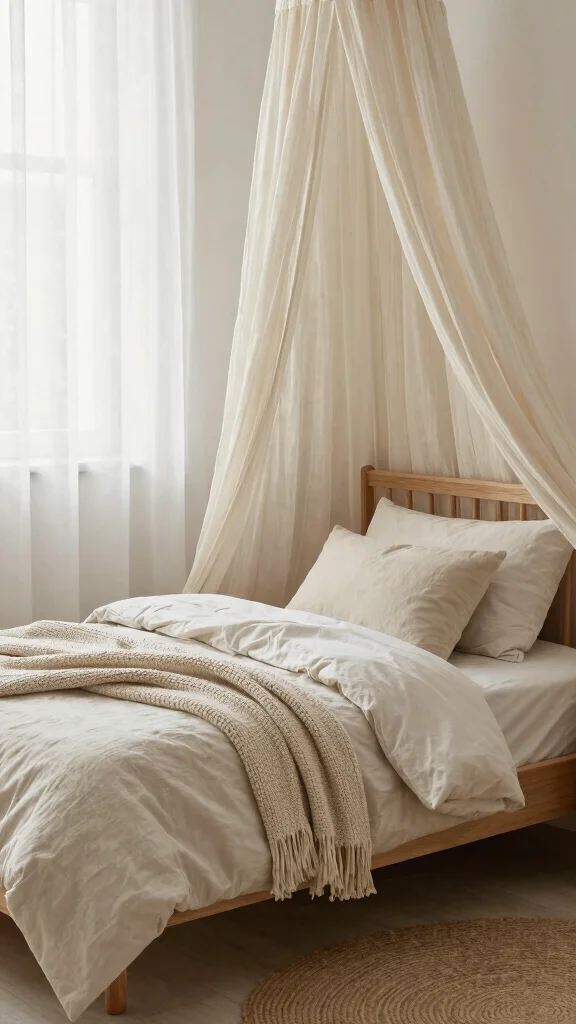
Selecting the right textiles and fabrics is crucial in a Japandi-themed kids’ bedroom, as they contribute to the overall warmth and comfort of the space. Soft, natural fabrics create a safe haven for your child, enhancing their sense of security.
Opt for organic cotton or linen bedding that feels gentle on the skin, and use knitted or crocheted throws to add warmth and texture. Curtains made from natural materials can soften the light entering the room, creating a soothing environment.
Consider these textile suggestions:
– Choose organic cotton or linen for bedding.
– Use knitted throws for added warmth.
– Select natural fabric curtains for soft lighting.
By prioritizing high-quality, soft textiles, you establish a cozy atmosphere that promotes relaxation, essential for a growing child.
Did you know natural fabrics can reduce overheating in kids’ rooms by up to 20%? In japandi kids bedroom design, organic cotton bedding and linen textures keep things breathable, cozy, and calm for bedtime rituals.
13. Scandinavian Influence
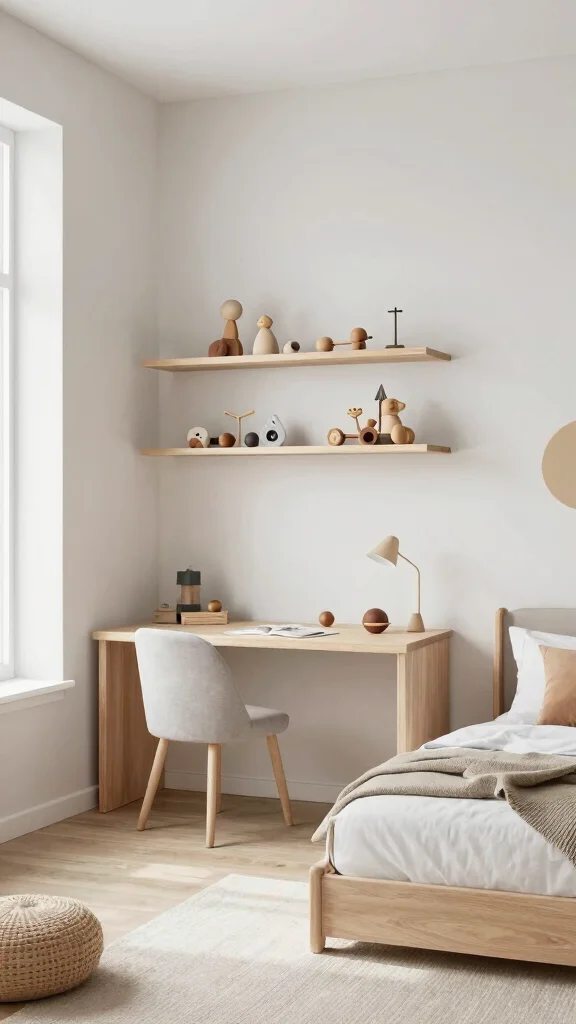
The Scandinavian influence within Japandi design introduces simplicity and functionality, which are particularly effective in kids’ bedrooms. This focus on clean lines ensures that each piece serves a purpose while contributing to the overall aesthetic.
Incorporate this influence by using unadorned furniture with practical designs and selecting functional toys and decor that can be easily stored away. A light color scheme that reflects natural light creates an airy feel, enhancing the room’s openness.
Embrace these Scandinavian principles:
– Use simple, functional furniture designs.
– Opt for toys and decor that can be easily stored.
– Maintain a light color palette for an open feel.
This blend of styles results in a beautiful and highly functional space, perfect for your child’s growth and creativity.
14. Minimalist Toy Storage
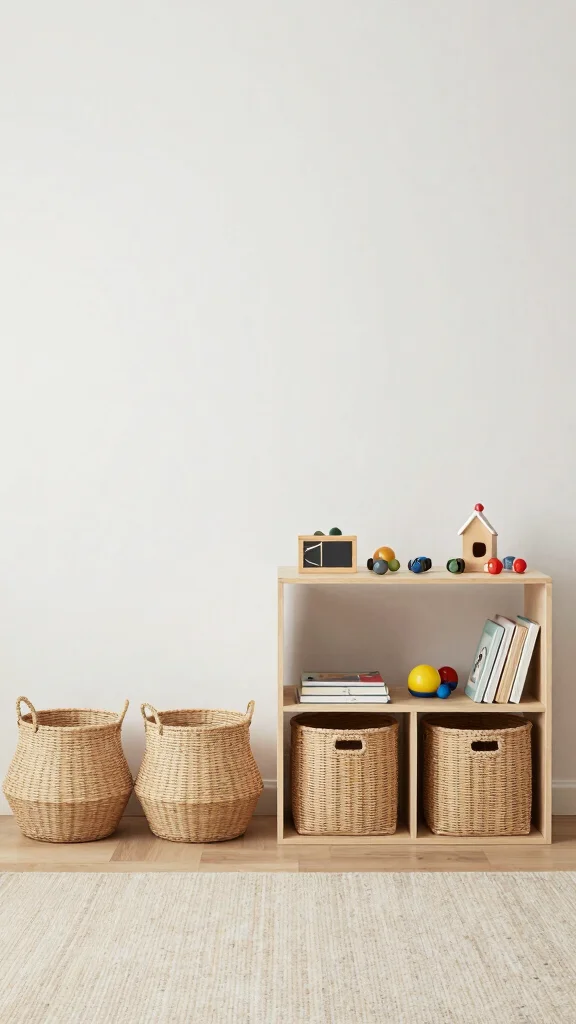
Toy storage can often lead to chaos, especially in small kids’ bedrooms. Japandi design promotes minimalist solutions that keep toys organized while blending seamlessly into the decor.
Consider stylish bins or baskets that match the room’s color palette for an effortless look. Invest in a multi-tiered shelving unit that can accommodate various toys and books, keeping them accessible yet tidy. Designate a corner shelf or toy box that doubles as a seat to create a functional area for play.
Explore these minimalist storage options:
– Use stylish bins that complement the decor.
– Invest in a shelving unit for organized toy storage.
– Create a designated toy area that serves dual purposes.
These solutions help maintain an uncluttered room while encouraging your child to take ownership of their space.
15. Nature-Inspired Decor
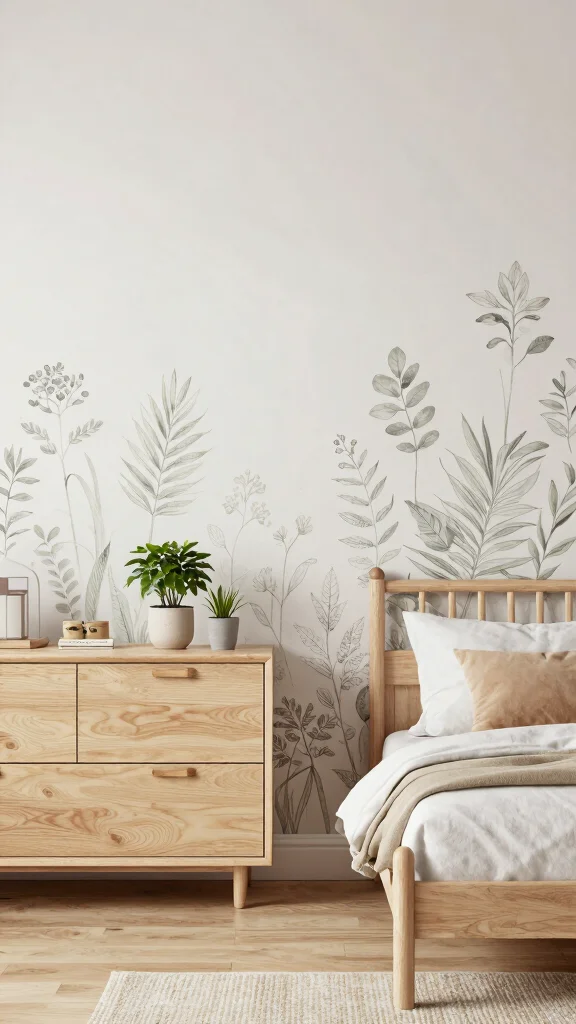
Incorporating nature-inspired decor elevates the peaceful ambiance of a Japandi kids’ bedroom. This approach not only connects the space to the outdoors but also instills an appreciation for nature from an early age.
Choose botanical prints or artwork featuring trees, animals, or landscapes to enhance the theme. Adding potted plants or easy-care succulent arrangements can bring life to the room while improving air quality. Opt for decor made from natural materials like wood or stone to complete the look.
Consider these nature-inspired decor ideas:
– Use artwork featuring natural elements.
– Add child-safe potted plants for vibrancy.
– Choose decor made from wood or stone.
These elements create a calming environment that encourages a connection to the natural world and fosters a sense of peace.
Nature-inspired decor makes a japandi kids bedroom design feel calmer the moment you walk in. Start with one plant and botanical art to anchor the space, then layer wood textures for a cozy, practical, and kid-friendly calm.
16. Whimsical Canopy Options
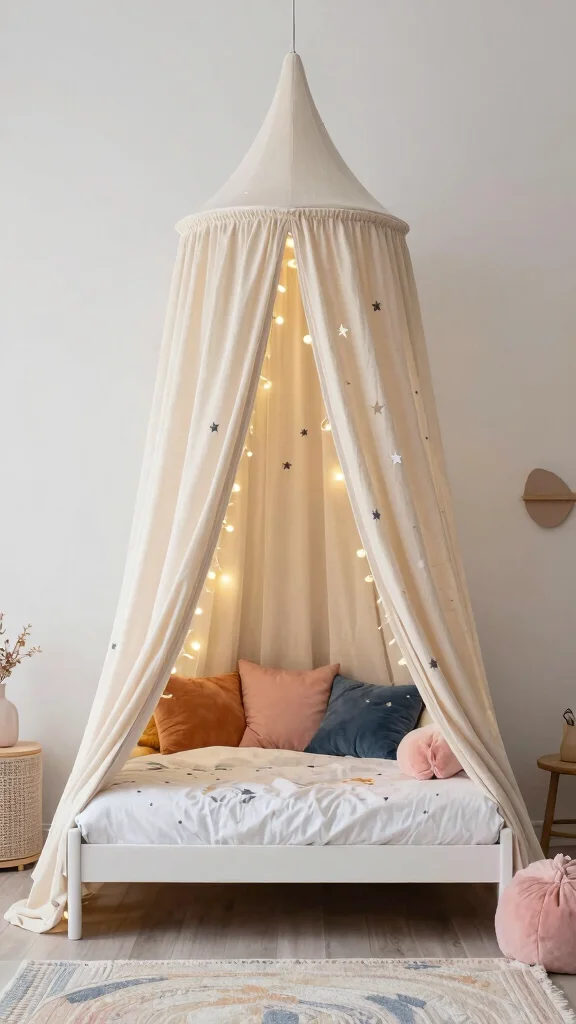
Canopy designs can be imaginative and playful, making bedtime feel magical for your child. A whimsical canopy can transform the bedroom into a charming storytelling nook while adding a personal touch to the decor.
Consider using colorful fabrics or patterns that reflect your child’s favorite themes, and incorporate star or moon motifs to enhance the dreamy atmosphere. Hanging fairy lights within the canopy can create a twinkling effect at night, adding to the enchantment.
Explore these creative canopy ideas:
– Choose fabrics that reflect your child’s interests.
– Incorporate star motifs for a dreamy effect.
– Hang lights for a magical nighttime ambiance.
These playful elements inspire creativity and imagination, turning the bedroom into a delightful haven for your child.
17. Minimalist Growth Charts
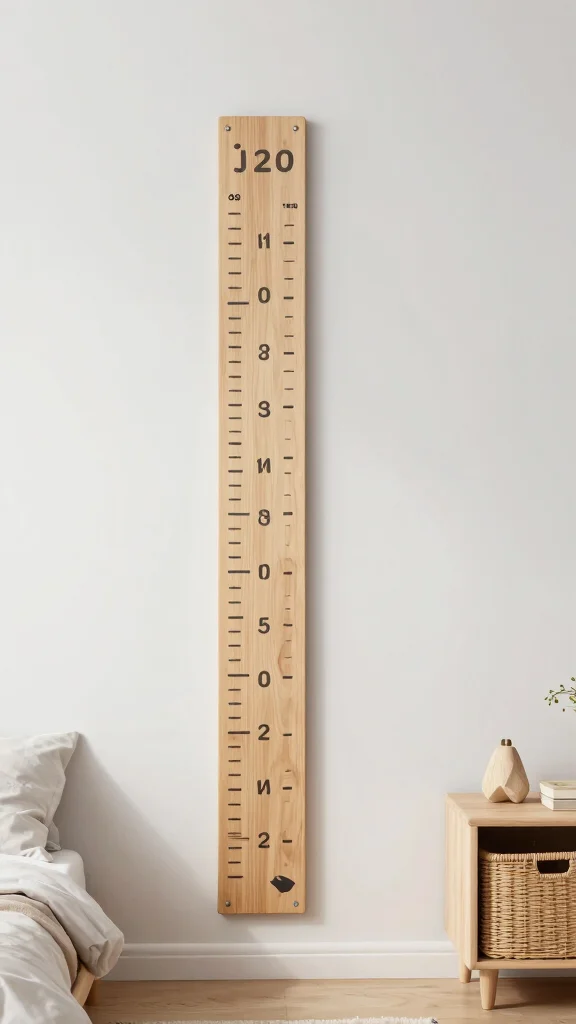
Adding a growth chart to your Japandi kids’ bedroom offers a stylish and functional way to track your child’s growth while maintaining a minimalist aesthetic. These charts can be beautiful decor pieces that blend seamlessly into the room’s theme.
Consider a wooden growth chart that can be hung on the wall, reflecting the natural materials present in the design. Alternatively, opt for a fabric or canvas version featuring fun designs that resonate with your child’s interests. Keeping it low-profile ensures it doesn’t dominate the space.
Here are some growth chart ideas:
– Choose a wooden chart for a natural look.
– Opt for a fun fabric chart that matches the decor.
– Keep it discreet to maintain the minimalist aesthetic.
With a thoughtfully selected growth chart, you can combine style and function while creating lasting memories of your child’s growth journey.
18. Functional Play Areas
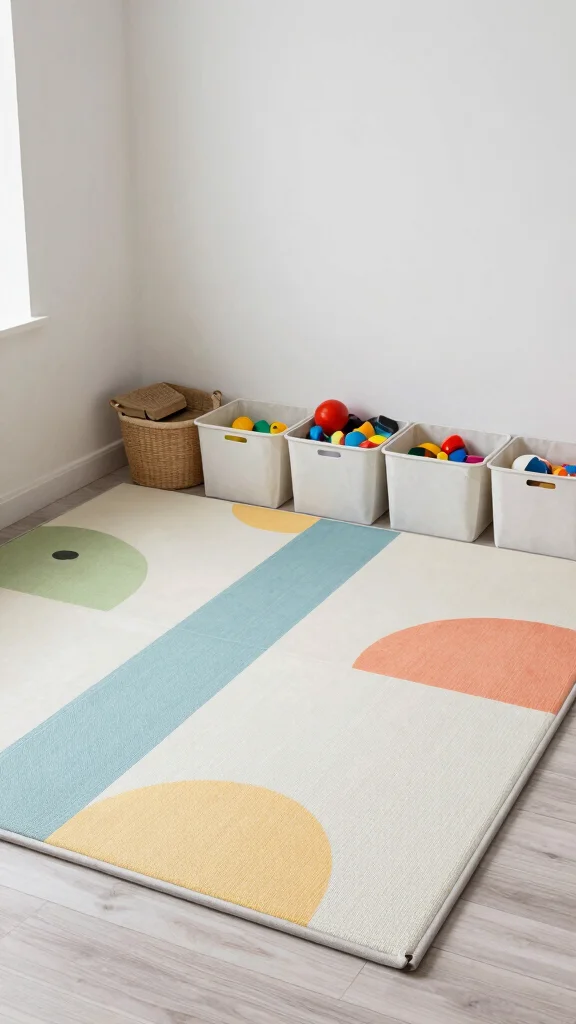
Creating a functional play area within a kids’ bedroom can inspire creativity while keeping the space organized. Japandi design emphasizes open areas that facilitate play without compromising the overall aesthetic.
Designate a corner equipped with colorful mats or a small table for art and crafts. Low storage bins can keep toys accessible yet tidy, while a small area for building blocks or puzzles ensures everything can be easily stored away when not in use.
Consider these ideas for functional play areas:
– Designate a corner for arts and crafts activities.
– Use low bins for accessible toy storage.
– Create a small building zone that can be easily tidied.
These play areas encourage imaginative exploration while keeping the bedroom serene and organized.
19. Eco-Friendly Choices
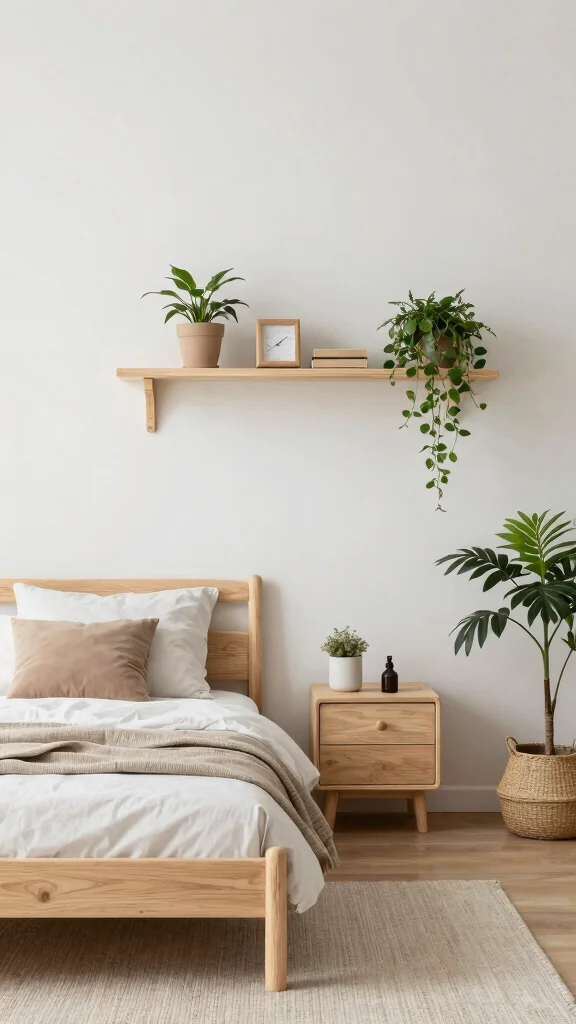
Making eco-friendly choices in your child’s bedroom is crucial in today’s world. Japandi design embraces sustainability, allowing you to create a beautiful space that respects the environment.
Select furniture made from sustainable materials like bamboo or reclaimed wood, and opt for organic bedding and textiles free from harmful chemicals. Adding plants not only enhances decor but also improves indoor air quality, creating a healthier environment.
Explore these eco-friendly options:
– Choose sustainable furniture for an eco-friendly impact.
– Opt for organic textiles for a safe sleeping environment.
– Decorate with plants to boost air quality.
By prioritizing eco-conscious choices, you create a beautiful space that positively impacts the planet and your child’s well-being.
20. Create a Cozy Atmosphere
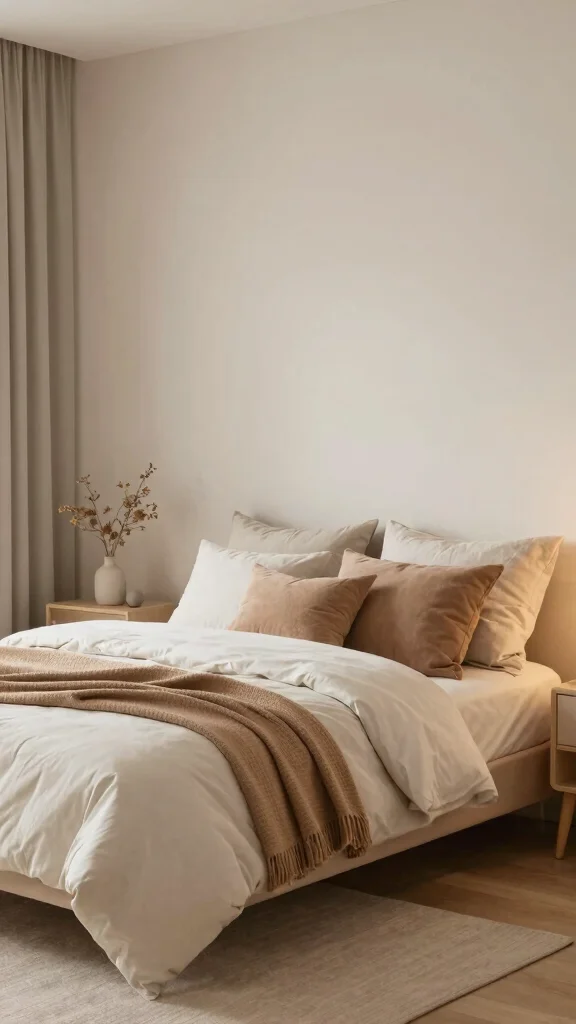
Creating a cozy atmosphere is the heart of a Japandi kids’ bedroom. This can be achieved through thoughtful design, combining warm textures, soft colors, and functional decor.
To foster coziness, layer bedding with soft throws and plush pillows for added comfort. Maintain a consistent color palette that promotes tranquility, and utilize soft, ambient lighting to enhance the room’s warmth during evening hours.
Consider these strategies for a cozy atmosphere:
– Layer bedding with soft throws and pillows.
– Maintain a calming color palette for tranquility.
– Use ambient lighting to create a warm glow.
With these thoughtful elements combined, you’ll create a nurturing environment where your child can relax, play, and dream, perfectly embodying the serene Japandi ethos.
Conclusion: Unlocking Minimalist Magic
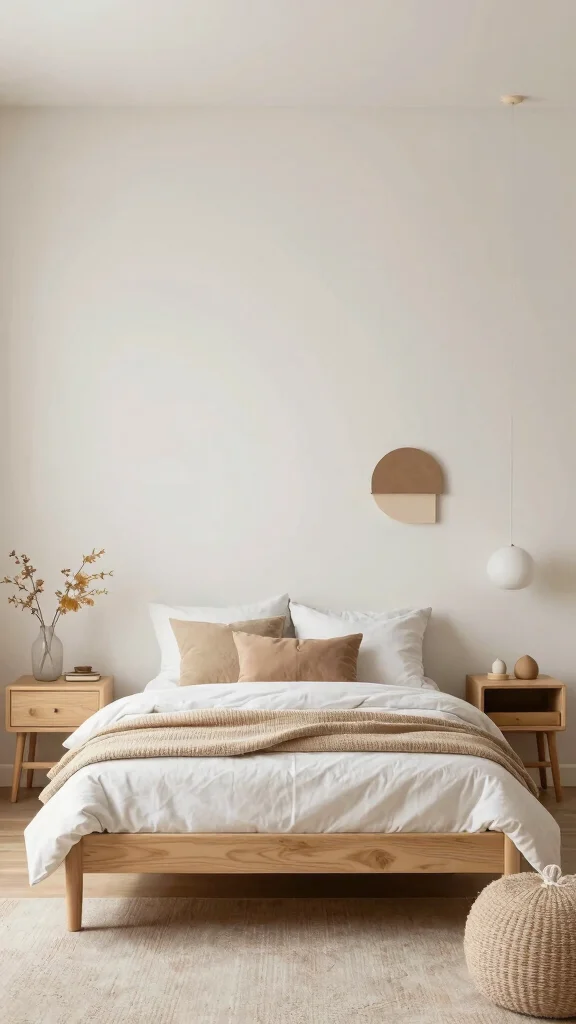
The Japandi kids’ bedroom design strikes a beautiful balance between minimalist aesthetics and functional spaces tailored to inspire creativity and comfort. With its focus on natural materials, thoughtful decor, and smart storage solutions, this style suits small spaces perfectly while allowing for personalization.
As you embark on this design journey, remember that every choice counts. Let your child’s personality shine through while maintaining the serene environment they need. The combination of Japanese and Scandinavian influences creates not only a stylish room but also a nurturing home that fosters growth and creativity.
Frequently Asked Questions
What is Japandi kids bedroom design and why is it ideal for small spaces?
Japandi blends Japanese minimalism with Scandinavian warmth, creating a calm, clutter-free space that’s perfect for small rooms. In japandi interior design, expect clean lines, natural materials, and a soft, neutral palette that makes a room feel bigger. Practical tips for japandi kids bedroom design in tight spaces: choose a low bed or floor mattress, use wall-mounted storage to keep floor area open, and pick a multifunctional desk or seating. Keep decor minimal with a few intentional pieces like a single framed artwork or a woven rug to reinforce the minimalist kids room vibe.
How can I achieve a minimalist Japandi look for a kids room on a budget?
Start with a timeless palette of whites, warm beiges, and natural wood tones—core to japandi interior design and Scandinavian design for kids. Invest in durable pieces that grow with them, such as a platform bed with drawers, a modular storage unit, and a desk that can extend as they learn. Look for secondhand finds or DIY upcycles to save money. Add texture with a minimalist kids room rug, linen curtains, and bamboo accents. Finish with a few high-impact decor items, like a simple wall gallery, to keep the space cohesive without breaking the budget.
What are the must-have furniture and decor pieces for a Japandi interior design in a children’s bedroom?
For japandi kids bedroom design, prioritize function-with-style items: a low bed or mattress on a platform, woven storage baskets, a compact dresser, and wall shelves. Create a small play corner with a soft rug that remains calm and uncluttered—ideal for small spaces. Choose warm lighting, such as a paper lantern or a warm LED strip. Use natural textiles like cotton or linen for bedding and curtains, and hang a few nature-inspired artworks to reinforce the japandi interior design aesthetic.
How do I maximize storage and keep clutter out in a small Japandi kids room?
Think vertical and dual-use: wall-mounted shelving and hooks free up floor space, while under-bed drawers and slide-under storage keep toys organized. Opt for neutral-toned baskets that blend with the palette to reduce visual clutter. Choose a compact, multi-function desk or storage ottoman that can serve as a seat, table, and stash spot. Label bins or use simple icons so kids can help tidy up, maintaining a minimalist kids room while preserving the japandi kids bedroom design look.
How can I involve my child in creating a Japandi bedroom that grows with them?
Make it a collaborative project by selecting a calm color palette together and letting your child choose a couple of art pieces or textiles within that range. Designate a flexible play zone with modular storage and a movable desk so the layout can adapt as they grow. Involve them in choosing safe, natural materials and in keeping the space tidy. This keeps the japandi kids bedroom design kid-friendly over time and ensures the room evolves with modern nursery ideas and ongoing children’s bedroom decor needs.
Related Topics
japandi kids bedroom
minimalist kids room
small space design
modern nursery
children's decor
scandinavian kids
eco-friendly decor
functional furniture
storage solutions
color palette
stylish organization
easy updates
Leave a Reply