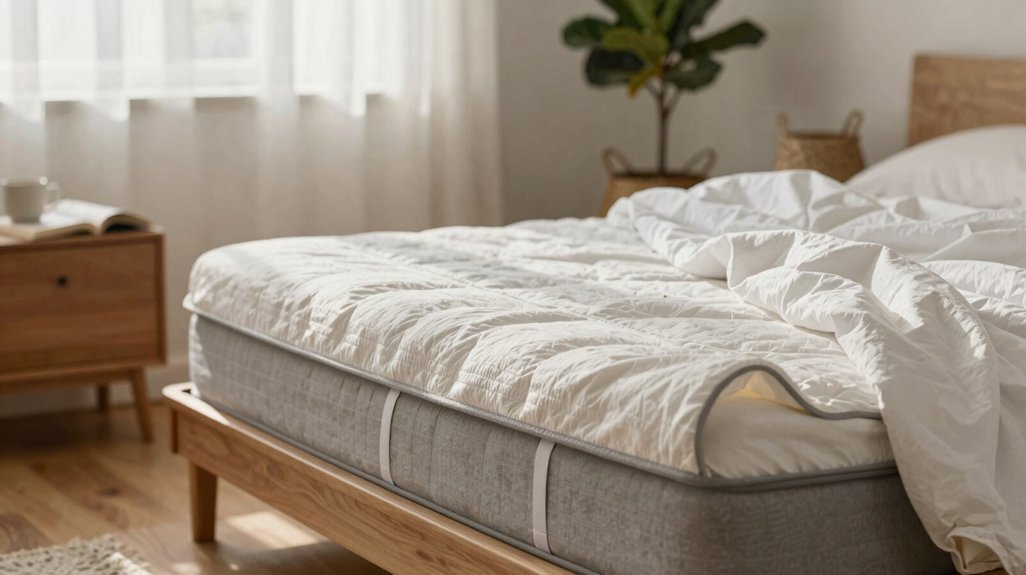
You probably didn’t expect your sagging mattress and your budget to fail at the exact same moment, but here you are.
A topper can bridge small dips, roughly 2–3 cm deep, using 7.5–10 cm of latex or dense foam.
You’ll need to check your sag first, though, because some damage is too deep for any topper to fix.
The real question isn’t whether to buy one; it’s whether your mattress is even worth saving.
Can a Topper Really Fix Your Sag? Here’s the Honest Answer
A mattress topper can be your stopgap when you’re dealing with a sagging bed, but it’s not a magic wand. You can’t truly fix a sagging mattress with a topper alone, especially when you’re facing broken springs or a collapsed support core underneath. Memory foam toppers and latex options work best for shallow dips under 3–4 cm, bridging the gap to restore surface comfort.
Your mattress feel improves temporarily, but body impressions deeper than that mean structural failure. You’ll notice the topper eventually conforms to the same valleys, particularly with lower-density memory foam.
Check your base first: slats should sit no wider than 3 inches apart, with proper center support for queen and king sizes. A topper only masks surface problems; it won’t fix what’s broken beneath.
Recommended Products
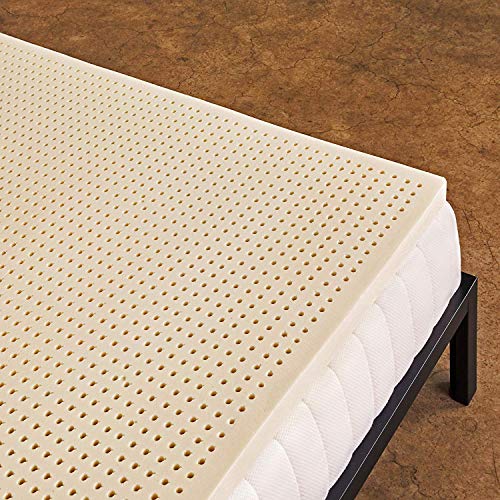
Soft – Great for Adding Softness to the Surface of a Mattress
Soft – Great for Adding Softness to the Surface of a Mattress
Medium Firmness – Provides Pinpointed Comfort & Support
Measure Your Sag: The Straight-Edge Test That Decides Everything
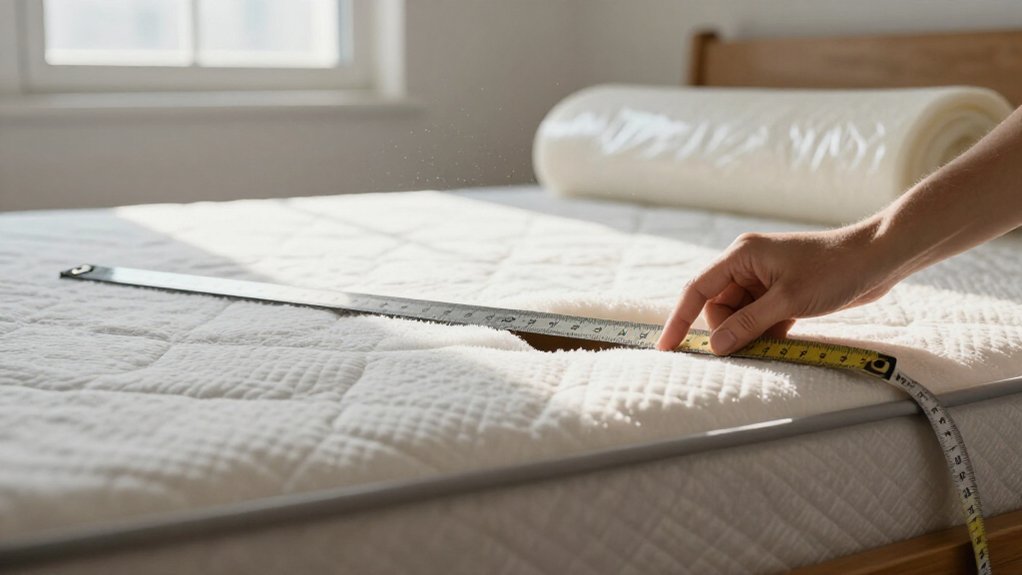
Grab a yardstick, a straight piece of lumber, or any rigid board you’ve got lying around, because you’re about to diagnose your mattress like a pro. Lay it across the mattress surface where you feel the worst dip, then measure the sag by checking how deep the gap runs underneath.
If you see a visible dip under 2 cm, a topper will likely fix the problem nicely. Between 2 and 3 cm, you’re in “might help short-term” territory. Beyond 3 cm, the mattress support structure has failed, and no comfort layer on top will save you. You’ll still be sleeping in a valley.
After testing, notice how the surface feels with and without weight. If the board rocks or the sag stays deep, you’re looking at core failure, not just a worn top.
Recommended Products

【5 INCH PREMIUM PRESSURE-RELIEF MEMORY FOAM】This 5 inch queen mattress topper blends slow-rebound foam and gel memory foam for dual comfort and support. The ergonomic design fits your head, shoulders, back, hips and legs perfectly. It disperses body pressure and relieves sore points effectively. No excessive sinking, just balanced softness and support for all-night cozy sleep.

Ergonomic Body Contouring: Designed to adapt to your natural cues, this memory foam mattress topper evenly distributes body pressure and supports you in any sleep position—back, side, or stomach. Enjoy better alignment and deeper, more restful sleep every night

The 3cm Rule: When Sagging Exceeds Topper Limits
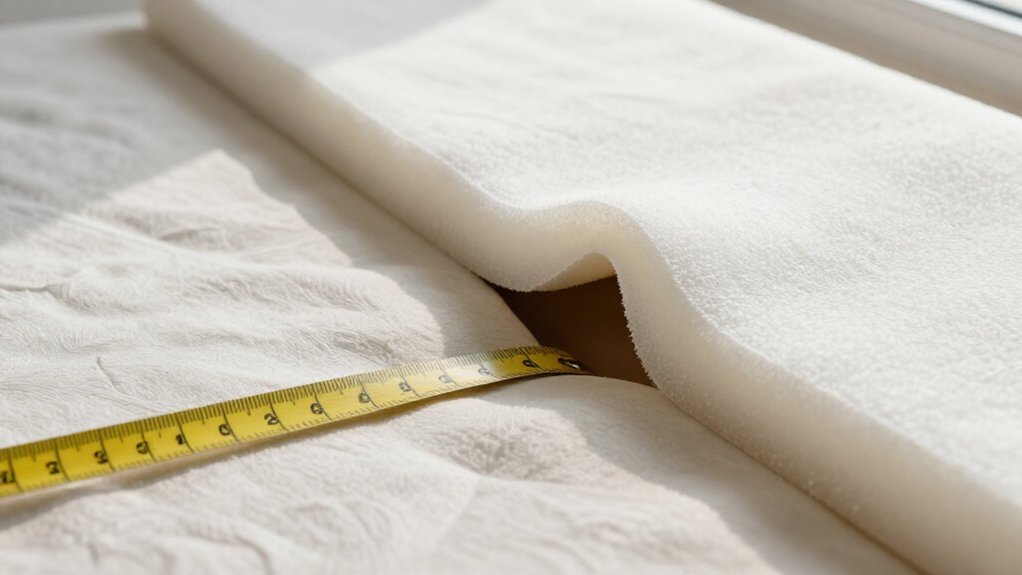
You’ve measured your sag with a straight edge, and now you’re wondering if a topper can actually help. Here’s the thing: if that dip runs deeper than about 3 to 4 centimeters, you’re pushing past what even a thick topper can reasonably bridge.
Most toppers work best when they’re smoothing out surface-level wear in the top comfort layers, not trying to fill a crater that’s eaten into the mattress core.
Recommended Products

Pressure Relieving Plush Contouring Memory Foam: Designed for use over your existing mattress, high‑density gel‑infused plush memory foam hugs your body curves to minimize pressure points for restful sleep. It refreshes worn mattresses and softens hard beds to extend mattress lifespan, perfectly suited for side, back and stomach sleepers with full contour support

GEL MEMORY FOAM MATERIAL: Our memory foam mattress topper readily conforms to the curves and shape of your body, distributes weight evenly to alleviate pressure points for better sleep.

Built for Comfort: 2 inch of AeroFusion Memory Foam is crafted to fit body's micro pressure points and conform to body's curves and shape for comfort throughout your sleep. Putting the topper on top of the mattress and under the mattress cover will give you a new and softer mattress, extending the life of the mattress and giving you a new sleep experience.
Measuring Sag Depth
Before you buy a topper, you’ll want to figure out exactly how deep that dip in your mattress really is. Measuring sag depth is simple: grab a straight edge or ruler and lay it across the bed where you normally sleep. Look underneath to see how much space sits between the edge and the mattress surface.
If that gap hits 3 cm or more, you’ve found the 3 cm rule in action. At this point, a topper can improve comfort on the surface, but it won’t fix failing mattress support underneath.
Most toppers only smooth out minor body impressions in the comfort layers, not deeper valleys from worn foam or coils. You’ll just add softness over the same problem, so replacement becomes the smarter move.
Topper Thickness Limits
Even if you’ve measured your sag and it falls within the 3cm range, you’ll still need to pay attention to how thick your topper is, because not all toppers can actually bridge that gap. The 3cm rule is your starting point, but topper thickness limits determine whether a Mattress Topper Fix actually works or just masks the problem temporarily.
For real sag-correction, you’ll want a topper around 7.5 to 10cm thick, think 3 to 4 inches of dense foam or latex. A thin 2.5 to 5cm pad won’t span deeper dips, it just adds a soft layer that still lets you sink into the structural sag beneath.
When mattresses sag beyond what the topper can bridge, you lose support across the entire sleep surface, your spine curves unnaturally, and back pain follows. Check the surface feel: if you’re still rolling toward the dip, the topper isn’t thick enough. Measure carefully, choose accordingly.
Replacement Indicators
How do you know when a topper isn’t enough? A mattress topper can improve comfort, but it can’t fix everything. Check whether the damage runs deeper than the surface.
Grab a straight-edge and measure the dip in your mattress surface. That’s where the 3cm rule comes in handy. If you find sagging mattresses with dips deeper than 3–4cm, you’re looking at structural damage a topper can’t mask.
The same goes if your bed is over ten years old, as widespread support loss sets in. Watch for back pain that persists beyond two weeks. That signals failed core support, not just worn comfort layers.
When removal tests prove the topper is doing all the heavy lifting, it’s time to shop for a replacement instead of layering on another fix.
Memory Foam vs. Latex: Which Material Fills Dips Best
When you’re trying to smooth out a mattress that’s developed dips or valleys, the material you choose for your topper makes a real difference. Latex fills dips better than low-density foam because it pushes back, so it won’t develop its own body impressions. It bridges shallow valleys nicely, keeping your mattress feels consistent over time.
Low-density foam, anything under about 4 lb per cubic foot, breaks down fast and traces the dip instead of fixing it. Heat makes it worse, softening the foam until you’re basically sleeping in the same hollow.
For dip-bridging, you need density that holds up. Memory Foam Mattress toppers around 5 lb per cubic foot perform more like a Firm Mattress, while 2 to 3 lb foam just conforms to the problem. Firmer latex, often Dunlop, gives you durability when you need real support.
Recommended Products

2-in-1 Dual-Layer Design for Instant Comfort Upgrade: This memory foam mattress topper features a 2" plush pillow top and a 3" gel memory foam base for a total 5" thick design. Combines cushioning softness with dual-sided pressure relief in one topper. Instantly upgrades your mattress into a softer, more relaxing sleep space without the cost of replacing your bed. We recommend measuring your mattress beforehand to ensure the perfect fit

TOTAL PRESSURE POINT RELIEF: Unique 5-zone design is optimized to provide compliant support across the entire body (head and neck, torso, hips, upper legs, feet and calves). Our swirl memory foam mattress topper readily conforms to the curves and shape of your body and distributes weight evenly to alleviate pressure points for better sleep.

SPINE SUPPORT & PRESSURE RELIEF: This 2-layer high-density memory foam mattress gently contours to your body's curves, helping distribute weight evenly, relieve pressure points, and support proper spinal alignment. Designed for sleepers weighing 150–240 lbs.
How Thick and Firm Your Bridging Topper Should Be
You’ll want to match your topper’s thickness and firmness to how bad your mattress sag actually is, since a too-thin layer just softens the dip instead of bridging it. For mild sags under about 1.5 cm, a firm 2-inch topper usually does the trick, but once you’re dealing with deeper valleys you’ll need 3–4 inches of supportive material like latex to keep you properly supported.
Just don’t go overboard: stacking excessive height or picking the wrong firmness can throw your spine out of alignment in the opposite direction, so stick to the bridging ranges and make sure your bed base is solid too.
Recommended Products
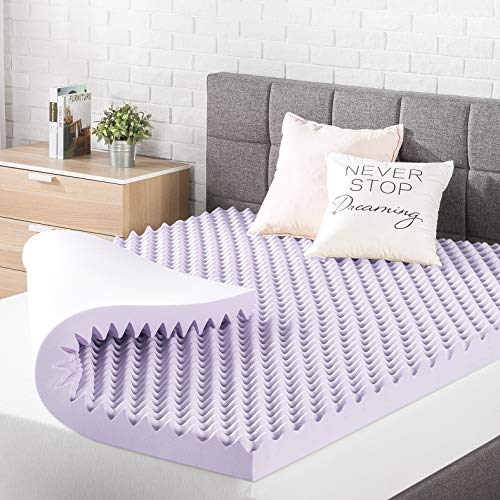
Egg crate mattress topper with increased airflow
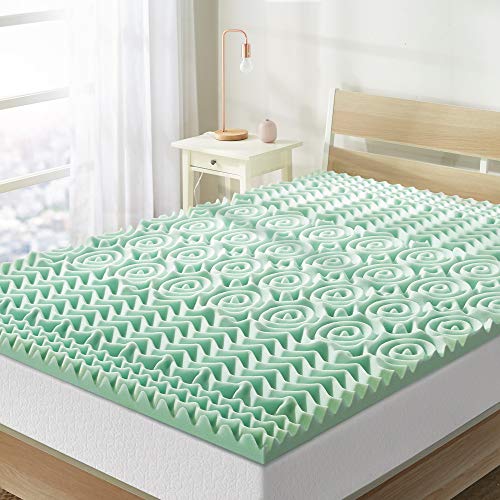
1.5 Inch Breathable Memory Foam Pad with 5 Body Zone Layer for Maximum Comfort

Pressure relief: The convoluted design of the foam helps to distribute weight evenly, which can help reduce pressure points on the body. This can be particularly helpful for people who suffer from joint pain or other conditions that make it difficult to get comfortable in bed.
Choosing Topper Thickness
Because a mattress topper can only do so much, you need to match the thickness to the actual problem you’re facing. Choosing topper thickness for mattress toppers means measuring your impression depth first. If you’ve got a shallow dip under 1.5cm, a 5cm (2 inch) layer might work, but it won’t really bridge anything deeper.
For mild-to-moderate sag, you’ll want 7.5cm (3 inches) or even 10cm (4 inches) to create that bridge over the valley. A firm topper sits above the dip instead of copying it.
Watch your surface feel, too. A slatted base with gaps over 7.5cm can ruin the whole setup, so check that first. Get the thickness right, and you’re halfway to sleeping better.
Finding Right Firmness
Thickness matters, but firmness is what actually keeps you from sinking into that valley. You need a firm surface that won’t follow every curve of the sag beneath it. A firmer topper creates a flat plane your spine can actually use, while the support underneath handles the rest.
- Choose medium-firm to firm material, around 3-4 inches, so it bridges rather than folds into the dip.
- Avoid low-density memory foam under 5 lb/ft³. It will mirror the sag and make the problem worse.
- Pick latex over standard memory foam for better resilience and pushback.
- Go firmer, not ultra-plush, to improve spinal alignment when the center dips.
You’ll get pressure relief without losing the structure you need.
Matching Mattress Condition
Since you’re working with a worn mattress, the depth of the dip determines everything about your topper choice. If you’re dealing with a shallow body impression under 1.5 cm, a 5 cm topper might do the trick, but anything deeper needs more muscle.
For dips around 1.5–3 cm, grab a firmer topper, 7.5–10 cm thick, made of dense latex or high-density foam. This bridges that broken layer instead of sinking into it, so you feel firmer support across the surface. Skip thin toppers under 2.5 cm; they’ll just follow the sag.
Rotate your mattress 180 degrees regularly, and the topper can help extend the life a bit longer. But if your mattress is deeply sunk, over 3–4 cm, no topper fixes that. You’ll need a new bed soon.
How to Install a Topper That Actually Stays Put
With a topper that refuses to stay put, you’re fighting an uphill battle before you even close your eyes, so getting the setup right from the start saves you a lot of hassle down the road. A mattress topper needs proper anchoring to create a stable sleep surface, and toppers often shift because people skip basic prep steps.
When you add a layer this thick, you’re effectively rebuilding your bed, so take time to check your setup.
Here’s how to lock it in:
- Match pocket depth to your topper, 40–45 cm works for 7.5–10 cm toppers, or use fastener straps for secure anchoring.
- Place the topper on a dry, smooth mattress, then stretch a deep-pocket fitted sheet over both to create friction.
- Align any gusset evenly from head and sides before tightening, so tension holds consistently.
- Add a mattress protector only if it’s truly deep-sized for topper use, undersized ones cause migration.
Re-check placement after night one, since small misalignment increases sliding.
Recommended Products
Medium Firmness – Provides Pinpointed Comfort & Support
Soft – Great for Adding Softness to the Surface of a Mattress

Soft – Great for Adding Softness to the Surface of a Mattress
Check Your Results: Is the Sag Gone After Two Weeks?
How do you know if that topper actually fixed your mattress, or if you’re just getting used to a slightly better band-aid? After 2 weeks, you’ll have a clear picture. If your back, hip, or shoulder pain has eased, you probably had mild sag in the comfort layer, not a failing support structure.
Try the remove-and-test method: sleep directly on the mattress for a couple nights. If it’s still worse without topper, the base is structurally compromised. Watch for bridging failure, where the topper starts conforming to the same valley; that signals sag deeper than 3–4 cm.
If pain persists, the support structure has likely failed. When your mattress is too old, or the dip exceeds 4 cm, replacement becomes the smarter move.
Recommended Products
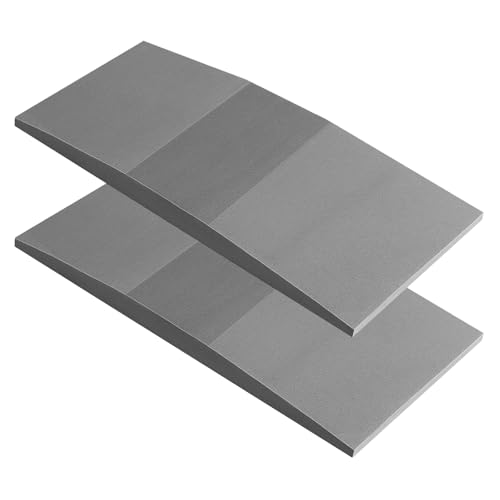
Targeted Support for Sagging Mattresses: this 2 pieces sagging mattress support set is designed to address localized mattress dips rather than covering the entire bed; Each pad measures 25 x 46.85 x 2.01 inches and helps reinforce sunken areas for users whose mattresses sag but are otherwise still usable, offering a practical alternative to full mattress replacement

Fix Sagging Mattress:Effectively repair your sagging mattress with our sagging mattress support in minutes. Save money and extend the life of your bed without the need for a new mattress. Experience a quick transformation to your sleeping surface.

【Fix Sagging for Under Mattress】: Effectively repair your sunken mattress and offer bed support, save your money and extend the life of mattress. Fix uncomfortable ugly sags in your bed and restore its beauty, HOMBYS mattress firming pad keeps your bed mattress look like new
Before You Topper More: Is Your Bed Base the Real Culprit?
Before You Topper More: Is Your Bed Base the Real Culprit?
Before you drop money on a topper, take a hard look at what’s underneath your mattress. Mattress Topper Help won’t solve anything if your bed base is failing you.
- Inspect your slats for gaps wider than 3 inches, missing pieces, or breaks, because those gaps cause premature sagging a topper can’t fix.
- Test your platform or divan for soft spots, compressed panels, or uneven surfaces that create false “sag” feelings.
- Remove your mattress and check for bowing, weak foundations, or missing center support legs on queen and king bed frames.
- If slats are uneven but not ruined, slide a bunkie board or sheet of plywood underneath to restore support for about £10–£15 before buying anything else.
Recommended Products
Built for Comfort: 3 inch of AeroFusion Memory Foam is crafted to fit body's micro pressure points and conform to body's curves and shape for comfort throughout your sleep. Putting the topper on top of the mattress and under the mattress cover will give you a new and softer mattress, extending the life of the mattress and giving you a new sleep experience.

PRESSURE RELIEVING MEMORY FOAM: Plush gel infused memory foam conforms to your curves for personalized comfort that hugs you to sleep; use it to rejuvenate an old mattress, soften a too-hard mattress, or prolong the life of your mattress

2-in-1 Adjustable Dual-Layer Design: This Queen (60" x 80'') mattress topper comes with two independent layers. Our mattress topper features a 2-inch cooling gel-infused memory foam pad and an additional 2-inch quilted pillow top cover filled with ultra-soft down alternative fiber.Expertly packaged for a premium unboxing experience, it serves as a perfect gesture to show you care – whether for family members or friends.
Rotate, Rest, Replace: Extending Your Bridging Topper’s Life
A mattress topper isn’t a set-it-and-forget-it fix, especially when you’re using it to bridge over sagging spots. You need to rotate your topper and the worn mattress beneath it every 3 to 6 months, so you’re not compressing the same dip night after night. This keeps the even surface intact and preserves comfort and support longer.
Give your bridging topper a rest by switching sleep positions, back to side, so one zone doesn’t take all your weight. If you keep hammering the same spot, the topper will eventually conform to the mattress sagging below it.
Check your base too. Slats should sit no wider than 7 to 7.5 cm apart, or add plywood underneath. When rotation stops helping and you feel springs within 1 to 2 weeks, replace the topper.
Recommended Products
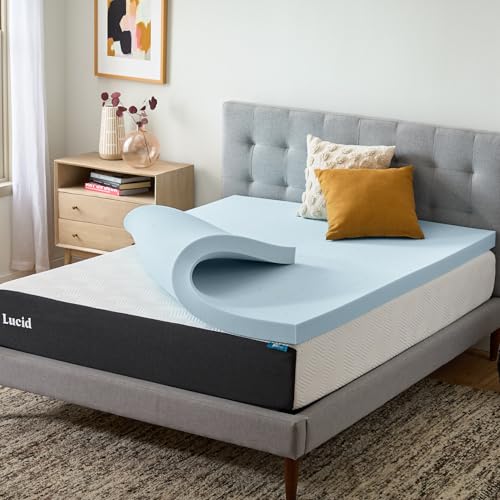
EXTRA PLUSH FEEL – Lucid memory foam mattress toppers are designed to enhance a mattress, making your sleep experience softer; three inches of plush memory foam feels light, airy, and responsive

50% More Fill By GSM: Made with 900 GSM 5D snow down alternative fill, our mattress topper provides 50% more fill per unit area than a 600 GSM construction, creating a fuller layer that balances soft comfort with gentle cushioning.

Gel Memory Foam Material: Our memory foam mattress topper readily conforms to the curves and shape of your body, distributes weight evenly to alleviate pressure points for better sleep.
Toppers Have Limits: When Only a New Mattress Will Do
You need to recognize when your mattress has crossed the line from fixable to finished, because a topper can’t save a bed with broken springs, a collapsed support core, or dips deeper than about 3–4 cm.
If your mattress is pushing past 10 years old, or you’re still waking with back and hip pain after two weeks on a topper, the internal structure is likely shot no matter what you layer on top. Check your base first, tighten up slat spacing to 3 inches or less, and add a bunkie board if needed, but when you keep rolling toward the middle and waking sore every morning, it’s time to stop patching and start shopping for a replacement.
Recommended Products
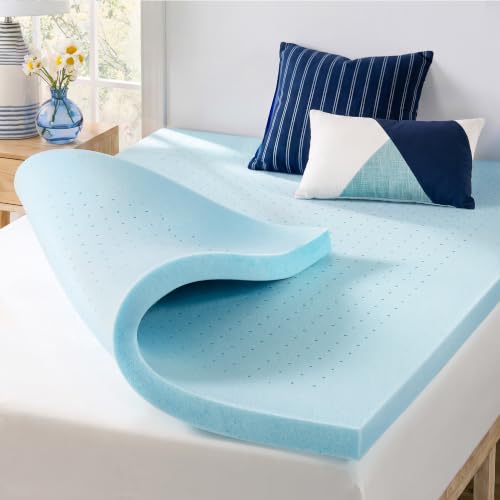
Please allow up to 72 hours for the topper to rise and any odors to dissipate

GEL MEMORY FOAM MATERIAL: Our memory foam mattress topper readily conforms to the curves and shape of your body, distributes weight evenly to alleviate pressure points for better sleep
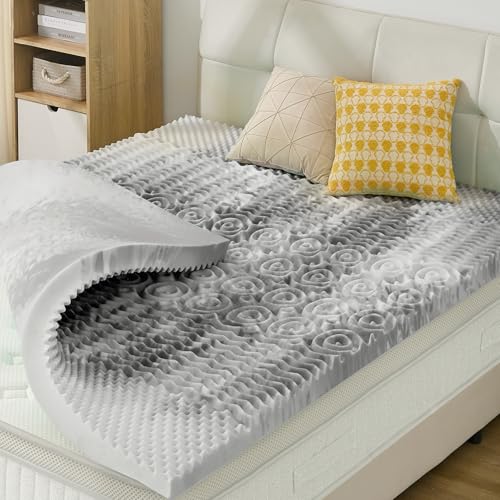
Total Pressure Point Relief: Unique 5-zone design is optimized to provide compliant support across the entire body (head and neck, torso, hips, upper legs, feet and calves). Our swirl memory foam mattress topper readily conforms to the curves and shape of your body and distributes weight evenly to alleviate pressure points for better sleep.
Structural Failure Signs
Although a mattress topper can work wonders for a bed that’s simply too firm or has minor surface wear, there are hard limits to what even the best topper can fix. When you’re dealing with structural failure, you’re looking at a mattress that needs replacing, not a quick upgrade.
Here are the warning signs that mean your topper can’t save the day:
- You feel or hear broken coils or a failing support core poking through, and the topper can not restore that mechanical foundation.
- Your mattress sags deeper than 3–4 cm, especially with foam mattresses where the valley just won’t spring back.
- You’ve fixed your base, tightened slats to 7.5 cm gaps, added center legs, but the dip keeps returning, signaling a broken layer beneath.
- You’re past 8–10 years and still get back pain after two weeks on the topper, confirming inadequate support that no cushion can fix.
Age And Wear
Over time, even the best mattress will hit a point where no topper can pull it back from the brink, and that timeline usually lands somewhere around the 8 to 10-year mark. Mattresses often reach this 8 to ten years threshold with deep sagging, permanent body impressions, or coils that simply give out.
Whether your mattress shows these signs or you’re just softening your mattress temporarily, you need to know when to stop. Once the foam has broken down past roughly 3–4 cm of sag, or the support core fails, a topper cannot restore proper spinal alignment. Always check if your bed is less than two years old with sudden dips, that points to warranty issues, not normal wear. Years without replacement mean you’re likely masking a problem that will only worsen.
Sleep Quality Impact
When you’re tossing and turning at 3 a.m. because your hips are sinking into a crater, it’s tempting to think a 5 cm memory foam topper will solve everything. It won’t. A thin layer of additional comfort can’t resurrect a dead support core.
Here’s when toppers hit their ceiling:
- Sleep quality degrades if the dip exceeds 3–4 cm; you’ll still feel that valley beneath.
- Your back will protest after two weeks if the core has failed, especially on memory foam beds that won’t bounce back.
- An entry-level mattress over ten years old, or one with broken springs, needs replacement, not a temporary fix.
- File that warranty claim first, but when poor sleep persists, only a new mattress truly restores alignment.
Leave a Reply