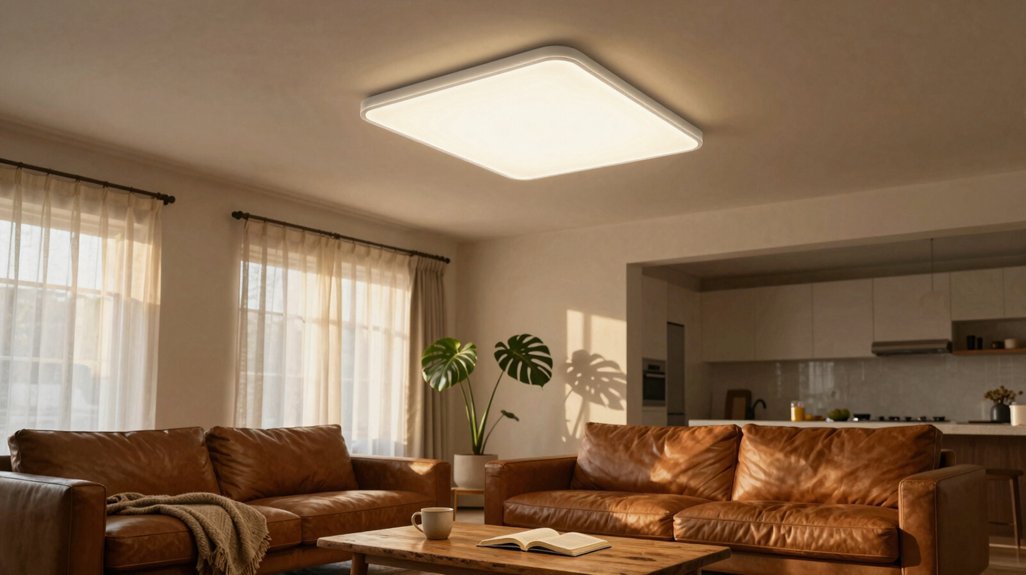
You’re standing in the lighting aisle, wondering if that sleek LED flush mount will actually dim when you install it at home.
Here’s the thing: not every LED ceiling light can dim, and the difference comes down to a small component called the driver.
You’ll need to check the box for a “dimmable” label, then match your dimmer type to what the fixture requires.
Get it wrong, and you’ll face flickering, buzzing, or lights that won’t turn off fully.
The good news: once you know what to look for, dimming LEDs is straightforward.
Which LED Ceiling Lights Can Actually Be Dimmed?
Not all LED ceiling lights can dim, so you’ll want to check the packaging or technical specs before you buy. Only fixtures labeled “dimmable” will actually work with a dimmer switch for LED, because the integral driver inside must be designed for reduced current.
You’ll need to match your dimmer type to the fixture’s driver technology. Many residential recessed units use TRIAC dimming, which cuts the leading edge of the AC waveform. If you mismatch types, you’ll get flickering, buzzing, or jerky dimming that shortens your LED ceiling light’s lifespan.
Non-dimmable LEDs won’t dim properly no matter what dimmer you install, and you can’t convert them with accessories. A shade only softens glare; it doesn’t change electrical output. When shopping, verify “dimmable LED lights” on the box. It’s your only guarantee of smooth control.
Recommended Products

Unprecedented Ultra-thin Ceiling Lights – We've used cutting-edge raw materials renowned for their flexibility and strength to create this incredibly slim round led light,…
How to Tell If Your LED Ceiling Lights Are Dimmable
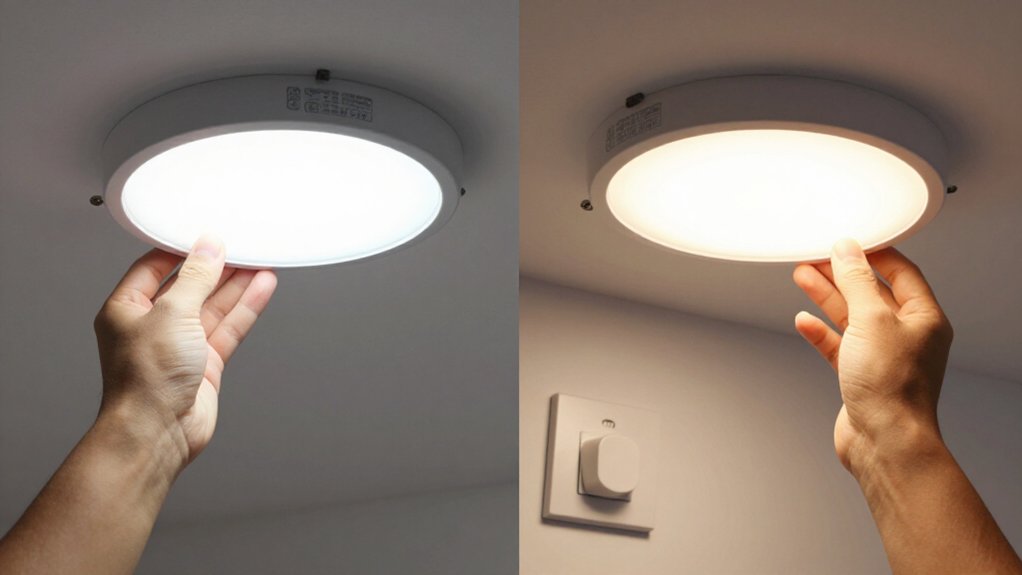
You’ll want to check the packaging first, since that’s where manufacturers usually slap a “dimmable” label if you’re in luck. Don’t stop there though, flip the box over and review the technical specifications too, because sometimes the fine print reveals whether the LED driver inside can actually handle dimming or if it’s strictly on/off.
Finally, you’ll need to verify dimmer compatibility, since even a dimmable bulb can flicker or buzz like crazy if you pair it with the wrong type of dimmer switch.
Recommended Products

【Smooth Thyristor Dimming】Tired of harsh, fixed brightness that strains your eyes and ruins the ambiance? Our dimmable ceiling light uses smooth thyristor dimming technology and is compatible with standard thyristor wall dimmers (dimmers are not included). Brightness can be easily adjusted from 10% to 100%, allowing you to create your ideal spatial atmosphere at any time.

POWERS 24V LED LIGHTING UP TO 400W – turns 100-130V AC house power into steady 24V DC for 24-volt LED strip, tape, cove and linear lighting, up to 400 watts (16.6 amps) from one driver, enough for a whole-room cove or kitchen run. For 24V fixtures only: not for 12V or 48V lights, so check the voltage printed on your LED strip or fixture before you order
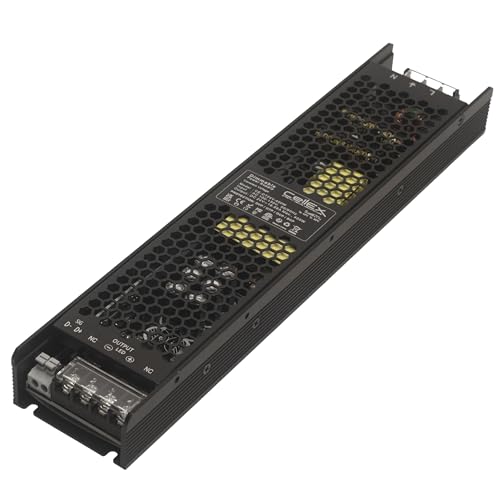
POWERS 24V LED LIGHTING UP TO 400W – turns 100-130V AC house power into steady 24V DC for 24-volt LED strip, tape, cove and linear lighting, up to 400 watts (16.6 amps) from one driver, enough for a whole-room cove or kitchen run without daisy-chaining small supplies. For 24V fixtures only: not for 12V or 48V lights, so check the voltage printed on your LED strip or fixture before you order
Check the Packaging
On the packaging itself, you’ll find the clearest clues about whether your LED ceiling lights can actually dim. When you check the packaging, look for clear labels stating “dimmable” or explicit LED dimmer compatibility notes. This step saves you from buying a non-dimmable LED by mistake.
Here’s what to watch for:
- The word “dimmable” or “dimmable lighting” printed prominently on the box
- Technical notes showing required dimming type, such as TRIAC/phase-cut or 0, 10V
- A warning that missing “dimmable” means ON/OFF only, which risks early failure
- Manufacturer compatibility info, not just generic symbols, to prevent flickering
Even when LEDs are dimmable, you’ll want to confirm they work with your existing dimmer. Good choice checking first; it prevents headaches later.
Review Technical Specifications
Flip the box over or pull up the product page online, and you’ll find the technical specifications section, which tells the real story about whether your LED ceiling lights can dim. Look for an explicit “dimmable” label first, then dig deeper into the specs to confirm which dimming method the fixture actually supports.
Check that the LED drivers inside are designed for dimming, since non-dimmable drivers only handle ON/OFF and will flicker or fail on dimmer switches. The technical specifications should list compatible dimmer types, such as TRIAC Dimmers or 0–10V systems, because these control signals aren’t interchangeable.
For integrated LED modules, verify the entire assembly is dimmable, not just the LED source itself. You’ll also want to compare wattage and load limits between your LED dimmer and fixture to avoid buzzing or reduced range.
Verify Dimmer Compatibility
Before you buy a dimmer or install your new LED ceiling lights, you need to check that they actually speak the same language. Dimmer compatibility isn’t automatic, even with dimmable LEDs, so you’ll want to verify a few key details before committing.
- Check your LED packaging for the exact word “dimmable,” because some fixtures simply don’t support external dimming at all.
- Match your dimming method, such as TRIAC/phase-cut versus 0–10V, since mismatched pairing causes flicker and buzzing.
- Confirm your dimmer is LED compatible, especially when swapping out old incandescent bulbs; older dimmers often create problems.
- Cross-reference both your LED fixture documentation and dimmer documentation; no universal symbol guarantees every combination works.
Getting this right upfront saves you from headaches later, and that’s a great choice for any home project.
Can You Add a Dimmer to Existing LED Ceiling Lights?
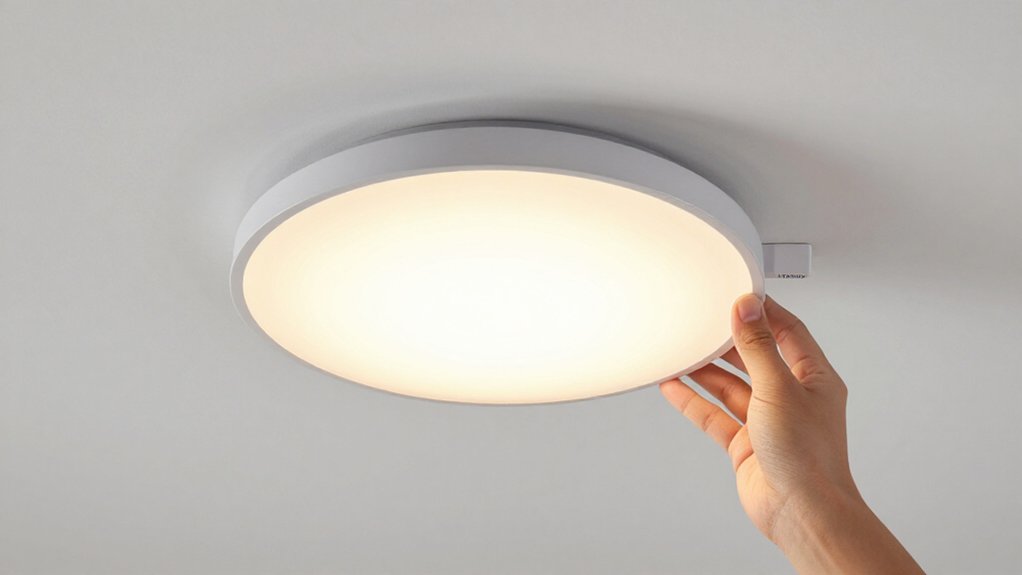
If you’re wondering whether you can add a dimmer to the LED ceiling lights already installed in your home, the answer depends entirely on what’s inside your fixture. You can only install a dimmer on existing LED fixtures that are labeled “dimmable” and specify compatible dimming types. Check your LED bulbs or integrated LED lighting for this marking before proceeding.
If your fixture supports dimming, you’ll need an LED-compatible wall dimmer, TRIAC or ELV for most homes, 0–10V for commercial setups, to avoid flicker and buzzing. Without a dimmable driver, adding a dimmer won’t work properly and could shorten your light’s lifespan.
Always verify the manufacturer’s dimmer compatibility list for your exact model. If you’re unsure about wiring or matching requirements, a professional electrician can confirm the safe choice and correct load limits for your circuit.
Recommended Products
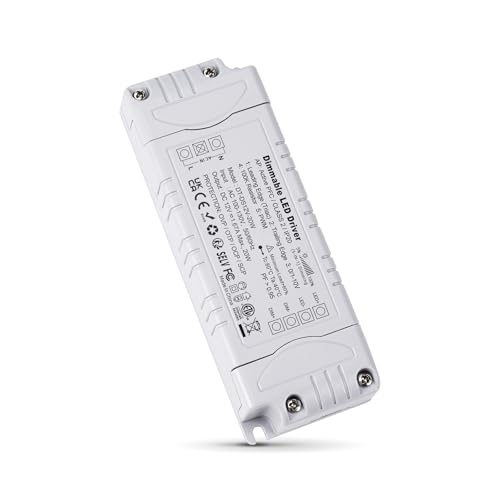
High Precision & Stable Dimming: AC 100-130V input, DC 12V constant voltage output, 50/60Hz, dimmable range 5%-100%. Supports multiple dimming ways: leading edge (Triac), trailing edge (Triac), 0-10V, 1-10V and PWM


POWERS 24V LED LIGHTING UP TO 300W – turns 100-130V AC house power into steady 24V DC for 24-volt LED strip, tape, cove and linear lighting, up to 300 watts (12.5 amps) from one driver. For 24V fixtures only: not for 12V or 48V lights, so check the voltage printed on your LED strip or fixture before you order
Why Some LED Ceiling Lights Can’t Dim (And Why Drivers Matter)
You’ll notice that some LED ceiling lights simply won’t dim no matter what switch you install, and that’s almost always because the driver inside only knows two settings: full power or nothing at all. The driver is the small electronic component that converts your home’s AC power into the steady, low-voltage current LEDs need, and if it lacks dimming circuitry, it can’t interpret a dimmer’s signals.
When you’re shopping, you’ll want to check whether the fixture includes a dimmable driver, since that’s what determines if you can actually lower the brightness or if you’re stuck with an on-off situation.
Recommended Products

RIGHT SHADE OF LIGHT: Adjust the light in your home with less guesswork, easily customize the LED bulbs among five shade preferences ranging from Soft White (2700K) to Daylight (5000K)
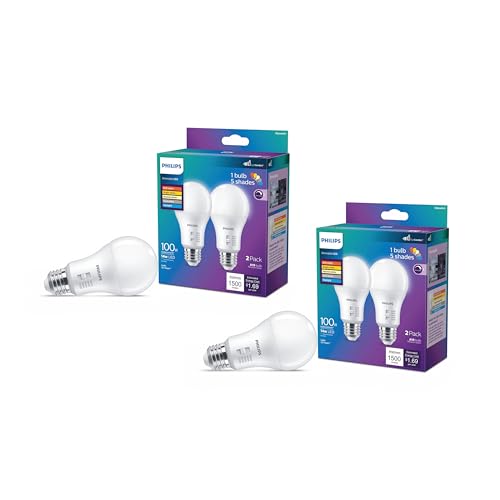
SMOOTH DIMMING: Adjust the light in your home with less guesswork, easily customize the LED bulbs among five shade preferences ranging from Soft White (2700K) to Daylight (5000K)

DESIGNED TO BE SEEN: Philips Vintage ST19 Clear Spiral Filament LED bulbs look just as good off as when they are on.
Driver Function Basics
Understanding how LED ceiling lights dim starts with the driver, a small component tucked inside your fixture that most people never think about. This device converts your home’s AC waveform into low-voltage constant current (DC) that LEDs need to function. Without the right driver, you’re stuck with full brightness or nothing at all.
Here’s what happens inside your fixture:
- Non-dimmable drivers only know ON or OFF, so they can’t respond when you twist a dimmer knob.
- Dimmable drivers use analog dimming or PWM to safely lower output without damaging the LEDs.
- Mismatched drivers overcompensate, causing flickering and early burnout.
- Your dimming success depends entirely on driver compatibility, not just having LEDs.
Check your driver type before buying dimmers; it’s a smart move that saves frustration.
Dimmable vs Non-Dimmable
Sometimes you’ll grab an LED ceiling light off the shelf, assuming it’ll dim just like your old bulbs, and that’s where things go wrong. Not all lighting is created equal.
If the box doesn’t explicitly say “dimmable,” you’ve likely got a non-dimmable LED driver inside that only knows on and off. It can’t interpret a dimmer’s reduced power signal.
Put that non-dimmable fixture on a dimmer switch anyway, and you’ll run into issues like flickering, buzzing, or a light that cuts out entirely. The driver simply isn’t built for variable input.
Even with a dimmable LED driver, you need to match your dimmer type to the driver’s requirements. Mismatch them, and you’ll see flickering at low settings. Check your specs before you buy, and you’ll avoid headaches later.
How LED Ceiling Lights Dim: PWM vs. Analog Methods
How exactly do your LED ceiling lights get darker when you twist that dimmer switch? You’re witnessing one of two methods at work inside your LED driver, the component that determines how dimming LEDs respond to your commands.
Your fixture likely uses PWM, which sends rapid DC voltage signal pulses to switch the LEDs on and off faster than your eyes can track. At 80% brightness, they’re actually on 80% of the time and off 20%. This happens around 50–90 times per second, so you see smooth dimming while your phone camera might catch flicker.
Alternatively, your LED driver might employ analog dimming, which simply lowers the electrical current flowing through the diodes. This avoids flicker issues, though you may notice slight color shifts at very low brightness levels.
Recommended Products

3 Selectable Color Temperatures via Back Slide Switch – Choose 3000K, 4000K, or 5000K using the slide switch on the back of the light fixture. This lets you select the right light for each space—warm white for bedrooms, neutral white for living rooms, or cool white for kitchens and offices—without guessing which color temperature to order. Note: Not compatible with dimmers.

✔ ENERGY SAVING – Feit Electric LED BR30 Light bulb provides up to 85.4% energy saving by replacing 65W with 9.5W; replace your old incandescent bulbs for a brighter and more energy-friendly space
Reminder: Color temperature, measured in Kelvin (K), determines the hue of white light. LOWER Kelvin values produce a WARMER, YELLOWER light, while HIGHER Kelvin values produce a COOLER, Whiter light.
Which Dimming Type Does Your LED Ceiling Light Need?
Why does your LED ceiling light flicker or refuse to dim when you install that new switch? You’ve probably grabbed the wrong type of dimmer for your fixture’s driver.
To dim an LED properly, you need a special dimmer that matches your light’s built-in method. Check your packaging or specs first. Most homes use TRIAC dimmers, which chop AC power for compatible LED drivers. It’s simple and common, but not universal.
For commercial-style recessed fixtures, you’ll likely see 0–10V dimming instead. This uses a low-voltage DC signal, 0V for off and 10V for full brightness, requiring its own control wires and compatible dimmers.
Using mismatched dimmers causes flickering, buzzing, and shorter lifespan. Always pair your LED ceiling light’s required method with the correct dimmer type.
Recommended Products

HIGH-QUALITY: Features metal cover designed for enhanced durability with corrosion and rust resistance. Advanced LED technology delivers instant-on brightness with no flicker, helping create clear, comfortable lighting with natural-looking color

【Customizable Light: Dimming + 3 Color Temps + 80% Savings】Adjust brightness from 5% to 100% via your wall switch (works with most dimmers). Choose your ideal color temp before installation: 3000K warm, 4000K neutral, or 5000K daylight. Built with integrated LED chips delivering 2640LM at just 24W—saving 80% energy compared to 240W incandescent. Flicker-free, no bulb replacements.

【Smart Ceiling Fan with Remote & APP】This flush mount ceiling fan pairs dimmable LED lighting with a high-performance DC motor. It features 6 wind speeds, a timing function and reversible airflow. Lightweight and decorative, it serves as both a cooling solution and stylish home decor. The fan and light support independent control; use the included remote or mobile APP to adjust settings freely from anywhere at home for a smarter, more convenient living experience.
How to Choose the Right Dimmer for Your LED Ceiling Lights
Before you buy any dimmer, you’ll want to confirm your LED ceiling light is actually labeled “dimmable” and check what driver or dimming type the manufacturer specifies, since not all LEDs play nice with every dimmer on the shelf. You’ll typically choose between TRIAC dimmers, which work great for most residential setups, or 0-10V dimmers if you’ve got modern recessed or commercial fixtures that need that DC control signal.
Picking the wrong type can leave you with flickering, buzzing, or a light that dies way too soon, so it’s worth double-checking the specs and grabbing an LED-compatible model that handles your total wattage without breaking a sweat.
Recommended Products

SLEEK, MODERN DESIGN: A modern edge-lit drop lens design gives this drop ceiling LED grid light a refined look with bright, energy-efficient illumination—a dramatic upgrade…
Check Compatibility First
Where do you even begin when picking a dimmer for your LED ceiling lights? You’ll want to check compatibility first, since not all dimmers are designed with LED technology in mind. Many modern dimmers are designed to deliver smooth dimming across a range of LED fixture types, but you need to verify your specific combination works together.
Look for dimmers compatible with a wide variety of LED drivers, and always confirm your ceiling light is explicitly labeled “dimmable” on its packaging or technical specs.
Here’s what to check:
- Match the dimmer type to your LED driver’s method: TRIAC for phase-cut systems, or 0–10V for drivers accepting that control signal.
- Replace old incandescent dimmers, which cause flickering, buzzing, or early LED failure.
- Verify your specific dimmer and fixture model appear on manufacturer compatibility lists.
- Check the dimmer’s rated wattage or fixture count to avoid overloading.
Select Proper Type
Once you’ve confirmed your LED ceiling light is actually dimmable, you’re ready to pick the specific dimmer type that’ll work best in your setup. Let’s explore your options.
You’ll want to match the dimming method to your fixture. TRIAC leading-edge dimmers work great for many residential recessed LED systems. For commercial setups or fixtures with dedicated low-voltage control, 0–10V dimmers send a DC signal where 0V means off and 10V means full brightness.
Check that your dimmer and light both specifically state “dimmable” and list compatibility. If you’re seeing flickering or buzzing at low levels, swap in an LED-compatible dimmer rated for LED loads rather than assuming the light can’t dim.
Verify the dimmer’s maximum wattage rating too, so you don’t overload it when you total up all connected fixtures.
Why Your Dimmable LEDs Still Flicker or Buzz
Why do your dimmable LEDs still flicker or buzz when you’ve already checked the box? The issue usually hides in the pairing between your LED driver and dimmer type. Even dimmable fixtures can struggle when you mismatch components.
Your LED driver might not play nice with your TRIAC dimmer, causing that annoying buzzing sound. You’re running a non-dimmable driver on a dimmer switch, which creates jerky output and flickering. PWM dimming at low settings leaves your lights ON just 20% of the time, making invisible flicker visible. Very low dimmer levels push your driver past its stable current range, so flickering increases near the bottom.
TRIAC leading-edge dimmers especially vibrate in fixtures, and they flicker more than trailing-edge options. Check your driver specs against your dimmer type, and you’ll solve most buzzing and flickering headaches.
Recommended Products

UNIVERSAL COMPATIBILITY: This driver works with Triac/Phase/MLV/ELV/0-10V/Potentiometer/10V PWM dimmers and is compatible with most AC wall dimmers, including popular brands like Lutron and Leviton, as well as many other household dimmers. It can be used for a variety of applications, including 24V LED Strip Lights, 24V Power Supply, LED modules, LED bulbs, and more

5-in-1 Forward and Reverse Phase Dimming: ELV / MLV / TRIAC / 0-10V / 1-10V / 10V PWM / Potentiometer.Versatile driver for most high-performance dimming applications: The Adaptive Pro 5-in-1 dimmable Class 2 drivers are designed to operate with any standard MLV / ELV / Incandescent TRIAC (forward phase) dimmer switch or can also be used with secondary side controls systems. Used commonly with Lutron and Leviton receivers and controls for secondary side dimming.

【UNIVERSAL COMPATIBILITY】This driver works with Triac/Phase/MLV/ELV/0-10V/Potentiometer/10V PWM dimmers and is compatible with most AC wall dimmers, including popular brands like Lutron and Leviton, as well as many other household dimmers. It can be used for a variety of applications, including 24V LED Strip Lights, 24V Power Supply, LED modules, LED bulbs, and more.
How Dimming Affects Your Energy Bills and LED Lifespan
When you dim your LED ceiling lights, you’re cutting back on the watts flowing into the driver. This means lower energy bills and less heat building up in your fixtures, which translates to real energy savings you can see on your monthly statement.
Dimming lets you reduce electricity use on demand, since power consumption drops proportionally with brightness. You’re not burning full watts when you only need soft, ambient light.
Your LED lifespan benefits too. Less heat stress means the driver and diodes age more slowly, though LEDs fade gradually rather than burning out suddenly.
Just pair your lights with a compatible dimmer. Mismatched hardware causes flickering and driver stress that shortens life. Avoid cranking dimmers extremely low, as unstable operation can actually strain components more than smooth, moderate dimming.
Recommended Products

See True Colors: Ultra Definition bulbs are equipped with a color rendering index of 95 (CRI95) bringing out the true colors of your home allowing you to enjoy natural lighting indoors.
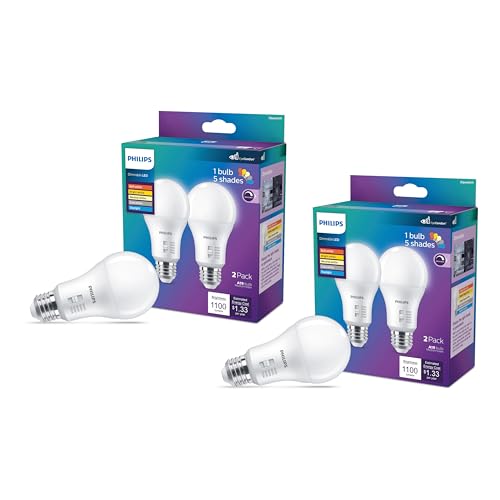
SMOOTH DIMMING: Adjust the light in your home with less guesswork, easily customize the LED bulbs among five shade preferences ranging from Soft White (2700K) to Daylight (5000K), all in one bulb

Daylight: Philips LED Dimmable A19 light bulbs offer comfortable lighting; At 5000 Kelvin the bulbs deliver bright, crisp color ideal for project and task lighting and to brighten larger spaces
When You Actually Need an Electrician for LED Dimming
Although swapping a light switch might seem like a quick weekend project, LED dimming gets tricky fast once you peek behind the wall plate. You need an electrician when your current dimmer isn’t explicitly rated for LED lighting, since mismatched dimmers cause flickering/buzzing or premature failure. If your fixture requires 0–10V control, common in commercial setups, you’ll need proper wiring rather than a standard TRIAC/phase-cut dimmer.
You should also call a pro when adding a dimmer changes electrical load or requires rewiring in the ceiling box, because overloading creates fire hazards. Integrated LED fixtures without built-in dimmers usually can’t be retrofit-dimmed safely without confirming driver compatibility first.
- Your dimmer isn’t LED-rated and causes flickering/buzzing
- The fixture needs 0–10V wiring, not a standard TRIAC/phase-cut dimmer
- You’re changing electrical load or rewiring ceiling boxes
- You notice poor dimming at low settings signaling driver compatibility issues
Recommended Products

Efficient & Bright: These A15 LED bulbs deliver energy-saving illumination equivalent to a 60W incandescent, using only 6W of power. They produce 620 lumens of neutral white light at 4000K, offering both brightness and efficiency.

Efficient & Bright: These A15 LED bulbs deliver energy-saving illumination equivalent to a 60W incandescent, using only 6W of power. They produce 620 lumens of daylight white light at 5000K, offering both brightness and efficiency.

Energy Efficient: Our E12 LED Bulbs are designed to be exceptionally energy-efficient, and only 6W LED can replace the 60W incandescent bulbs. With advanced LED technology, our LED ceiling fan light bulbs consume significantly less electricity compared to traditional incandescent bulbs, which not only brightens your space but also reduces the electricity bill. Making them a perfect choice for your lighting needs. (NOTE: Not dimmable, please do not use it with dimmer switch or dimmable socket.)
Leave a Reply