
You’re probably wondering when your baby will need to move out of that bassinet. Most families get about four to six months of use, but your baby’s weight and milestones matter more than the calendar.
You’ll want to check your model’s limit, usually 15 to 20 pounds, and watch for early signs like rolling or pushing up.
The changeover timing isn’t always obvious, though.
How Long Can Your Baby Sleep in a Bassinet?
Most babies sleep soundly in a bassinet for about four to six months, which gives you a manageable window to ease into parenthood. You’ll want to keep a close eye on three things during this stretch: age, weight, and movement.
Your bassinet comes with a manufacturer weight limit, usually around 15 to 20 pounds, so check your exact model. Hit that number, and it’s time to move on, even if you’re still in the first six months.
The same goes for mobility. Once your baby starts rolling, pushing up on hands and knees, or trying to sit, the bassinet becomes less stable. Remember, whichever comes first, age, weight limit, or those early movement milestones, signals the end of bassinet sleep.
5 Signs Your Baby Has Outgrown the Bassinet

You’ll want to watch for three clear signals that your little one’s bassinet days are ending: they’ve hit that 15, 20 pound weight ceiling most models carry, they’re suddenly rolling or pushing up on hands and knees with real determination, or they’re simply looking cramped and uncomfortable at 4, 6 months old.
These milestones matter because bassinets are built for tiny, mostly still newborns, not active babies who need room to stretch and move safely. Once you spot any of these signs, it’s time to start shopping for a crib or playard that’ll keep them secure through the next growth phase.
Weight Limit Reached
When you’re checking whether your baby has outgrown the bassinet, weight is often the clearest signal, and most models cap out around 15 to 20 pounds. You should know your bassinet weight limit to safely use a bassinet, since exceeding it risks stability.
Watch for these signs:
- Your baby hits or passes the manufacturer weight limits
- The bassinet feels wobbly or less sturdy than before
- Baby seems cramped, even without other milestones reached
- You’ve forgotten to check your specific model’s thresholds
Don’t wait for an age milestone if the scale says otherwise. Different brands vary, so dig out your manual. If your little one’s already over the line, move to a crib or playard right away. It’s a great choice for keeping sleep safe and sound.
Mobility Milestones Met
Weight isn’t the only thing that ends bassinet days. You’ll need to move on from a Bassinet as soon as you notice your baby start rolling, since that movement changes everything about sleep safety. Most little ones hit this window around 4 to 6 months of age, though some get there earlier.
Watch for pushing up on hands and knees, strong scooting, or repeated sit-up attempts inside that shallow space. These milestones mean your baby needs the extra room and lower height of a crib or playard, even if they’re well under the weight limit.
Many bassinets sit high off the ground with limited sidewalls, so early reaching and pulling creates real instability risks. Check your manufacturer’s guidance, but trust what you’re seeing: movement milestones matter more than numbers on a scale.
Physical Size Exceeded
Although most bassinets list a weight limit between 15 and 20 pounds, you’ll want to grab your manual and double-check the exact number for your model, since those figures vary quite a bit from brand to brand. You’ll know it’s time to move from the bassinet to a crib when physical signs start stacking up.
Watch for these clear indicators:
- Your baby’s head and feet press firmly into the sides, leaving no wiggle room
- The mattress shows gaps or poor fit as your little one shifts around
- Your baby pulls up on the sides, creating real fall risk
- They look visibly cramped, even if they haven’t hit the exact weight number yet
Most babies outgrow bassinets around 4 to 6 months, so you’ll want to plan that change early. Following safe sleep practices means moving them before they get too big, not right at the limit.
Bassinet Weight Limits and Age Cutoffs Explained
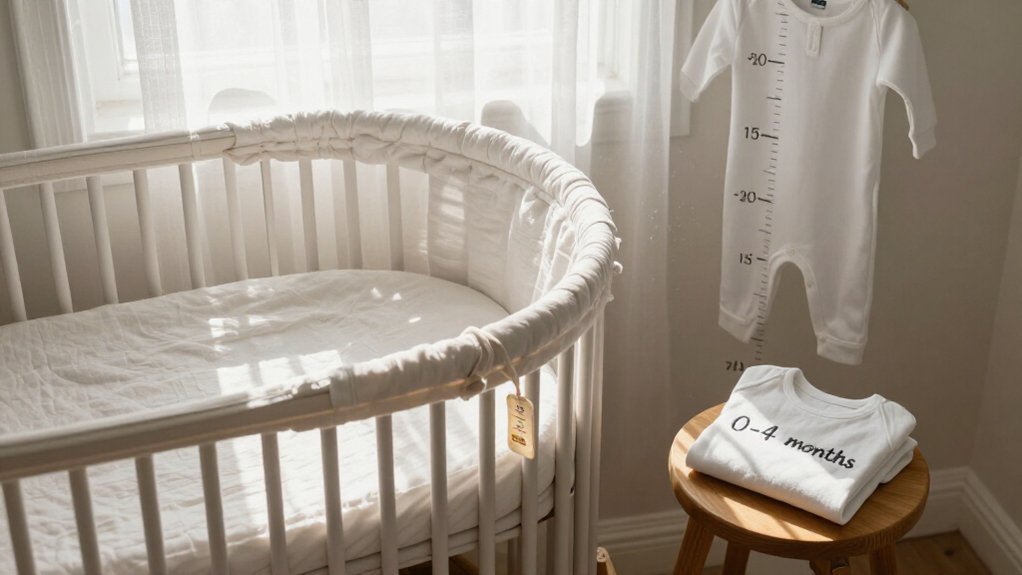
At around 4–6 months, you’ll notice your baby getting more active, and that’s usually when it’s time to start thinking about moving them out of the bassinet. Most manufacturers set bassinets weight limits between 15–20 lb, and you’ll want to follow whichever number is lower for your specific model. Age cutoffs help reduce sudden infant death syndrome (SIDS) risk, but they’re just general guidance.
Stop using the bassinet immediately if your baby starts rolling over, pushing up on hands and knees, or trying to sit up, even if they’re still under the weight limit. Pulling up to standing or frequently reaching the side edge means they’ve outgrown it too.
Check your manual for exact height and weight limits; those specifics are the real safety rules.
Recommended Products

YOUR ON-THE-GO SOLUTION: As a parent, we know life takes you different places. So, we designed this Snuggle Nest Bassinet to be lightweight, portable, and have a tool free set-up. Simply fold it up, and off you go!
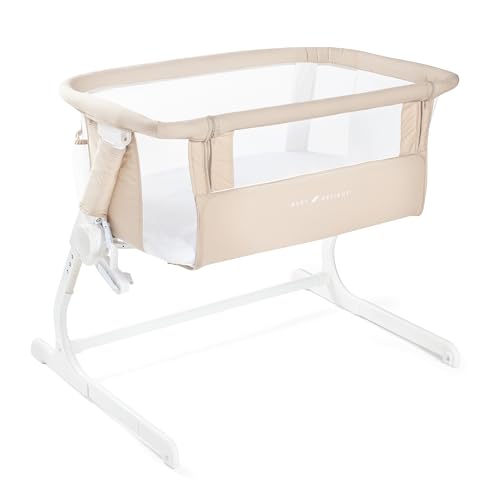
MAXIMUM SAFETY: Sleep soundly knowing your baby is safely nestled in the bedside sleeper. Anchors at the bottom firmly secure the bassinet to your adult bed to make sure it stays snug and in place. Baby Safety Alliance Certified.
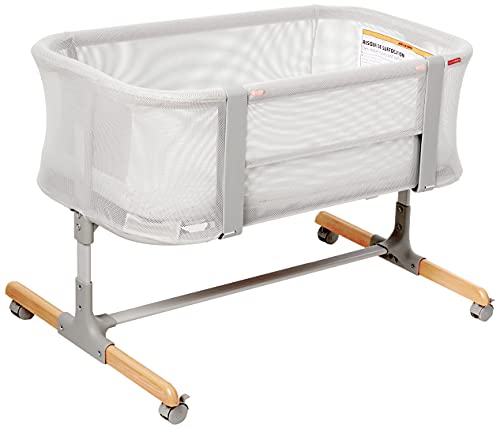
Featuring two ways to use it: bedside sleeper or stand-alone bassinet, our 2-in-1 sleep solution keeps baby comfy and close
After the Bassinet: Crib or Playard?
Once your baby hits that 4 to 6 month mark or starts pushing up on hands and knees, you’ll need to decide between a crib or a playard for the next sleep stage.
A full-size crib, which typically measures about 28 by 52 inches with a mattress height you can lower as baby grows, offers the most long-term value for nightly sleep. If you’re tight on space or travel often, a playard with a firm, flat mattress and breathable mesh sides can work great; just double-check it’s specifically designed for safe infant sleep rather than just playtime.
Recommended Products
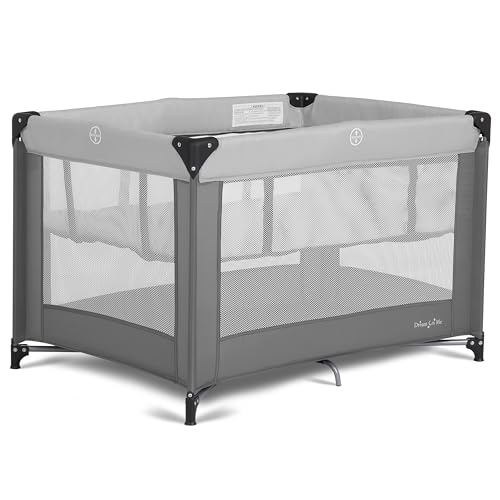
2-in-1 DESIGN WITH DETACHABLE BASSINET – Includes an easily removable bassinet that provides a comfortable, elevated sleeping space for newborns. Recommended for infants up to 15 lbs, 5 months of age, or until your baby begins to roll over.
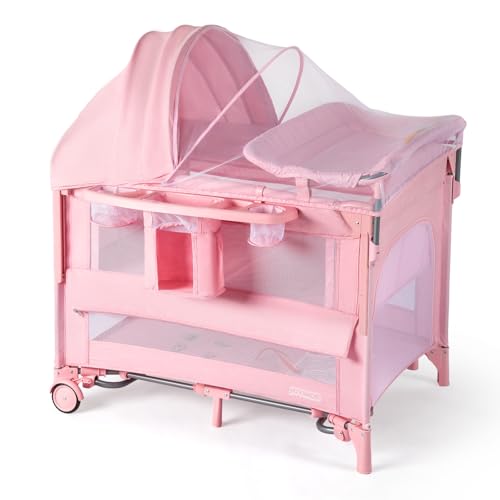
9-in-1 Design to Simplify Baby Care: Make room for your baby without filling your home with separate pieces of gear. This multifunctional bedside bassinet offers four modes—baby bassinet, bedside sleeper, gentle rocker, and baby playard—plus practical accessories changing station, storage shelf, music center, hanging toy and mosquito netto keep everyday changing, soothing and storage needs in one convenient place.
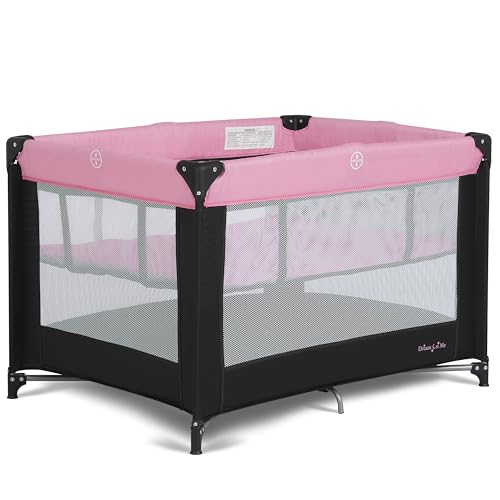
2-in-1 DESIGN WITH DETACHABLE BASSINET – Includes an easily removable bassinet that provides a comfortable, elevated sleeping space for newborns. Recommended for infants up to 15 lbs, 5 months of age, or until your baby begins to roll over.
Crib Transition Timing
When your baby starts pushing up on their hands and knees or rolling over with confidence, you’ll know it’s time to move them out of the bassinet. Most parents plan this crib transition around 4–6 months old, though you’ll want to act sooner if your little one hits that 15–20 lb weight limit or shows early mobility skills.
Watch for these clear signals that the bassinet days are ending:
- Your baby rolls over consistently during sleep
- They push up on hands and knees, ready to crawl
- They grab the sides and try pulling themselves up
- They’ve reached the manufacturer’s weight limit
For an easier change, start with daytime naps in the crib using your same bedtime routine. You’ll want a firm, flat mattress with a fitted sheet only, keeping pillows, blankets, and toys out of the sleep space to reduce suffocation risks.
Playard Versatility Benefits
If you’re weighing what comes after the bassinet, a playard is a solid option that pulls double duty without eating up extra space or budget. You get a sleep space and a contained play area in one setup, which means fewer changes for your baby throughout the day.
When deciding between a crib or playard, consider your room sharing plans. A playard’s mesh sides improve airflow, and its compact footprint fits nicely beside your bed. Many models include a removable bassinet attachment for newborns, so you’ll simply remove it once your baby grows. This creates continuity without buying new gear.
You’ll appreciate the extra height and space compared to a bassinet as your baby starts sitting up. Just keep the mattress level, use only the manufacturer insert, and skip loose bedding, pillows, or toys.
How to Set Up Your Baby’s New Sleep Space
Because your baby will outgrow the bassinet faster than you’d expect, you’ll want to get that crib or playard ready well before the first night in the new space. You’re building a safe sleep environment that’ll carry your little one through the bassinet stage and beyond.
Ensure the mattress is firm, flat, and fits snugly with zero gaps around the edges. Dress the surface with only a fitted sheet, no loose blankets, pillows, bumper pads, or stuffed animals. Check that mesh panels or breathable materials aren’t blocked by bedding or positioners. Keep cords away and maintain airflow around the entire sleep area.
Set the room temperature so it’s comfortable, not warm, since overheating poses real risks. When everything’s ready, you can start putting baby down for naps in the new space first, using familiar cues like white noise and dim lights, a good choice for easing the transfer.
Recommended Products

YOUR ON-THE-GO SOLUTION: As a parent, we know life takes you different places. So, we designed this Snuggle Nest Bassinet to be lightweight, portable, and have a tool free set-up. Simply fold it up, and off you go!

Local and Safe – We are a US company and design and test our products in New Jersey. We have been trusted by parents for over a decade, and this bassinet meets or exceeds all US safety regulations for side-sleeper bassinets.
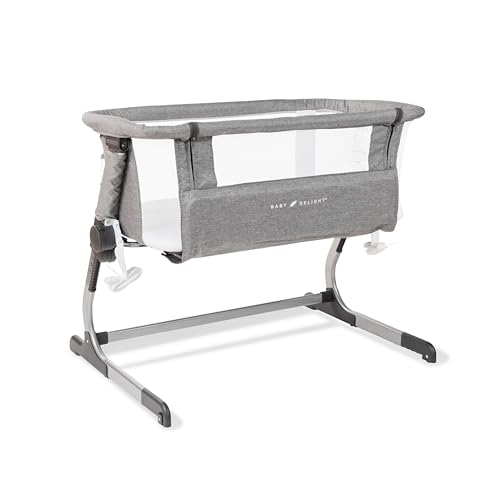
MAXIMUM SAFETY: Sleep soundly knowing your baby is safely nestled in the bedside sleeper. Anchors at the bottom firmly secure the bassinet to your adult bed to make sure it stays snug and in place. Baby Safety Alliance Certified.
How to Move Your Baby From Bassinet to Crib
Once your baby hits that 4–6 month window, or starts rolling and sitting up sooner, you’ll need to make the shift to a crib, which typically measures about 52 inches long, 28 inches wide, and has mattress heights you can lower as they grow. Check your bassinet’s manufacturer weight limit, often around 15–20 lb, and move immediately if your baby is approaching it.
Start shifting your baby with daytime naps first. Keep the same bedtime routine, bath, book, lullaby, and place them on their back on a firm, flat mattress with only a fitted sheet, following American Academy of Pediatrics (AAP) safe sleep guidelines.
If the bassinet to crib switch gets rough, pause and retry in 1–2 weeks. Use a baby monitor for reassurance those first nights.
Recommended Products

[4-in-1 Versatile Design] This pack and play combines a baby playard, newborn bassinet, insert bassinet, and changing table in one — giving parents everything they need from newborn to 36 months without buying multiple products.

√ Cute Spiral Activity Toy: The baby car seat toy is made of plush, bright and mixed fabric spiral elephant design, including 4 sensory toys: musical owl, flower teeth-er, rattle sheep, bb ladybird with distorting mirror.

【𝟐-𝐈𝐍-𝟏 𝐁𝐀𝐒𝐒𝐈𝐍𝐄𝐓 & 𝐁𝐄𝐃𝐒𝐈𝐃𝐄 𝐒𝐋𝐄𝐄𝐏𝐄𝐑】 Designed for 24-hour adaptability, BEKA bedside bassinet combines two essential functions in one compact frame:
Leave a Reply