You need to start by pulling everything out, because you can’t see what you’re working with until the closet’s empty.
Measure the space: height, width, and depth, so you know if a 12-inch shelf or an 8-inch bin will actually fit.
Most small closets have about 24 inches of depth, which means standard hangers work, but bulky items eat space fast.
You’ll want to group what you own by type, not by color, since that tells you how much hanging rod versus shelf space you need.
The real trick is planning vertical storage: stackable shelves at 10 to 12 inches high, under-hang bins for shoes, and slim hangers that trim two inches off each garment’s footprint.
If you’re stuck on what comes next, there’s a specific order to putting it all back that keeps daily items reachable without creating new piles.
Start With a Ruthless Closet Purge
Before you can make any real progress on your small closet, you’ll need to strip it down to what actually matters. You’re doing a ruthless purge first, removing more than half of your clothes, especially items that no longer fit or aren’t in style. You’re only keeping pieces you like and actually wear.
You’re taking everything out for a full “blank slate” reset. You’re sorting into clear categories: blouses with blouses, jeans with jeans, dresses with dresses. You’re letting go of the excess before deciding what earns its spot back.
You’re eliminating “junk drawer” storage behavior by placing keep-items back by category where they naturally belong. This prevents overflow from becoming lost piles.
Even in tight spaces like a 5x3x8 closet, purging creates baseline capacity for your closet makeover. You’re viewing excess as fixable, learning how much easier getting dressed becomes with fewer, better-fitting pieces. Your closet looks clearer already.
Recommended Products

Product Size: To ensure a perfect fit for your wardrobe, please pay close attention to the product dimensions before making a purchase. Each storage box layer measures 16.73 inches in length, 13.11 inches in width, and 7.28 inches in height (equivalent to 42.5 cm x 33.3 cm x 18.5 cm). Double-checking these measurements will help you avoid any compatibility issues.

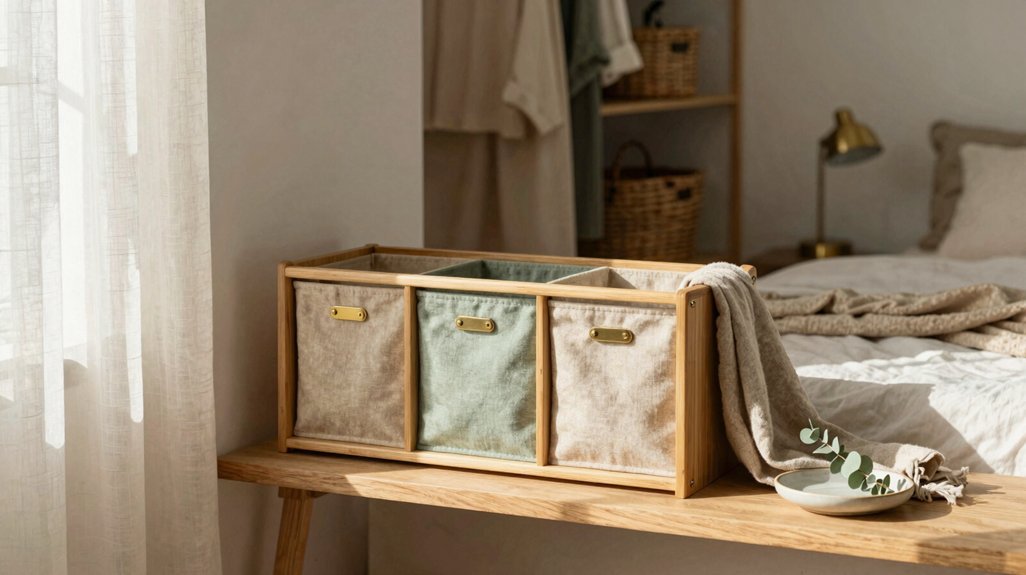
Sorbus Closet Shelf Organizer: Sorbus stackable storage baskets are ideal for neatly organizing clothes, linens, toys, and more with easy-access, open-front design.
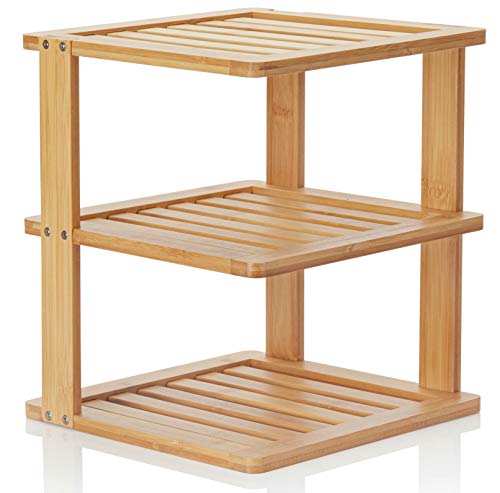
Space-Saving Design: Add more space on your counter tops with this 3-tier shelf measuring 10 x 10 inches and 11.5 inches high
Identify What’s Broken in Your Current Setup
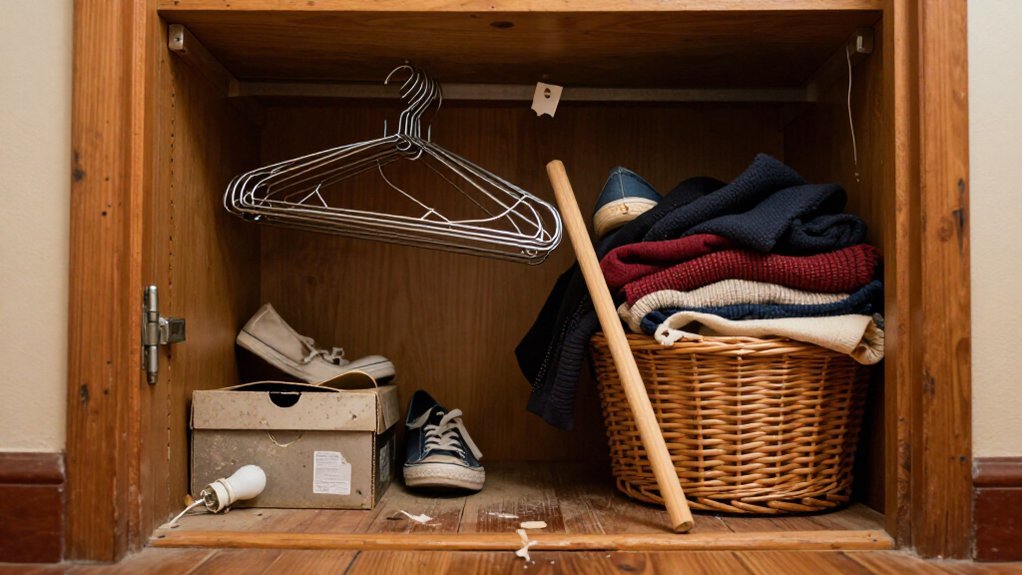
Why does your closet still feel cramped even after purging? Part of the problem is that you’re working around a broken system, not fixing it. Start your Closet Organization by pulling everything out and re-categorizing, blouses with blouses, jeans with jeans, so you can spot what’s actually failing instead of repeating the same “junk drawer” pattern.
Stop working around your broken closet system—pull everything out, re-categorize by type, and finally see what’s actually failing.
Small closet issues usually hide in three places:
- Prime back wall space that’s become a dead zone for items you can’t reach
- Rickety wire racks that sag and waste vertical real estate you could use
- High shelves where stacks tumble and sweaters stay out of rotation
Check for side-hung clothes blocking your longer back wall; they’re often forgotten. Swap mismatched storage, like shower rings for scarves, with balanced pants-hanger solutions that actually hold. Your closet storage works better when geometry matches daily habits.
Recommended Products

Simple Setup: Made with sturdy 2mm cardboard sides,and strong reinforced handles, this organizer stays upright and can be expanded for immediate use. With 12 compartments and seamed bottom (keeps your shoes from sliding), we have thoughtfully designed this organizer for you.

SPACE-SAVING DESIGN: 8-tier hanging organizer maximizes vertical closet space with multiple storage compartments

Maximizes Vertical Closet Space: 10 tiers of cubbies for you to make full use of narrow closets or storage areas; helping you organize shoes, clothes, and other items without taking up floor space
Plan Your Layout Around What You Actually Own
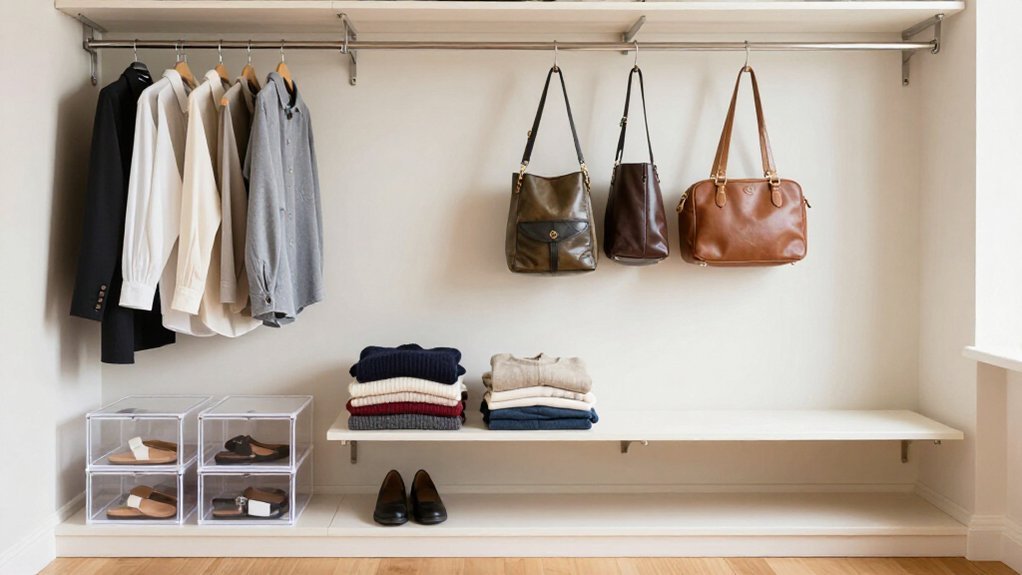
Before you buy a single shelf or rail, grab a tape measure and sketch out your closet’s actual dimensions, something like 5×3×8 feet, so you’ll know exactly what adjustable systems will fit without blocking your access.
Then pull everything out and sort it into real categories, pants, shirts, dresses, sweaters, shoes, plus whatever else you’re actually storing like board games or that small luggage you keep forgetting about. You’ll build a layout that works because it’s built around your stuff, not some imaginary Pinterest closet you’ll never have.
Recommended Products

Heavy Duty Load Capacity: Thickened ABS plastic; each hanger holds up to 30 lbs; supports winter coats, denim, sweaters, hoodies and shirts without bending, warping or cracking; wrinkle-free

High Quality Wardrobe Storage Hangers: Our pants hangers are made of high-quality anti-rust metal material, not easy to bend, can bear heavy clothes, and metal hangers are more durable than wooden or plastic hangers. Clothes hanger has rubber tips on the exposed edges to avoid damage and cuts, and the non-slip clips have soft rubber to keep clothes from getting pinched.

Non Slip Foam Padded Hangers NO Shoulder Bump: Each metal swing arm of the hanger is wrapped by thick and soft EVA foam, which will not scratch clothes or people. Its good anti-slip properties keep your clothes firmly on the hanger. And the hangers that don't leave shoulder bumps because the soft foam material help keep the natural shape of clothes. Besides, EVA foam will not degrade or fade over time. NO worry about it fading or linting like velvet hangers or felt hangers.
Inventory Your Categories First
Since you’re working with a tight 5×3×8 footprint, you’ll want to know exactly what you’re storing before you buy a single shelf or rod. Pull everything out and sort into real categories: blouses together, jeans together, dresses together. You’ll quickly see what you actually love versus what would just take up precious space.
Plan around bulky versus slim items. Stack sweaters rather than hanging them, freeing rod space for shirts and pants. Don’t forget non-clothing storage competitors, like games, small luggage, or seasonal bins. Add dedicated zones for longer items.
Use your inventory to assign homes for daily access. Overflow happens when you ignore reach limits from a high top shelf, or when too much lands in “miscellaneous” storage.
- See your folded sweaters forming neat, color-coded towers.
- See your dresses hanging freely without crushing hems.
- See clear bins labeled “winter accessories” sliding onto upper shelves.
Measure Before You Buy
Because you’re working with just 15 square feet of floor space, every inch matters when you’re picking out shelves and rods. Measure before you buy, or you’ll end up with closet systems that don’t fit your small space.
Grab a tape measure and record your exact dimensions, like 5x3x8, plus any constraints such as a super-high top shelf or awkward corners. Sketch a rough layout showing where pants and shirts will hang, where sweaters will stack instead of hang, and how longer items fit.
Make sure you account for shelf depth, too; 22.5-inch shelves might leave items unreachable in tight layouts. Inventory what you actually own, then translate that into zones and quantities. If you’re using modular products, expect some trial-and-error returns to get everything fitting just right.
Maximize Every Inch: Vertical Space, Sides, and Hidden Corners
When you’re working with a small closet, every square inch matters, so you’ll want to think vertically from the start. Install a top shelf, but keep it low enough so you’re not creating a “super high” zone where stuff topples down. Use vertical strips first, since you’ll want to move rails and shelves around later when your needs change.
Don’t ignore the side areas, those hidden corners where the back wall stretches past your closet opening. Add side shelves there for board games or outdoor gear you barely touch, so you’re not dragging everything to the middle just to reach them.
Picture your organized closet:
- A low, reachable top shelf with labeled bins stacked neat and secure
- Side shelves tucked behind the door frame, holding camping gear you grab twice a year
- Shoe racks and a small dresser filling the gap beneath your hanging shirts
Switch bulky sweaters to stacking on shelves instead of hanging them, which frees up room for shirts and pants that actually need the rod. Add under-the-hang storage, too, like a cube or bookshelf, plus multiple shelf levels so your everyday items don’t overflow.
When you’re picking shelf lengths, measure carefully: 15″ wide by about 22″ long works well, but 22.5″ might block your access depending on your closet depth.
Recommended Products

Double-check the size:16.3"X10.2"X21.5" [4 Tier Black Shoe Rack] Free standing shoe rack is made of sturdy waterproof non-woven fabric layer, reinforced plastic connectors and black thickened metal tubes. Simple structure, but strong load-bearing capacity and good stability

Enhanced Load-Bearing Capacity: The shelves are more densely arranged, which increases the load-bearing capacity, and the smaller gaps are more suitable for the storage of items

【Unique 4-Tier Custom Design – 3 Wood + 1 Mesh】 3 sturdy wood shelves for heavy support + 1 high-density breathable mesh shelf to prevent odor; all 4 shelves fully interchangeable & height-adjustable – swap any position to fit any bag size perfectly in your purse organizer stand
Still No Room? Rotate, Relocate, and Rethink Your Categories
Even after you’ve squeezed every inch from your closet, you might still find yourself staring at a rod that’s packed tight or a floor you can’t actually walk on.
Rotate your clothes seasonally, moving out-of-season items to under-bed storage or your basement so you’re only keeping what you actually wear right now. Relocate bulky sweaters into accessible under-bed bins with top-opening lids, so you can grab one quickly when it’s chilly.
If you share the closet, rethink your categories by assigning each person distinct zones based on different needs, long items versus daily tops, rather than letting everything collide. Stop forcing folded basics onto the top shelf; use dresser space instead to free up closet capacity for hanging pieces that actually need it.
Recommended Products

Large Size & Capacity – Our over the door organizer is made of breathable, durable, and low-odor non-woven fabric. With 5 roomy pockets (14.5 x 6.5 x 6.5 in) and 4.5 in spacing, this over the door organizer provides ample storage for different items, supporting up to 20KG.
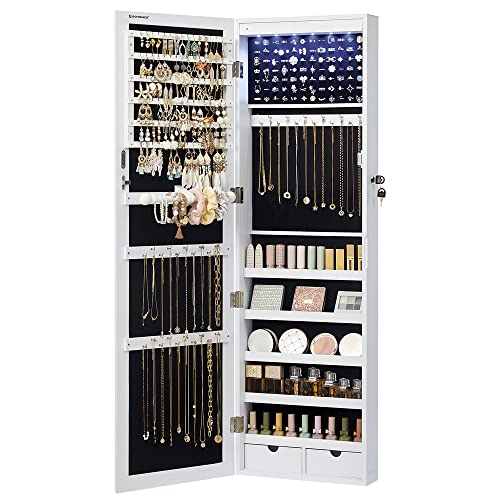
[Specialized Jewelry Cabinet] You deserve this well-constructed and designed jewelry cabinet from SONGMICS. The solid MDF body is for long-term use and the full-length mirror is framed to avoid leaving fingerprints on it every time you use the cabinet
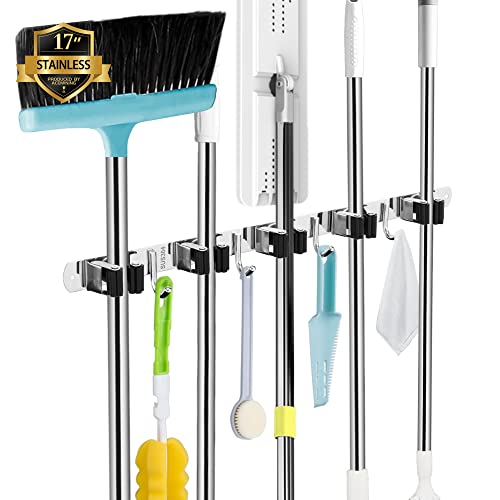
Strongest Hold & Non-slip Design: The broom and mop holder wall mount is made of rustproof 304 stainless steel, more durable than plastic materials, holds items up to 30 lbs when secured with screws (or 8 lbs if secured with self-adhesive). The broom hanger combines with anti-skid silicone, preventing scratches, slots are double rubber gripped to help keep a stronger hold on your items.
Organize Your Small Closet for Zero Dollars
Before you spend a dime on fancy organizers, give your closet a hard reset that costs nothing. Pull everything out, toss empty cardboard boxes to reclaim air space, and re-home loose office supplies so you can see what you truly have before reorganizing. This zero-dollar hard reset works whether you’ve got a tiny reach-in or a cramped walk in closet.
- Wrap leftover cardboard boxes with scrap paper to create instant bins for folded items.
- Repurpose grocery crates into a quick shoe storage system that beats a wobbly pile.
- Roll an old dresser under your bed with casters for bonus drawer space.
Use bins and baskets you already own first. Skip fancy sweater bags, reach for lidded bins instead. You’re building function from what you’ve got, and that’s a great choice.
Recommended Products

【Upgraded Wide Mouth Design】15.7"x11.8"x8.7"(L x D x H) in size,these clothing organizers are suitable for most size of clothing especially big clothes, pants and jeans.Due to the appropriate depth, the basket will not protrude when placed in the wardrobe.

What You Will Get: One large rattan box (12" x 8" x 5"), and one small rattan box (10" x 6" x 3.5"). Perfect for storing jewelry, keepsakes, paper rolls, clothes, and more, helping you maintain a tidy and clutter-free space.

Compact design for small spaces: At 6 inches tall, these shorter shelf dividers are perfectly sized for organizing clutches, evening bags, mini-purses, and folded items on lower shelves without blocking visibility or feeling bulky in tight closets
Make It Last: Simple Habits for a Tidy Closet
You don’t need to obsess over your closet every single day, but you’ll keep it looking sharp if you build a quick daily reset routine, like spending two minutes putting clothes back on their labeled hooks or shelves before bed.
When the seasons change, rotate your wardrobe by storing off-season items, such as bulky winter coats or sandals, in under-bed bins or those high shelves you reserved for seldom-used stuff, which keeps your 5x3x8 space open and practical. These small, regular habits prevent the dreaded “clothing avalanche” and make your organized closet actually stay organized without feeling like a second job.
Recommended Products

【High Quality Material】- Door shoe organizer hanging sturdy structure and the panel connectors of closet organizers and storage hanging with a foldable design are made of sturdy ABS to securely join the panels which Lightweight,durable and high-quality,suitable for long term gravity suspension.Dust is not easy to enter,and is durable.

Large Capacity: Measuring 16.5 " (42 cm) x 7.5 " (19 cm) x 47.4 " (120.5 cm), this over the door shoe organizer features 10 variously sized pockets that can hold 12 pairs of shoes, including sneakers, slippers, and women’s heels. The bottom pockets are designed with a thickened base, spacious enough for two pairs of mid-calf boots

Cabinet&Hanging Storage: Come with 4 sturdy large hanging hooks, you can use them to hang the basket on the closet rod or garment rod. Moreover, you can use it in flat on a surface, to store items anywhere like dorms, bathrooms, bedrooms, closets, under the bed, in the garage or in the pantry. Hooks fit in standard closet rod/bar up to 1.65 inch diameter.
Daily Reset Routine
Once you’ve finished organizing your small closet, keeping it that way comes down to small, consistent habits rather than marathon cleaning sessions. Your daily reset routine doesn’t need to be exhausting. You only need about 10 minutes when you spot papers creeping back or a catch-all pile forming, not a full overhaul every day.
Try following this simple rhythm:
- Check your closet every 30 days, restoring items to their original zones before chaos spreads.
- Practice “don’t put it down, put it away” the moment items come out, so clutter never rebuilds.
- Reset the highest-priority areas first, like the back wall and blocked-access zones, protecting your closet’s capacity.
If something wouldn’t work in a particular part of the closet, focus on getting rid of it quickly rather than letting mismatch and overflow take over.
Seasonal Wardrobe Rotation
Because your closet’s square footage stays fixed while your clothing collection probably doesn’t, rotating pieces by season is the single best way to keep daily dressing simple. You need a seasonal wardrobe rotation plan that moves out-of-season items twice yearly, freeing space for what you’ll actually wear.
Push rarely used pieces to the top shelf; they’re fine sitting high since you won’t touch them for months. Store bulky sweaters in under-bed storage with pull-out tops or rolling boxes, not zipped bags, because you’ll swap them back in eventually.
Use clear, labeled bins so you spot contents instantly without digging. Stack folded items instead of hanging to match your layout limits. This keeps daily access easy and prevents overflow from burying your favorites.
Leave a Reply