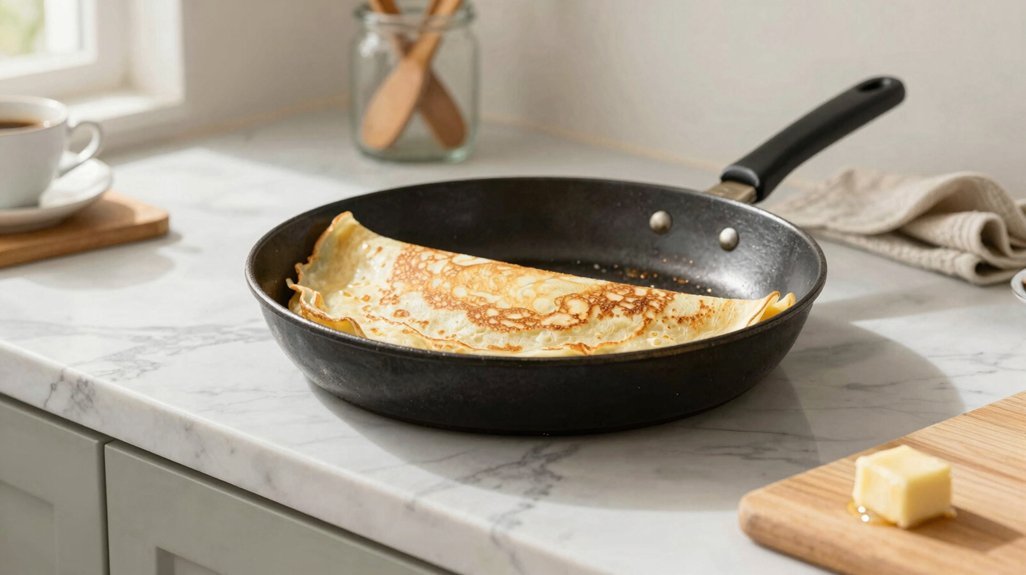
You don’t need a bulky steamer to get crisp, wrinkle-free curtains. A hot shower, a simple kettle, or even your hair dryer can do the trick in under 15 minutes.
Each method works best with specific fabrics and curtain weights, so you’ll want to match your approach to what you’ve got hanging.
The bathroom steam trick handles thick velvet panels, while a spray bottle suits lightweight sheers.
But before you grab any tool, there’s one quick test that’ll save you from ruined fabric.
Steam Curtains in a Steamy Bathroom (No Tools Needed)
Since you don’t have a handheld steamer lying around, you can still get those wrinkles out using nothing but your bathroom and some hot water.
You’ll need to steam curtains without any special tools. Hang your curtains over or near the bathtub, close every window and door, and run the hot water tap for about 10 minutes. The steam fills the room, relaxing the fibers naturally.
Keep that steamy environment going long enough for wrinkles to soften, then let the curtains dry right where they hang. Gravity and the fabric’s own weight do the work of pulling creases out. If you spot stubborn fold lines, smooth them by hand while they’re still warm. This helps redistribute the fabric.
Steaming curtains works great for most materials, but check the care label first. Avoid moisture or heat warnings mean you should skip this method. Test a hidden spot if you’re unsure.
Don’t expect instant perfection; creases fade as the fabric fully dries, so patience pays off.
Recommended Products

You will receive two 33.8 fl oz bottles of Downy Wrinkle Releaser All-in-One Spray: Wrinkle Remover, Static Remover, Odor Eliminator, Fabric Refresher, and Ironing Aid; Brought to you by Nehemiah Manufacturing

Fight Wrinkles & Static On-the-Go: Downy wrinkle release spray is ideal for busy lifestyles. Spray, tug, and smooth to eliminate wrinkles without ironing. This all-in-one anti wrinkle spray for clothing fights static cling, making it a must-have for travel and everyday use – keeping your fabrics looking fresh and crisp. Brought to you by Nehemiah Manufacturing.

Fight Wrinkles & Static On-the-Go: Downy wrinkle release spray is perfect for busy lifestyles. Just spray, tug, and smooth to remove wrinkles without ironing. This wrinkle spray for clothing also fights static cling, making it essential for everyday use. Brought to you by Nehemiah Manufacturing.
Steam Wrinkles With a Kitchen Kettle
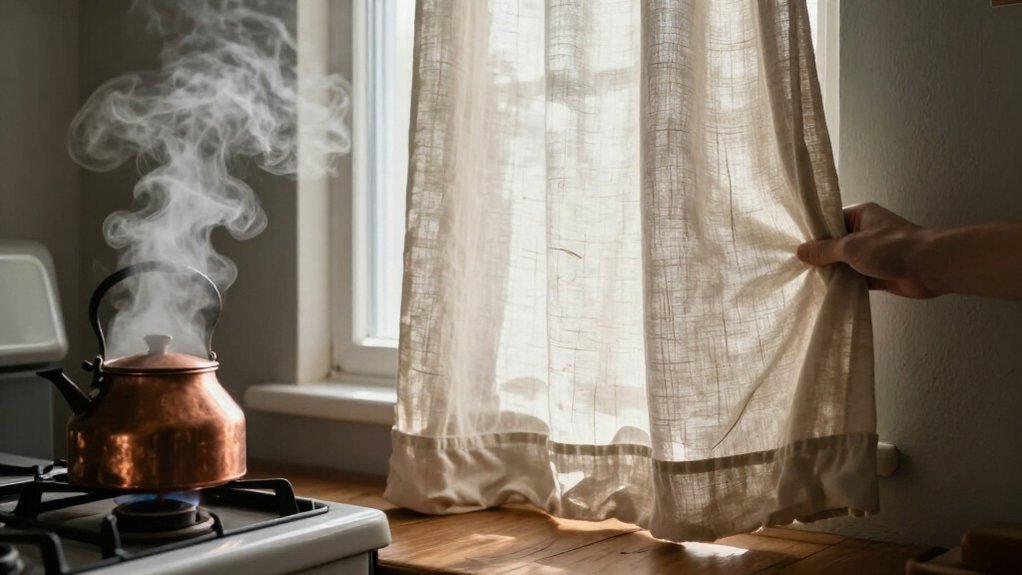
You can set up kettle steam by filling a standard 1.7-liter kitchen kettle with water, bringing it to a steady simmer, and holding the spout about 6 to 12 inches from your curtain so the steam drifts onto the wrinkled fabric. You’ll want to work from the top edge downward through both sides, using short bursts of steam while you gently smooth with your free hand, which keeps the fabric from getting too wet and lets wrinkles migrate out evenly.
For thicker cotton or linen, you might need slightly longer steam on stubborn creases, but keep the spout moving continuously to prevent uneven dampness or spotting. Always test a hidden corner first on delicate materials like sheers, silk, or velvet since kettle steam runs stronger than most garment steamers.
Recommended Products

LUXURY AESTHETIC: Indulge in pure luxury with our black velvet shower curtain. Crafted for busy professionals and design lovers, this 260 GSM heavyweight fabric brings a moody, high-end vibe, turning your master or guest bathroom into a premium private sanctuary.
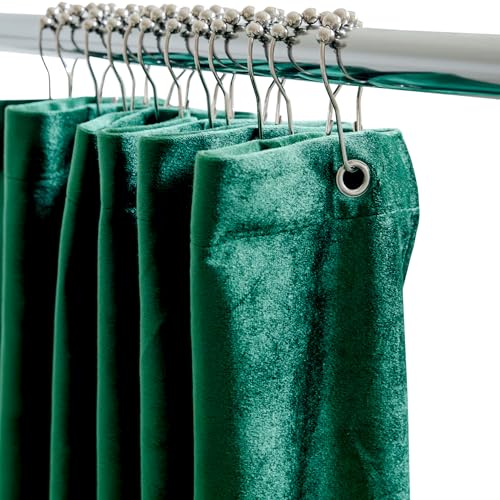
Brings a Touch of Class to Your Bathroom: The velvet fabric shower curtain will make your bathroom look and feel more elevated; And don't worry, the fabric will keep its buttery soft, plush texture even with regular exposure to moisture and steam

LUXURY AESTHETIC: Indulge in pure luxury with our gold velvet shower curtain. Designed for those who love glamorous decor or a sophisticated Art Deco-inspired aesthetic, this 260 GSM heavyweight fabric turns your bathroom into a radiant, high-end sanctuary with a touch of modern opulence.
Kettle Steam Setup
If you don’t have a steamer handy, a basic kitchen kettle can tackle those curtain wrinkles just fine. You’ll want to fill a stovetop kettle with distilled water to prevent mineral buildup from coating your curtains with residue. Regular tap water works too, but distilled water keeps things cleaner over time.
Bring the water to a rolling boil, then carefully move the spout close enough to direct steam onto the wrinkled fabric without actually touching it. Keep that spout about 6 to 12 inches away to reduce any heat damage risk.
Test a hidden corner first, especially if you’re working with silk, velvet, or sheer fabrics, since these materials need gentler treatment and can be damaged by direct, concentrated steam.
Kettle Steam Technique
Once the kettle whistles and steam starts billowing, you’re ready to smooth out those curtains. Hold the kettle carefully, keeping the nozzle about 6 to 12 inches from the fabric so steam flows toward it without splashing or touching metal directly.
Work from the top edge down each side, moving slowly until wrinkles visibly loosen. Use your free hand to smooth the fabric while steam hits, helping set folds in place. Tackle small sections for the cleanest results.
Open a window for light airflow, so moisture dissipates faster and curtains dry fully while hanging. This reduces re-wrinkling.
If creases remain after drying, or after about 24 hours, repeat the kettle steam technique with closer attention to lower areas near the bottom. You’ll get wrinkles out of curtains without much fuss.
Spray and Smooth: The Water Mist Method
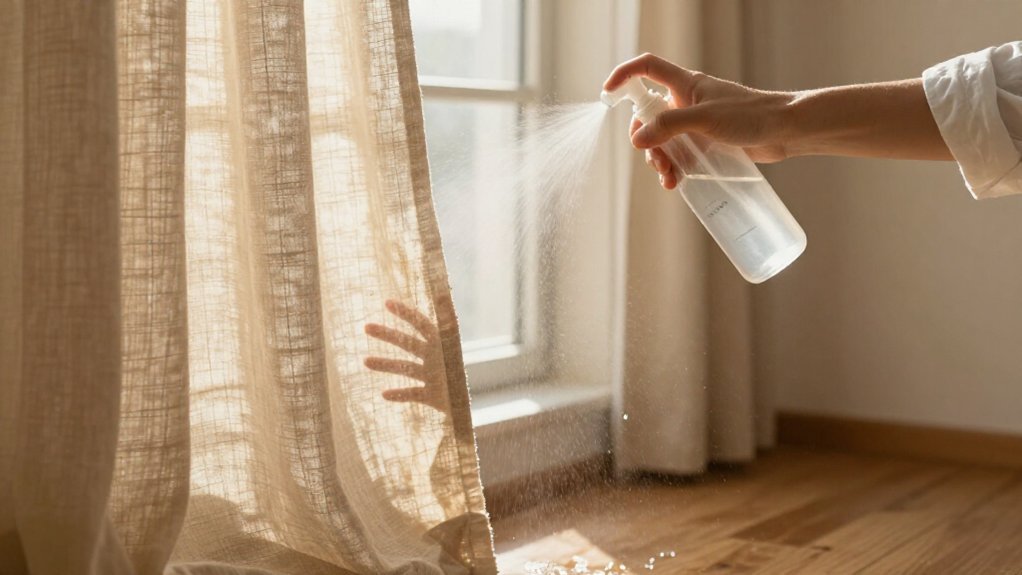
Grab a clean spray bottle, fill it with plain water, and you’ve got everything you need for this approach. You’ll want to mist the creased sections lightly until the fabric looks damp, not soaked, then run your hand downward to let gravity do the heavy lifting on those wrinkles. It’s a simple, no-fuss method that works great when you don’t have a steamer handy. Just remember to test a hidden corner first if your curtains are delicate or light-colored.
Recommended Products

TURBO STEAM POWER FOR FAST, DRY WRINKLE REMOVAL: No spitting, leaking, or wet spots with powerful 1875-watt steam for silk, everyday clothing, thick fabrics, curtains, and upholstery. Dry Steam Technology helps deliver consistent results.

[Easy to Use] This 700W steamer generates gentle, long-lasting steam and has a 8.5- foot power cord, so you'll never have to worry about operating it remotely and you can iron clothes from a distance.

Powerful & Efficient: Equipped with 1000W high power, it heats up quickly in 20 seconds to generate strong steam, smoothing out garment wrinkles in just a few seconds
Choose Spray Bottle
Misting your curtains with plain water is one of the simplest ways to ease out wrinkles without any special equipment. You’ll want a clean spray bottle that holds about 16 to 24 ounces, which gives you enough water to work with but isn’t too heavy to handle. Look for one with an adjustable nozzle, so you can switch between a fine mist and a more targeted stream when you’re dealing with stubborn creases.
If you’re considering a wrinkle-release spray instead of plain water, that’s a good choice for fabrics that need a little extra help. These products contain mild fabric relaxers that speed up the smoothing process. Just check the label first, since some sprays work better on cotton than on silk or synthetics.
Mist Evenly Technique
Since you’ve got your spray bottle ready, it’s time to put it to work on those wrinkles. Fill it with clean water, then spray a light, even mist along the length of each wrinkle. You’re aiming for damp, not soaking, so the fabric gets just enough moisture to relax.
After each pass, smooth the fabric downward with your hand. This helps gravity pull the creases out as the moisture spreads through the fibers. If you hit a stubborn spot, spritz only that section. Don’t drench the whole panel, or you’ll risk water spots.
Let the curtain air-dry fully. The weight of the lightly wet fabric helps separate wrinkles while it hangs. If creases stick around after drying, repeat with a second careful mist-and-smooth cycle rather than oversaturating. This simple wrinkle release method takes patience, but it works.
Smooth By Hand
If you don’t have a steamer handy, a spray bottle and your hands can get the job done just fine. Fill a clean, empty spray bottle with water, then lightly mist the wrinkled curtain area. Spritz along the length, or target only the creased spots, without soaking the fabric. After misting, smooth the fabric by hand in the direction of the wrinkle using steady downward strokes. The dampness and gravity help pull the folds apart to remove wrinkles.
If a section still shows creases, re-mist that area and smooth again rather than drenching the whole panel. This avoids water spots and added drying time. Let the curtain air-dry fully while hanging, since the added weight from the slightly wet fabric helps flatten remaining wrinkles.
If steaming isn’t available and wrinkles don’t improve after a full day, apply more targeted mist under pressure near the bottom creased area and allow more drying time.
Steam Curtains With a Warm Damp Cloth
Starting with a warm damp cloth gives you a simple, no-fuss way to ease out wrinkles when you don’t have a steamer handy. You’ll want to grab a clean cloth, lightly dampen it with warm water, and wring it out so it’s just warm and damp, not soaking wet. This method works great as a pressing cloth alternative, and you can even pair it with a Wrinkle Releaser spray for extra stubborn folds.
Here’s how to get the best results:
- Test on a hidden corner first, especially with delicate fabrics like sheer, silk, or velvet.
- Place the warm damp cloth over the wrinkled area and press gently, holding briefly.
- Smooth the fabric with your free hand while the cloth makes contact.
- Peel the cloth away and let the curtain air-dry in place, re-dampening only as needed for tough creases.
Recommended Products

STEAMER BOOST FOR CLOTHES (2 Pack): The Faultless wrinkle remover for clothes works along with your standard steamer to un-wrinkle your clothes, prevent future wrinkles AND gives a freshly laundered scent. Protect your clothes from pesky wrinkles with our fabric refresher spray!
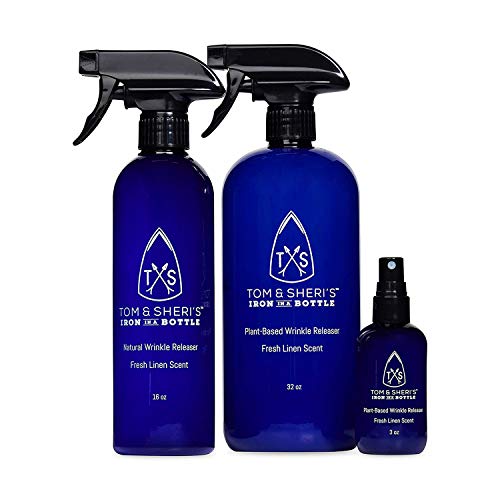
REMOVES WRINKLES: De-wrinkle your clothes in less time than it takes to heat up an iron. Tom and Sheri’s relaxes the fibers of your clothing like a conditioner would your hair. This allows them to be manipulated, aka straightened out, causing the wrinkles to release

Farmhouse Decor: Decorate your bathroom with our charming Farmhouse Stripe Shower Curtain. The design is reminiscent of shiplap beams, with a pattern of thin and thick colored stripes on a cream background.
Steam Curtains Using a Hair Dryer
You’ll tackle stubborn wrinkles by hanging your curtains and running a hair dryer on warm, not hot, about 6 to 12 inches from the fabric while you keep it moving. Spritz the creased areas lightly first, since that moisture helps the warm air work faster, and use your free hand to smooth the fabric downward as you go.
Always test on a hidden corner before you start, especially with delicate materials like silk or velvet, so you don’t accidentally scorch or damage the texture.
Recommended Products

Fight Wrinkles & Static On-the-Go: This all-in-one anti wrinkle spray for clothing fights static cling and is ideal for busy lifestyles. Spray, tug, and smooth to eliminate wrinkles without ironing. Brought to you by Nehemiah Manufacturing.

BOUNCE ANTI STATIC SPRAY: You will receive (1) 9.7 Fl Oz bottle of Bounce Anti Static 3-in-1 Spray, perfect for removing static, eliminating odors, and wrinkles from your clothes

Fight Wrinkles & Static On-the-Go: This wrinkle spray for clothing fights static cling and is perfect for busy lifestyles. Just spray, tug, and smooth to remove wrinkles without ironing. Brought to you by Nehemiah Manufacturing.
Hair Dryer Technique
When you don’t have a steamer handy, a hair dryer can work surprisingly well for smoothing out curtain wrinkles. You’ll want to use this tool with care to protect your fabric.
Set your hair dryer to low heat and hold it a few inches from the curtain surface. Keep the dryer moving in short, overlapping passes from top to bottom. Lightly mist wrinkles with plain water first to help fibers relax. Smooth the fabric with your free hand as you work.
Hang your curtains in place before you start, since gravity helps the fabric fall straight as you warm it. Test on a hidden corner first, especially with sheer or silk. Afterward, let everything cool and dry fully while hanging so creases don’t reform.
Heat Safety Tips
At about 6 to 10 inches away, you’re keeping enough distance so the fabric won’t scorch or overheat, which is especially important for polyester blends and lighter synthetics. Always use the lowest heat setting and fan speed, since higher temperatures can damage fibers quickly.
You’re protecting delicate fabrics like sheer, silk, and velvet by testing a hidden corner first, a great choice that prevents costly mistakes. Mist lightly with water before applying warm air, then keep the dryer moving in slow, continuous passes from top to bottom.
Don’t linger on lace or embellishments, prolonged direct heat weakens these areas. Smooth with your free hand as you work, preventing new creases from forming.
Finally, let the curtain air-dry fully in place, wrinkles return if fabric stays damp.
Overnight Humidifier Steam Method
If you’re dealing with stubborn creases but don’t want to wrestle with a steamer, an overnight humidifier can do the heavy lifting while you sleep.
Here is how you set this up:
- Hang your curtains in place, then position your overnight humidifier nearby to raise ambient moisture so deep creases loosen.
- Select cool or room-temperature mist, if available, so you avoid heat-related damage to delicate fabrics.
- Aim the humidifier so it steams the room without directly soaking the fabric, and keep airflow moving around the panels to prevent damp odors.
- Test on a small hidden corner first, especially for silk or velvet, since even moisture can spot or shift texture.
In the morning, smooth downward by hand. Your curtains will resist wrinkles better this way, a good option for low-maintenance care.
Recommended Products

LUXURY AESTHETIC: Indulge in pure luxury with our dark green shower curtain. Designed for those who appreciate moody decor or a sophisticated gothic-inspired aesthetic, this 260 GSM heavyweight fabric turns your bathroom into a premium, private sanctuary with a touch of modern drama.

Brings a Touch of Class to Your Bathroom: The velvet fabric shower curtain will make your bathroom look and feel more elevated; And don't worry, the fabric will keep its buttery soft, plush texture even with regular exposure to moisture and steam

LUXURY VELVET& TIMELESS ELEGANCE: Our plush velvet fabric offers an ultra-soft, smooth touch with a rich, substantial drape that feels luxuriously full and refined. The moody dark roses and warm tone leaves bloom vividly against the deep black background, their vintage painterly details brought to life by the velvet’s soft, velvety texture, turning your everyday space into a cozy, elegant retreat you’ll love coming home to.
Steam Floor-Length Curtains With a Tension Rod
Because floor-length curtains often pool at the bottom, you’ll need a way to hold them taut while you work. Mount your curtains on a tension rod, adjusting it to stretch the fabric tight from top to bottom. Turn on your hottest shower for about ten minutes, letting the bathroom fill with steamy humidity that relaxes creases without requiring any handheld steamer.
Spritz only the wrinkled spots from a few inches away with a spray bottle; don’t soak the whole panel. Smooth the fabric downward with your hand so gravity pulls the wrinkles out. Keep doors and windows closed to trap moisture inside.
Let the curtains dry completely while still tensioned before adjusting them. For stubborn folds, repeat the steam treatment, focusing extra moisture near the bottom where gravity helps most.
Recommended Products

TURBO STEAM POWER FOR FAST, DRY WRINKLE REMOVAL: No spitting, leaking, or wet spots with powerful 1875-watt steam, making this the perfect steamer for clothes, silk, everyday clothing, garments, thick fabrics, curtains, and upholstery. Dry Steam Technology helps deliver consistent results.
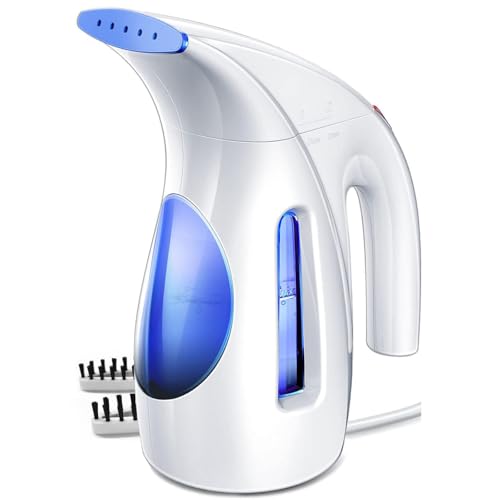
[Easy to Use] This 700W steamer generates gentle, long-lasting steam and has a 9- foot power cord, so you'll never have to worry about operating it remotely and you can iron clothes from a distance.
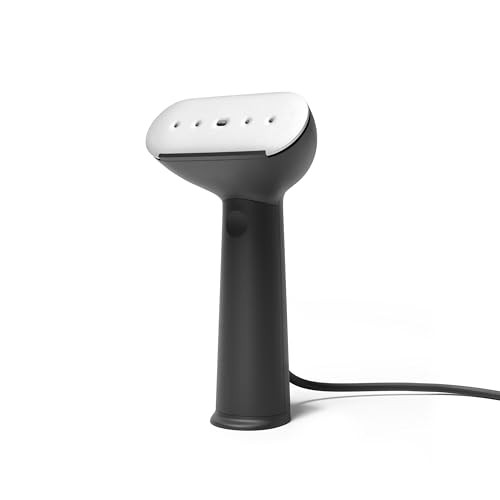
Minimalist in design, powerful in performance. Combining the benefits of a steamer and iron, our Cirrus 3 Iron Steamer smooths out wrinkles instantly with dry hot steam.
Pick the Right No-Steamer Method for Your Fabric
Once you’ve got your curtains hanging smooth, you’ll want to make sure you’re treating the fabric itself with the right approach. Different fabric types demand different tactics, especially when you’re getting wrinkles out of new panels that have been folded in packaging.
Here’s how to match your method:
- Cotton or linen: Spritz with water, then smooth by hand, or run through a gentle wash cycle and hang damp. These fabrics love moisture and flatten beautifully.
- Polyester blends: Toss in the dryer on low or air-fluff with a damp towel for 10 to 15 minutes. Light misting works too.
- Sheer fabrics: Targeted spraying only, no soaking, and keep heat away entirely.
- Silk or velvet: Skip DIY moisture. Check your tag, and call a pro if you’re unsure.
When in doubt, test a hidden corner first.
Recommended Products

【Transform Your Space】 Immerse your interior in the perfect ambiance with our Cordless Roman Blind. Crafted from exquisite woven fabric, these Roman Shades effortlessly blend casual elegance with the magic of room darkening, creating a serene atmosphere in any room
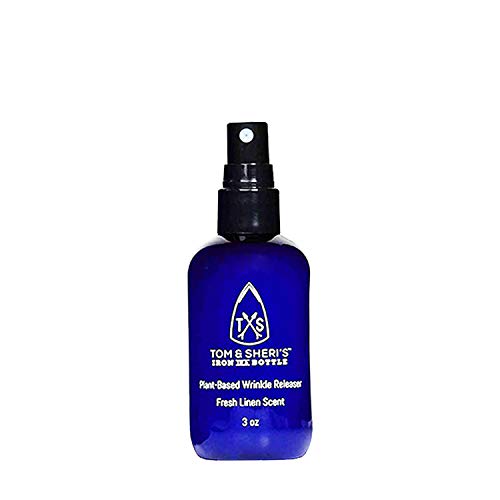
REMOVES WRINKLES: Remove clothing wrinkles easily without ironing. Tom and Sheri’s relaxes the fibers of your clothing like a conditioner would your hair. This allows them to be manipulated, aka straightened out, causing the wrinkles to release
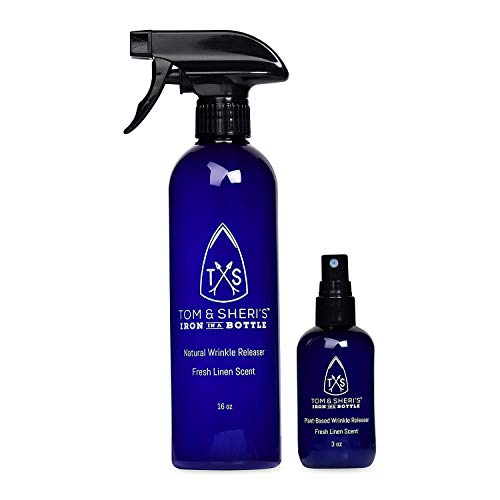
REMOVES WRINKLES: Remove clothing wrinkles easily without ironing. Tom and Sheri’s relaxes the fibers of your clothing like a conditioner would your hair. This allows them to be manipulated, aka straightened out, causing the wrinkles to release
How Long Does Each Steaming Method Take?
How much time are you really signing up for when you pick a no-steamer method? The shower steam method takes about 10 minutes of running hot water, plus extra settling time until creases fade. If you have a steamer with distilled water, you’re looking at quick passes top-to-bottom, then air-dry for ~10–15 minutes before touching.
The spray-and-smooth method demands patience: wrinkles keep improving as fabric dries, often needing up to 24 hours for full results. Wrinkle-release spray works faster at 10 minutes, though you wipe residue and let it air-dry completely; wrinkles might resurface within a day.
The dryer “steam effect” runs 20–30 minutes on low heat, with possible 5-minute extensions if curtains feel damp.
Recommended Products

✅ No More Wrinkles! – Just a spray and you're on your way! Instantly removes wrinkles and eliminates odors. Don't waste time doing laundry when your clothes don’t need it, instantly restores your worn clothes' look and feel with just a few sprays. Simply spray the fabric, smooth, and hang until dry

Fight Wrinkles & Static On-the-Go: This all-in-one anti wrinkle spray for clothing fights static cling and is ideal for busy lifestyles. Spray, tug, and smooth to eliminate wrinkles without ironing. Brought to you by Nehemiah Manufacturing.
When to Skip DIY and Call a Professional
You’ve got your timing figured out, but sometimes the wrinkles aren’t the real problem. Call a Professional when your curtains need more than a quick fix.
- Skip DIY if you spot persistent musty odors or visible staining, since steaming won’t deodorize or lift embedded soil.
- Avoid home methods on silk, vintage, or high-value fabrics; wrong heat or moisture causes irreversible damage.
- Call a pro when creases stay stubborn, especially on “dry clean only” curtains that risk damage from water exposure.
- Choose professional help for allergen buildup like dust or pet dander, or when care labels are unclear.
Required fields are marked by fabric type and condition, so don’t guess. A professional matches the right method to your specific material, saving you from costly mistakes.
Recommended Products

TIMELESS ROSE ELEGANCE: Inspired by retro American luxury, these curtains blend timeless rose prints with premium velvet—lifelike large roses and delicate branches create…
Leave a Reply