
You’re staring at a pile of sweaters and shorts that don’t belong in your current closet, and you know you need a better system than shoving them in garbage bags.
Start by pulling everything out and being honest about what you’ll actually wear next year, because storing clutter just wastes your time and storage space.
From there, the real challenge is matching each fabric to the right container so your clothes survive until next season.
You’ll want to stick around for the specifics on bin sizes and tissue weights that actually make a difference.
Step 1: Purge Before You Store Off-Season Clothes
Before you pack away a single sweater, you’ll want to take a hard look at what you’re actually keeping. Start your seasonal purge by pulling every item out of your closet, and be honest about what you actually wear. If you haven’t touched something in a year, or it doesn’t fit right now, remove it before you store your clothes.
Check each piece for problems: anything stained, damaged, or worn out should go unless you’ll fix it this week. When space is limited, you can’t afford to hold onto “maybe someday” items or duplicates you never reach for. If you hesitate to leave the house wearing something, that’s your answer.
Fill donation bags immediately, and schedule the drop-off so nothing sits unresolved. Clearing this clutter first protects your closet space and keeps only worthy off-season clothing in storage.
Recommended Products

【Extra Large】Measuring 27"L x 15"W x 13.5"H, Ukeetap storage bins offer a spacious 24-gallon volume and hold up to 65 lbs, ideal for moving, packing, and all your storage needs.

Reinforced Handle: The storage bag handle is sewn with two layers of thick fabric, the load-bearing capacity is doubled. Reinforced seams are also implemented for added strength, which are hard to be broken, can be used for a longer period of time

Reinforced Handles: The reinforced handles are sewn with 3 layers of fabric to ensure easier carrying. You can lift the storage box without worrying about it breaking when filled with heavy clothes
Step 2: Store Off-Season Clothes by Fabric Type
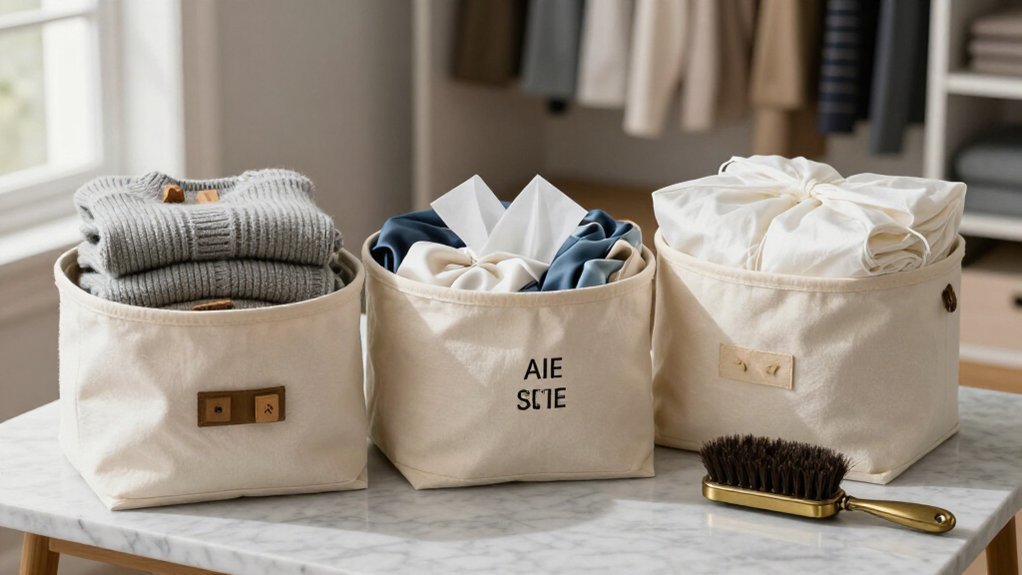
Once you’ve cleared out the clutter, your next move is sorting everything by fabric type since different materials need different containers to stay in good shape.
For your cotton, denim, and everyday synthetics, fold them into neat stacks and tuck them into clear, weathertight storage containers. You can use vacuum-sealed bags, but only for short-term seasonal storage since they limit airflow and might damage fabric over time.
Your delicate fabrics like silk, cashmere, and wool need more care. Wrap each piece in acid-free tissue paper, then layer them inside canvas or linen bins, never plastic. This prevents creasing and protects against long-term stress.
For leather and suede, stuff them with acid-free paper, wrap zippers and buttons to stop rubbing, and store folded flat. Puffy jackets stay hung in breathable garment bags to keep their fill fluffy. Delicate knits get folded with tissue between layers, never hung.
Skip cardboard boxes, they attract pests and moisture. Instead, choose proper bins to protect your clothing through every season of storing seasonal clothes.
Recommended Products

15-pack of assorted size vacuum storage compression bags for storing off-season clothes, towels, linens, and more

CORDLESS PUMP FOR TRAVEL VACUUM BAGS — The 2000 mAh rechargeable pump compresses each vacuum storage bag in 10 to 15 seconds via USB-C charging from a power bank or wall adapter, One charge lasts through multiple trips for carry-on luggage, cruises, and road trips

【80% Space Save】: Pack-Seal-Vacuum, with these 3 easy steps, Fygrip vacuum storage bags help you save 80% storage space. They are the game changer for storing your bedding, blankets, clothing and more.
Step 3: Label Your Off-Season Clothing Storage
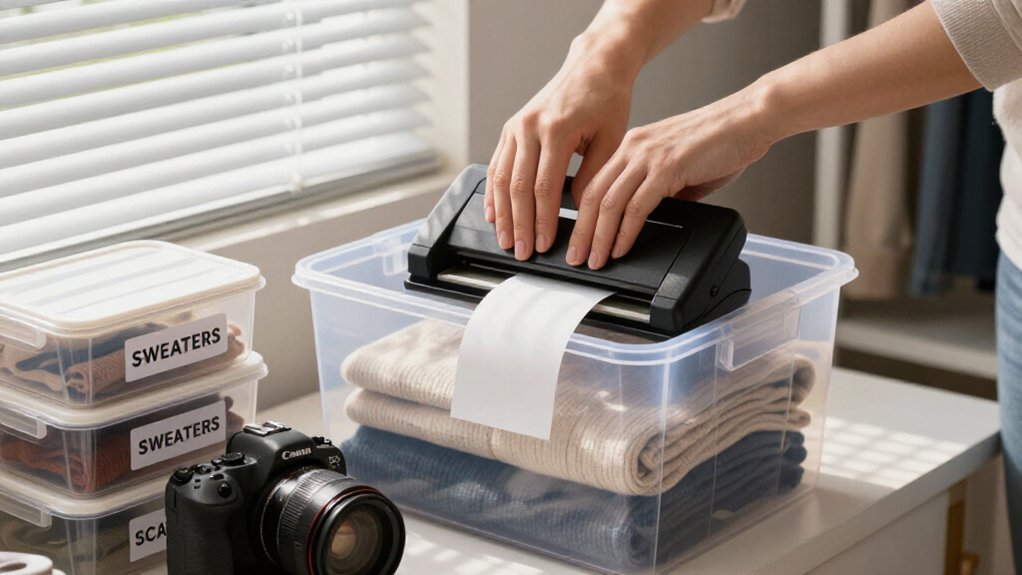
You’ve sorted everything by fabric and packed it into the right containers, so now you need a system that lets you find what you need without tearing through half a dozen bins. Grab some labels and mark each storage bin by category and season, like “winter sweaters” or “summer accessories,” so you can spot seasonal items fast during your next closet swap.
Jot down contents plus quantity right on the label, such as “3 sweaters, 2 scarves,” and you’ll skip the guesswork later. For a smarter setup, slap QR code stickers on your storage bins; scan them with your phone to check what’s inside without lifting a lid.
Keep a simple inventory list, paper or spreadsheet, noting where each container lives in your storage space. Update labels when you add, remove, or donate pieces, and your seasonal clothing storage stays accurate year-round.
Recommended Products

Abundant quantity: This bulk pack includes 100 sheets of tissue paper bulk, ensuring you have an ample supply for your daily storage needs. Large size, 30 x 20 inches, the generous quantity also allows you to share these dependable preservation materials with family members or others who may benefit from them.

Package Content: You will receive 25 sheets of acid-free tissue papers, and each sheet of paper measures 20x30inch / 50.8×76.2cm. The quantity is enough to meet your daily use need.

Abundant Quantity: This paper pack includes 200 sheets of acid free tissue paper, ensuring you have an ample supply for your daily storage needs. Large size, 20 x 15 inches, the generous quantity great for making DIY crafts, flower tissue Pom Pom's, gift bags, packaging use, tassel garland and more
Leave a Reply