
Studies show the average mattress sags noticeably within 7–10 years, but you’re not stuck buying new just yet.
You can extend its life with simple fixes, some costing under $50 and taking less than an hour.
The real question is whether your sag is shallow enough to repair, or deep enough that you’re throwing good money after bad.
Here’s how to tell the difference, and what actually works.
Assess How Bad Your Sagging Mattress Really Is
How deep are those dips you’re sleeping in? Grab a ruler and measure those indentations, since many warranties, like Purple’s, only cover impressions up to about 1 inch, and you’ll often need 1.5 inches or more for a claim.
Next, inspect what’s underneath you. A broken box spring, cracked slats, or warped bunkie board can make your mattress is sagging look worse than it is, and fixing these foundation issues helps your mattress last longer.
Check where the sagging hits hardest, too. Dips at your hips and shoulders differ from center sinkage, and each needs different fixes. Finally, be honest about age. Memory foam typically holds up 7, 8 years, and once you’re past 10, you’re usually looking at replacement, not repair.
Recommended Products

Pressure Relieving Plush Contouring Memory Foam: Designed for use over your existing mattress, high‑density gel‑infused plush memory foam hugs your body curves to minimize pressure points for restful sleep. It refreshes worn mattresses and softens hard beds to extend mattress lifespan, perfectly suited for side, back and stomach sleepers with full contour support

GEL MEMORY FOAM MATERIAL: Our memory foam mattress topper readily conforms to the curves and shape of your body, distributes weight evenly to alleviate pressure points for better sleep.
GEL MEMORY FOAM MATERIAL: Our memory foam mattress topper readily conforms to the curves and shape of your body, distributes weight evenly to alleviate pressure points for better sleep.
Rotate Your Mattress to Slow Further Sagging
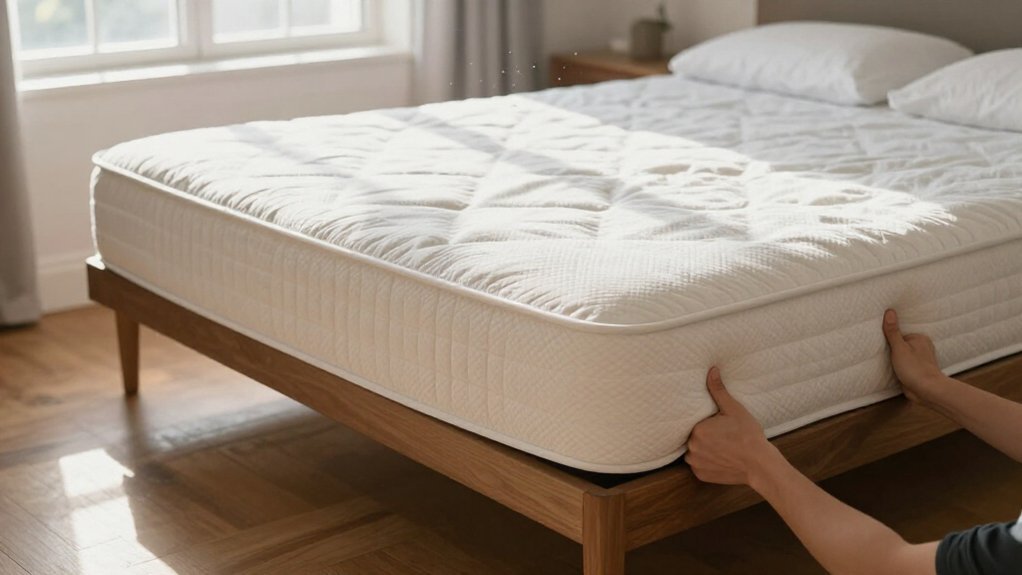
Now that you’ve checked your mattress for damage and measured those dips, you’re ready to slow things down. Rotate your mattress every three to six months to redistribute your body weight and stop new soft spots from forming. You’re basically turning it 180 degrees so your head rests where your feet used to be.
Your hips and shoulders create pressure points that wear down the same spots night after night. Rotation spreads that compression around, which helps even after sagging starts. You’re buying time, not fixing the problem completely.
Check your label first, though. Some mattresses aren’t built for rotation, and you’ll want to follow whatever the manufacturer says. Pair this with a solid foundation; weak box springs will undo your work. It’s free, it’s simple, and it’s a smart step to fix a sagging mattress.
Recommended Products
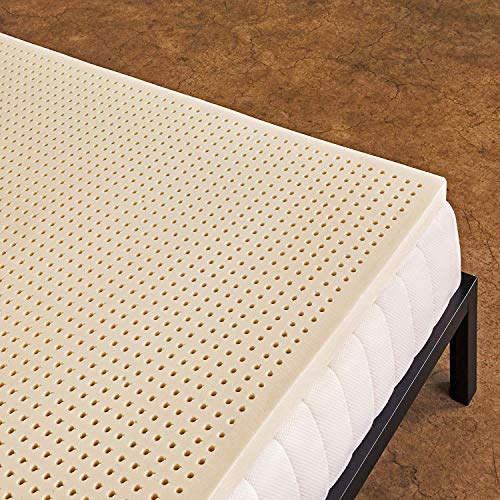
Soft – Great for Adding Softness to the Surface of a Mattress
Soft – Great for Adding Softness to the Surface of a Mattress
Medium Firmness – Provides Pinpointed Comfort & Support
Add a Topper for Temporary Comfort and Support
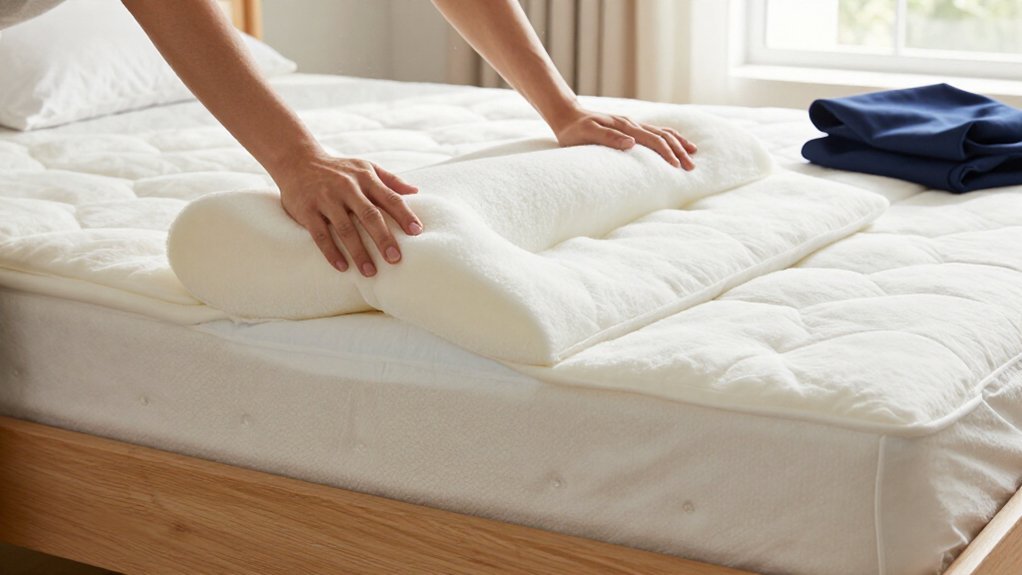
You can smooth out minor dips and get some pressure relief by adding a mattress topper, which works great for shallow sagging under two inches but won’t rebuild a mattress that’s deeply collapsed. For the best results, you’ll want to pick a topper that’s two to four inches thick, with three to four inches being a solid choice if you’re a side sleeper or dealing with joint pain. Stick to high-density foam or latex, since those materials actually hold up.
Just remember that a topper is only buying you time, not fixing the underlying problem. If your mattress has deep permanent dents or the foam is breaking down, you’re really just compensating rather than restoring real support.
Recommended Products

🛏Relieve Pain & Protect The Spine: This 2-layer pressure-relieving firm memory foam mattress topper fits your body contours perfectly. It distributes weight evenly to align your spine and effectively ease uncomfortable pressure points.


ULTRA SOFT: Niagara King Mattress Topper is made from rayon derived from bamboo fiber and fits mattresses 8-20 inches deep. The mattress topper king is 78×80 inches in size, gentle on sensitive skin, and ultra-soft.
How Toppers Help
If you’re not ready to replace a sagging mattress, a topper can buy you some time while smoothing out the worst spots. A mattress topper adds an extra comfort layer, usually 2–4 inches thick, that helps fill in minor dips and makes the sleep surface feel more even. When you’ve got soft spots that aren’t too deep, this added cushioning redistributes your weight away from worn areas.
Here’s what to keep in mind:
- Choose high-density foam or latex, since very soft materials bottom out fast
- Lay it evenly to avoid creating new pressure points
- Use non-slip backing or a fitted sheet to stop shifting
- Add a mattress protector on top for stability
Choosing Topper Thickness
Since you don’t want a topper that’s too thin to matter or so thick it feels like a different bed, shoot for the 2–4 inch sweet spot. This range gives you meaningful support without completely changing how your bed feels.
If you’re a side sleeper, deal with joint pain, or face minor sagging, lean toward 3–4 inches of high-density foam or latex. These materials add firmness and contouring that softer fills just can’t match.
For light cushioning only, 1–2 inches works, but it usually won’t handle deeper issues. Remember, mattress toppers mainly help with minor dips. If sagging is severe, with deep indentations around 1.5–2 inches or more, you’ll see limited results.
Always lay your topper on a clean, dry surface, and use a protector or non-slip backing to keep it from shifting.
Topper Limitations Explained
Although a topper can make your bed feel better for a while, it’s important to know what it actually does and doesn’t do. Mattress topper limitations mean you’re getting a band-aid, not a cure. A 2–4 inch layer, especially 3–4 inches for side sleepers, can smooth over minor dips and add pressure relief fast. It won’t rebuild broken-down foam or springs inside, though.
Here’s what to expect:
- It masks sagging under 1.5–2 inches, but deeper sinkholes still drag you down
- Foam toppers feel level quickly, yet they don’t fix structural failure
- You’ll need a tight mattress protector or non-slip backing to keep it from sliding
- It can extend your mattress’s life briefly, not indefinitely
When indentations pass that 2-inch mark, you’re really just delaying the inevitable: replacement.
Inspect and Fix Your Bed Frame or Foundation
Why does your mattress sag in the first place? Often, it’s not the mattress at all; it’s your bed frame or box spring letting you down. When your mattress sags, you need to inspect the foundation first.
Check your box spring for broken or warped wood, bent coils, or uneven spots where the mattress sits. Press down firmly across the surface. You’ll feel any dips or weak points immediately. If your bed frame uses slats, measure the gaps between them. Anything over 3 inches can cause your mattress to sag in those unsupported zones.
Tighten every bolt and bracket on your frame now. A wobbly base ruins even great mattresses fast. For slats that have loosened, secure them with screws or add extra boards cut to length. Spot severe damage? You’ll need to replace the foundation entirely. No topper fixes structural failure.
Recommended Products

1. Sturdy & Durable Heavy Duty Metal Construction:Built with a heavy-duty metal frame, this 5 Inch Box Spring for Queen Bed offers exceptional support and durability. With a 3000 lbs capacity, it ensures long-lasting performance, making it the perfect foundation for your mattress, providing a stable and secure base for restful sleep.

COMFORT AND SUPPORT BOOST: Enhances mattress comfort and stability
COMFORT AND SUPPORT BOOST: Enhances mattress comfort and stability
Reinforce With Plywood or a Bunkie Board
You can grab a ¾-inch plywood sheet and slide it under your mattress for a quick support fix, which firms up the surface and buys you some time before you need a replacement. If you’re looking for a cleaner, longer-term foundation upgrade, a bunkie board works great too. It’s a thin, often fabric-covered plywood panel that sits between your frame and mattress to keep everything stable.
Just remember, either option blocks some airflow underneath, so you’ll want to prop the mattress up occasionally to let it air out and avoid trapping moisture.
Recommended Products

UPGRADED 0.43" THICKNESS FOR STRONG SUPPORT-LAVEVE Bunkie Board features an upgraded sturdy 0.43" thickness, providing stable and even support for your mattress. It effectively helps solve sagging and unevenness, helping your mattress maintain firm, like-new support day after day.

STOPS MATTRESS SAGGING BETWEEN SLATS — Your mattress needs a flat, continuous surface to perform the way it was designed. When bed slats are spaced too far apart, the mattress sinks into the gaps — creating pressure points, uneven wear, and back discomfort. This 10mm twin-wall support board bridges those gaps, giving your mattress the foundation it needs. Our bunkie board requires a structure underneath, such as a metal frame or bed slats. Its capacity depends on the support structure.

STOPS MATTRESS SAGGING BETWEEN SLATS — HEAVY DUTY DENSITY — Your mattress needs a flat, continuous surface to perform the way it was designed. When bed slats are spaced too far apart, the mattress sinks into the gaps — creating pressure points, uneven wear, and back discomfort. This heavy duty version features a higher-density 10mm twin-wall core for enhanced rigidity, bridging wider slat gaps with zero flex. Our bunkie board requires a structure underneath, such as a metal frame or bed slats. Its capacity depends on the support structure.
Quick Support Fix
For a fast, budget-friendly boost, slide a ¾-inch plywood sheet between your mattress and bed frame to firm up a sagging middle. This quick trick works great when your frame lacks solid support, and it’ll help you fix your sagging bed without breaking the bank.
Here is why this method helps:
- A ¾-inch plywood sheet creates an even surface, reducing dips and pressure points
- A bunkie board adds similar stability if you want something neater-looking
- These fixes target weak foundations, not worn-out mattress guts
- You’ll need to air out your mattress regularly, since plywood blocks airflow
If you still notice deep sags after reinforcing the base, your mattress foam or springs are likely too far gone. At that point, plywood won’t save you, and replacement becomes your best bet.
Long-Term Foundation Upgrade
Quick fixes like sliding plywood under your mattress can buy you time, but a proper foundation upgrade tackles the root problem and lasts much longer. A long-term foundation upgrade starts with a ¾-inch plywood sheet, cut to fit your bed frame, that creates a firmer, more even base to counter that annoying sink spot.
Before you add anything, inspect your frame for broken or warped slats. Loose support structures will keep your mattress uneven, even with plywood on top. If your slats are widely spaced, make sure the plywood sits securely so your shoulders and hips don’t still dip through.
For a cleaner option, swap out that old box spring for a bunkie board, a thin plywood panel wrapped in plastic that adds stability without bulk. This extra layer allows air to flow better than solid plywood, though you’ll still want to air out your mattress regularly to prevent moisture buildup.
Use Pillows to Fill Minor Dips Overnight
Where exactly is that annoying dip keeping you from sleeping soundly? You can tackle small, localized sags overnight by sliding a supportive pillow beneath the indented area, creating a temporary even surface until morning.
Here’s how to make this quick fix work for you:
- Choose firmer pillows made from memory foam or latex, since soft, fluffy ones flatten fast and won’t hold their shape
- Target the “sink-in-the-middle” feeling by placing support underneath rather than adding softness on top
- Confirm your bed frame and slats stay stable first, because pillows can’t fix foundation problems
- Remember this works best for minor dips in an otherwise functional mattress, not deep structural damage
Since your mattress protector keeps things in good condition, you’ll notice how the mattress feels more level come morning.
Recommended Products

Cooling Gel Infused Memory Foam: Our memory foam mattress topper provides ergonomic pressure relief, helping alleviate back, neck, and shoulder pain. The flexible design perfectly contours to your body and is 100% compatible with a mattress without losing its shape

GEL MEMORY FOAM MATERIAL – BDEUS memory foam mattress topper gently molds to the curves and shape of your body, evenly distributing your weight to reduce pressure points and promote a more comfortable sleep
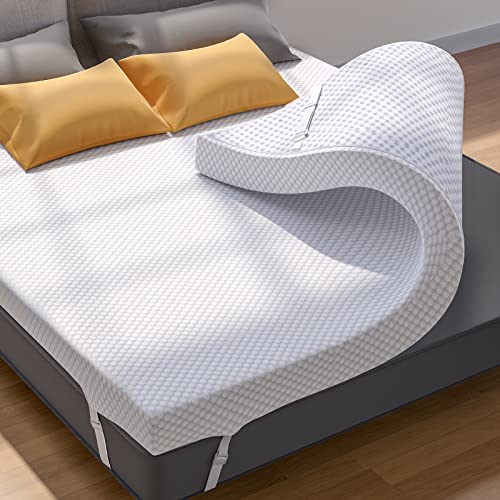
𝐈𝐧𝐜𝐫𝐞𝐚𝐬𝐞 𝐒𝐨𝐟𝐭𝐧𝐞𝐬𝐬 𝐚𝐧𝐝 𝐂𝐨𝐦𝐟𝐨𝐫𝐭: The 2-inch mattress topper queen is a perfect addition to a new mattress, which is able to add softness and offer extra support. Our breathable mattress topper queen size bed helps disperse the pressure on your body, keep you cozy, regulate your body temperature, and make you sleep more comfortably
Check Your Warranty Before You Replace
Before you spend money on a new mattress, you’ll want to dig out that warranty paperwork and see what’s actually covered. Many mattress warranties actually cover sagging, especially once the signs become obvious and start messing with your support.
Don’t buy a new mattress until you’ve checked whether your warranty already covers that sagging problem.
Grab a tape measure and check how deep that dip goes. Most manufacturers want to see sagging over 1.5 inches before they’ll honor a claim, so you’ll need solid documentation. Take clear photos, record your measurements, and note your bed setup.
Your foundation matters more than you’d think. If you’re using the wrong box spring, slats spaced too far apart, or an unsupported frame, you could void your mattress warranty entirely. Double-check that your base meets the manufacturer’s requirements.
When your mattress starts to sag, contact the company directly to confirm your coverage. It’s the lowest-cost option you’ve got.
Recommended Products
Medium Firmness – Provides Pinpointed Comfort & Support
Soft – Great for Adding Softness to the Surface of a Mattress

Soft – Great for Adding Softness to the Surface of a Mattress
Leave a Reply