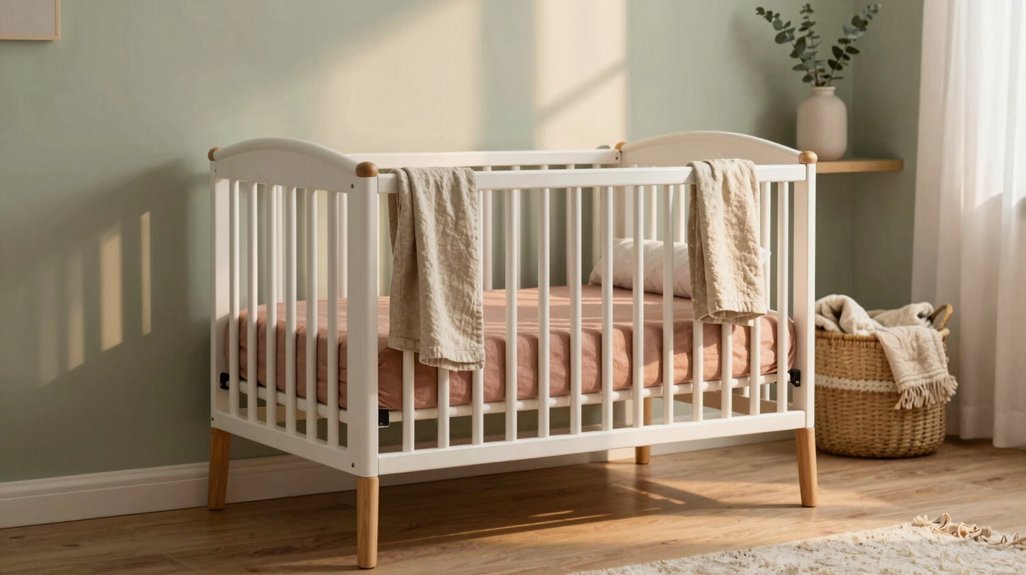
You’re standing in the nursery at 2 a.m., wondering if tonight’s the night your baby outgrew that bassinet.
Most bassinets max out at 15 to 20 pounds, or when your little one can push up on hands and knees, whichever comes first.
You’ll want to check those manufacturer limits now, not during a 3 a.m. wakeup.
The crib conversion catches a lot of parents off guard, but there’s a straightforward way through it that keeps everyone sleeping soundly.
Bassinet to Crib: Know When It’s Time
Although every baby develops on their own schedule, you’ll want to keep a close eye on your bassinet’s limits because that’s what keeps sleep safe. You’ll need to check your manufacturer height and weight limits first, since those numbers tell you exactly when the bassinet to crib change must happen. Watch for your little one starting to roll, even just a little, because that’s a huge red flag for switch timing. You’ll also spot trouble when they’re pushing up on hands and knees or sitting solo.
Once space becomes cramped, with head or feet touching the ends, you’ve hit your deadline. Most babies shift around 4 to 6 months, but milestone signs trump age every time. When you see these signals, a safe crib with deeper mattress space and higher rails becomes your next step.
Recommended Products

5-IN-1 CONVERTIBLE CRIB: Converts from baby crib (mattress sold separately) to toddler bed (toddler guardrail sold separately), daybed, and full-size bed with headboard & optional footboard (conversion kit sold separately); Assembly required

BREATHE-THRU SAFETY: The ONLY crib mattress with a Wovenaire breathe-thru core. Our patented technology ensures optimal breathability, reducing the risk of suffocation and overheating. And because your baby is sleeping safe and sound, you’ll sleep better too. Measures 52" x 28" x 4". Core proudly made in the USA.

SECURE & SNUG FIT | Pack and play mattress is expertly crafted for 38"x26" playpen. Approved by Baby Safety Alliance (formerly JPMA), rigorously tested to meet All U.S. standards for your peace of mind. Rounded corners create a seamless, gap-free edges for safety. Please check size before buying
Check Your Crib’s Safety Before Night One
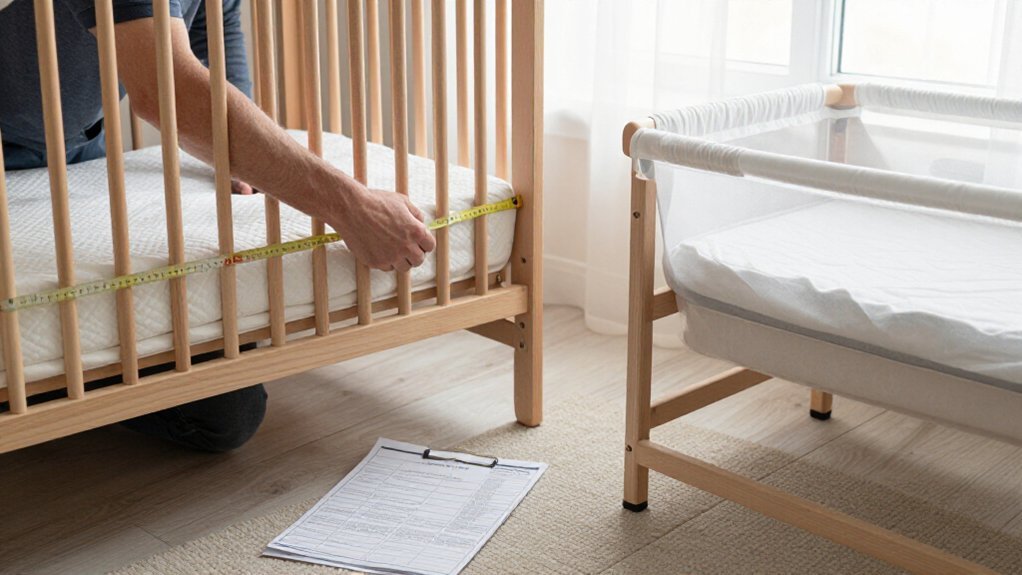
Where should you start once you’ve got that crib ready? You’ll want to verify you’ve got a genuine safe sleep space, not just any old furniture piece. Confirm your crib carries a label for infant sleep, then check that crib mattress. It needs to be firm and flat, not plush or angled, covered with a tightly fitted sheet only.
Do the two-finger test: slide your fingers between the mattress and crib edge. More than two fingers means gaps exist, and that’s unsafe. Check those slats, too; they’re spaced around 2 3/8 inches apart to prevent head entrapment.
Follow all manufacturer safety guidelines closely, including back-to-sleep positioning. Skip the crib bumpers entirely, even mesh ones, along with pillows, blankets, and stuffed animals. You’re building a bare foundation here, and that’s a great choice for your baby’s security.
Recommended Products

【No Seams – Fits all 54 "x29.5" cribs】We use hand sewing techniques to provide a tight fit to the crib every time. No risk of unsafe space or losing pacifiers, toys on either side or corner of your crib. And this comfortable Crib & Toddler mattress meets 16-CFR-1633,16-CFR-1632,16-CFR-1241 standard.

MEDICAL-GRADE WATERPROOF PROTECTION: Designed for safe sleep, this firm crib mattress features a medical-grade waterproof cover that helps block moisture, stains, spills, and odors. Easy-clean surface creates a hygienic sleep space and supports a fresh, dry environment for babies and toddlers.

Dual-Sided Design – Thoughtfully designed with an extra-firm side recommended for infants to support safe sleep and a cushioned toddler side for growing comfort. Features a soft, breathable 3D mesh cover and a 3" polyester core fiber padding that provides consistent support from newborn through toddler years.
Create a Bare, Safe Sleep Space

You’ll want to strip that crib down to the absolute basics before your baby spends even one night in it. This means a firm, flat infant mattress, one tightly fitted sheet, and absolutely nothing else. Toss the bumpers, loose blankets, stuffed animals, and those “sleeper” or “napper” products that aren’t actually labeled for safe sleep, since they pose real suffocation risks that aren’t worth gambling on.
Make sure you run the two-finger test around the mattress edges, too: if you can jam more than two fingers between the mattress and crib rails, you’ve got a dangerous gap and need a tighter fit.
Recommended Products

M6 x 14mm Cross Dowels – 150mm M6 Threaded Bolts Set

M6 Threaded Washers – 120mm M6 Threaded Bolts Set
M6 x 14mm Cross Dowels – 80mm M6 Threaded Bolts Set
Remove All Loose Items
Start with a completely empty crib, and you’ll create the safest possible sleep space for your baby. As you change over from bassinet to a crib, you’ll want to check the crib 1-2 times to make sure you’ve removed all loose items. Make the crib a bare environment, keeping only what’s essential for safe sleeping.
When your baby starts sleeping in a crib, leave out pillows, loose blankets, stuffed animals, and crib bumpers, including mesh versions. These items raise suffocation and strangulation risks, and bumpers can even help babies climb out.
You should also skip loungers, nappers, and unlabeled “sleeper” products that aren’t approved for infant sleep. A pacifier is fine if you use one, but otherwise keep it empty. With a firm mattress and tight fitted sheet as your foundation, you’re set for safe nights.
Use Firm Flat Mattress
A firm, flat mattress is the foundation of safe crib sleep, so you’ll want to choose one specifically designed for infants rather than reusing an old hand-me-down. When you’re managing the shift to the crib, you’ll find this step makes a huge difference for your baby’s safety.
You’ll need to check the fit using the two-finger test: slide two fingers between the mattress edge and the crib frame. If there’s too much gap, you’ll need a different size. You’re creating a safe sleep environment, so skip the inclines and wedges even if your baby had reflux in the bassinet to crib shift.
You’ll use just a tightly fitted sheet, maybe a pacifier, and nothing else. You’re building the bare, safe space your little one needs.
Check Crib Safety Standards
Once you’ve got that firm mattress sorted, it’s time to look at the whole crib setup. You’ll want to verify your crib meets current crib safety standards, including the June 2021 CPSC rule the American Academy of Pediatrics emphasizes. Check that slat spacing, too: aim for no more than 2–3/8 inches apart to prevent head entrapment.
Run the snug fit two-finger test between your firm flat mattress and the crib frame. If you can fit more than two fingers in that gap, it’s not tight enough.
Strip everything else out. That means no loose blankets, no pillows, no stuffed animals, and definitely no bumpers, mesh included. You’re building the safest sleep environment possible, and bare is best. A fitted sheet, that’s it.
Get Your Baby Used to the Crib Awake
Before you ever ask your baby to sleep in the crib, you’ll want them to feel at home there while they’re still awake. Start with short awake periods in the empty crib while you stay nearby, so your baby can build positive associations without pressure. These “crib hangout” moments help your baby practice being in the space calmly. You might read a book or do quiet play nearby, making the nursery feel like a safe spot, not just for bedtime.
To ease the shift, place your baby in the crib at the end of regular routines, even before naps, and watch how they respond. Keep the mattress firm and flat, with a tight-fitting sheet only, so they feel secure. If your little one seems unsettled, repeat this daily, gradually increasing time, rather than rushing the change.
Recommended Products

BETTER FIT: Measures 52”X 28”, our crib sheets can snug fit most standard crib and toddler bed mattresses. 8'' deep pocket provides a safe and secure 360 degree coverage and protection for your luxury mattress.

FABRIC: Crafted from 100% organic cotton. The soft jersey fabric is breathable and great for all seasons from fall/winter to spring/summer.

Start With Crib Naps Only
You’ll want to begin this shift during daytime naps, since they’re usually less stressful than bedtime and your baby tends to be more adaptable. Pick the first morning nap when your little one’s typically in the best mood, and keep everything else exactly the same: room temperature, white noise, swaddle, so the crib itself becomes the only new variable.
Once you’ve got one solid crib nap down, you can slowly add more, building that consistent routine without overwhelming anyone.
Recommended Products

#1 BRAND INDEPENDENTLY TESTED FOR SAFETY: From BreathableBaby, the original, patented breathable mesh liner with millions sold since 2002. Designed for crib styles sold in the North American marketplace and tested by a third party CPSC-accepted accredited lab to meet or exceed ASTM F1917 Standard Consumer Safety Performance Specification for Infant Bedding and Related Accessories. Never use a mesh liner that is not compliant with ASTM F1917. Non-compliant products may present safety hazards.

Smart Foldable-Swing Rails Design: Our toddler bed rails featuring a one-click button for effortless folding and swinging. Guardrail with 25 speed adjustable height for different thickness mattress, making co-sleeping convenience. As bedtime approaches, parents fold down the crib rail by pressing the button, creating a snug haven for bedtime stories and comforting moments. Elevate your sleep time.

Smart Foldable-Swing Rails Design: Our toddler bed rails featuring a one-click button for effortless folding and swinging. Guardrail with 25 speed adjustable height for different thickness mattress, making co-sleeping convenience. As bedtime approaches, parents fold down the crib rail by pressing the button, creating a snug haven for bedtime stories and comforting moments. Elevate your sleep time.
Choose Ideal Timing
Because naps carry less pressure than nighttime sleep, they’re the perfect testing ground for your baby’s first crib experiences. You’ll want to start moving from a bassinet with crib naps first, usually the morning nap when your baby’s sleep drive runs highest.
Aim to begin around 4 to 6 months, but don’t watch the calendar too closely. Instead, look for safety readiness cues. If your baby shows signs of rolling, pushes up on hands and knees, or hits the bassinet’s weight limit, you’ll need to move earlier. Rolling makes swaddles unsafe, so plan this move alongside your swaddle to sleep sack switch.
Place baby in the crib at the end of your existing nap routine, keeping everything else familiar. This strengthens the sleep cue without overwhelming your little one with too many changes at once.
Maintain Familiar Environment
Once your baby is spending one solid nap in the crib, you’ll want to keep everything else exactly the same. You’ll maintain familiar environment by sticking with crib naps only for now, since daytime sleep carries less pressure than nighttime. Use your consistent bedtime routine, and place baby in the crib at the very end, just like you did with the bassinet.
Keep the sensory setup identical too. Run that same white noise machine at the same volume, and lay your little one down on a firm, flat crib mattress with a tightly fitted sheet, no extras. You can even tuck in a worn t-shirt that smells like you, or do brief awake play in the crib so it feels safe. You’re building comfort before you move your baby fully.
Build Consistent Routine
Now that your baby’s environment feels familiar, it’s time to build a consistent routine that starts with crib naps only. You’ll make the switch easier by trying just one crib nap daily, usually the morning one, since naps carry less pressure than bedtime.
Keep your usual wind-down signals, dim the room, run the sound machine, and follow your regular feed and diaper steps. At the end, place your baby in a safe crib with a firm, flat mattress and tight fitted sheet only, no extras. This location swap reinforces the sleep cue without changing everything at once.
Once crib naps go smoothly, you’ll shift more of your evening routine into the nursery. Moving from bassinet to crib works best when you change one variable at a time, letting your baby adapt without formal sleep training pressure.
Ditch the Swaddle Before Rolling Starts
Although your little one might still sleep soundly in their swaddle, you’ll want to start the shift the moment you spot early rolling signs, like pushing up during tummy time or rocking onto their side. A swaddled baby who rolls faces increased risk, so you’ll switch directly to a wearable blanket that keeps the snug feel without pinning those arms down.
Watch for rolling cues during supervised tummy time, not just in the crib. Choose a wearable blanket sized for 0-6 months, typically 10-18 inches wide with arm holes around 3 inches. Keep baby sleep consistent whether they sleep in a bassinet, Pack ‘n Play, or during the crib transition.
Time this switch alongside your crib transition window, usually 4-6 months, or earlier if milestones hit sooner.
Recommended Products

Certified Quality Materials: This crib mattress is CertiPUR-US and OEKO-TEX STANDARD 100 certified, with no fiberglass. It supports healthier sleep for your baby and brings greater peace of mind to parents
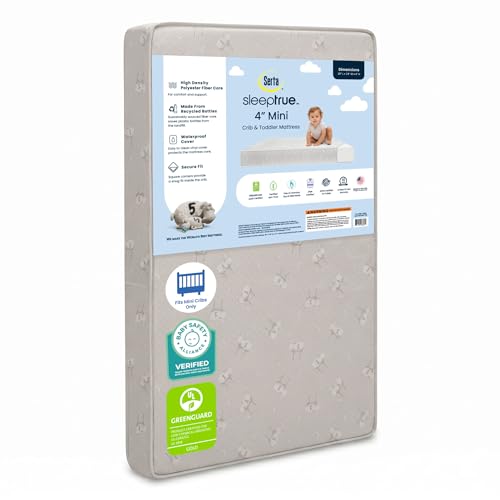
FITS MOST MINI & PORTABLE CRIBS: This crib mattress fits most mini cribs and portable cribs; mattress measures 38"L x 24"W x 4"H (not designed for standard cribs or pack 'n plays) | Measure your crib first to ensure a perfect fit.General Note: Please allow 24 – 72 hours for your Mattress to regain its full shape. Any memory foam will expand faster in a warmer room. In cold temperature, at delivery, your mattress may take a bit longer to return to full sized from its compressed state.The expansion time of the mattress will vary as per the surrounding

CLASSIC, STYLISH DESIGN— VERSATILE, EASY-TO-MATCH STYLE: The Benton features classic lines, stylish details, and an easy-to-match versatile design making it the perfect addition to any nursery
Move Bedtime Routine to the Nursery
Once naps in the crib are going reasonably well, you’ll want to move your entire evening routine, feeding, diaper change, pajamas, story, lullaby, into the nursery so your baby starts learning that this space means sleep time.
Keep the crib setup simple and safe with a firm, flat mattress, a tightly fitted sheet, and nothing else, no pillows, blankets, bumpers, or toys. Use the same predictable sequence every night, because consistency helps reinforce that the change in location doesn’t change what the routine means.
Recommended Products

Dual-Stage Comfort: 2-stage crib and toddler mattress features a firm infant side and softer toddler side for comfortable sleep through multiple stages of early childhood.

GREENGUARD GOLD CERTIFIED: Tested for more than 10,000 chemicals and VOCs, this crib mattress is certified to contribute to cleaner indoor air and meets the most stringent chemical emissions standards to create a healthier home for your baby
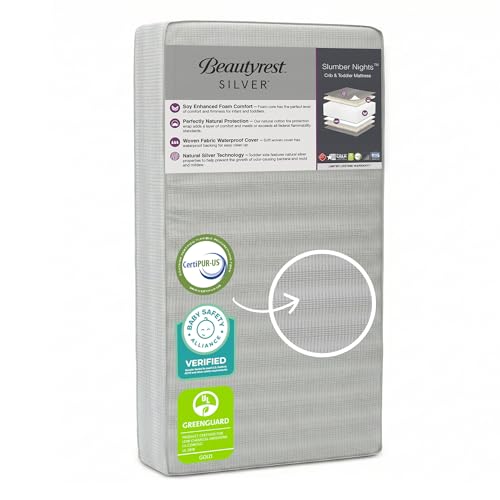
DUAL SIDED FOR BABIES & TODDLERS: Firm foam core blended with plant-based soy offers superior support | Infant side features ideal firmness for babies | Toddler side features Natural Sliver Technology
Establish Familiar Environment
Before you expect your baby to sleep peacefully in the crib all night, you’ll want to make the nursery feel like home. You’re moving your baby from bassinet to crib, so the new environment needs to feel safe and familiar. Keep room sharing going if it works for you, or ease the crib into your room temporarily. Healthy sleep starts with consistency, so replicate what already works.
Use a dark room with blackout curtains to block light. Keep the temperature steady, around 68-72°F. Run white noise to mask household sounds. Place baby in a firm, flat crib with only a fitted sheet.
Practice one crib nap daily before expecting full nights. When your baby learns to sleep in the crib through small steps, the shift feels manageable rather than overwhelming.
Maintain Consistent Routine
Babies almost always sleep better when they can predict what comes next, so you’ll want to anchor the change in a routine that stays exactly the same. Move your entire bedtime sequence into the nursery before you switch sleep locations. Do the final feeding, diaper change, pajamas, story, and lullaby in that room every night. This way, your baby learns that these steps signal sleep, not a specific surface.
Start this routine while they’re still in the bassinet. Once naps in the crib go reasonably well, you’ll feel ready to complete the shift.
Keep the crib setup consistent: firm, flat mattress, tightly fitted sheet, nothing else inside. Use identical dim lights and white noise each evening. The routine becomes your baby’s sleep signal, so stick with it even when nights feel rough.
Respond to Night Wakings the Same Way
When your baby wakes at night, you’ll want to respond with the exact same calm routine every single time, because consistency is what keeps them from expecting something new each time they stir. You don’t want night wakings to become confusing adventures, so you’ll stick to your plan whether you’re helping your baby sleep in a crib or elsewhere.
Check your baby the same way each time, using the same order of looks and touches. Keep the crib setup firm and flat, with just a tight fitted sheet, so you don’t worsen wakings with unsafe changes. Avoid rocking or feeding all the way to sleep, since you want to ease your baby toward self-settling. Use brief reassurance instead, helping move baby back down with minimal stimulation.
If you need to move your baby back to the bassinet after a crib attempt, that’s fine. You’ll still use the same response pattern each time. Personal sleep habits build slowly, so you’ll stay patient as you help your little one adjust.
Recommended Products
M6 x 14mm Cross Dowels – 140mm M6 Threaded Bolts Set
M6 x 14mm Cross Dowels – 140mm M6 Threaded Bolts Set
M6 x 14mm Cross Dowels – 120mm M6 Threaded Bolts Set
Extend Crib Stretches Gradually
A few small shifts in your daily routine can make the crib feel like home without overwhelming your baby. Start with one or two daily naps in the crib, then stretch that time longer and add extra crib naps before bedtime goes fully crib-only. This gradual approach, recommended by Pediatric Sleep specialists, lets your little one adjust without shock.
If nights get rocky, try the “first part of the night” plan: begin in the crib at bedtime, then move from the bassinet for later hours if needed. Keep lengthening those crib stretches over successive nights.
During the first few weeks, practice awake “hangout” time in the empty crib so the space feels familiar. When you switch to a crib and change sleep gear at the same time, keep initial stretches shorter and consistent. Watch for safety triggers like pushing up, rolling attempts, or bassinet limits, then prioritize full crib time.
Recommended Products

PERFECT FIT: The crib sheet measures 52" X 28" X 8". The elastic bandage wraps around to ensure that our crib mattress sheets fit your crib mattress snugly, not loose, but flat, giving your baby a comfortable bedding.

Perfect Fit: The soothing bassinet fitted sheet measures 32×16 inches and is up to 4 inches thick, making it compatible with a wide range of mattress brands. It's compatible with hourglass, oval, rectangular, and round bassinet shapes, providing comprehensive protection for your baby.
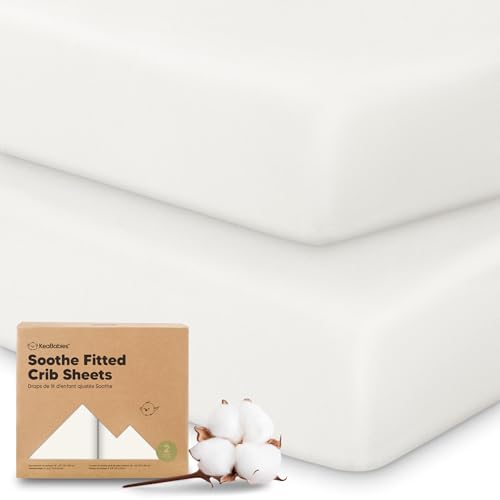
2-Pack Baby Crib Sheets – KeaBabies Soothe Fitted Crib Sheets for boys and girls; fit standard crib mattresses (52"x28" with height 3" to 8") perfectly, offering your baby a safe and restful sleep.
Fix Head-Bumping and Getting-Stuck Issues
Because the crib’s slats sit closer together than a bassinet’s mesh walls, your baby will probably bump their head a few times during those first nights.
Head-bumping usually fades within a week or two as your little one learns the space. Getting stuck at the slats needs quicker attention. You’ll want to verify your crib is approved for safe spacing: no more than 2⅜ inches between slats prevents head entrapment.
Keep a firm, flat, well-fitted mattress with no loose bedding so your baby moves freely. Skip crib bumpers entirely, since they increase suffocation risk instead of helping. Check your baby monitor for a clear view when limbs poke between slats. Consider a portable crib temporarily if getting stuck persists beyond two weeks.
You’ve got this.
Recommended Products
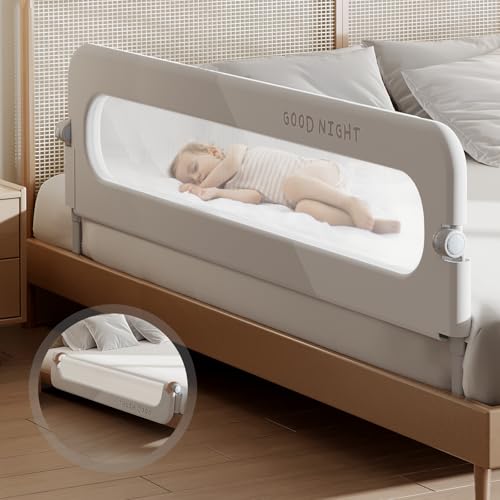
Smart Foldable-Swing Rails Design: Our toddler bed rails featuring a one-click button for effortless folding and swinging. Guardrail with 25 speed adjustable height for different thickness mattress, making co-sleeping convenience. As bedtime approaches, parents fold down the crib rail by pressing the button, creating a snug haven for bedtime stories and comforting moments. Elevate your sleep time.

Versatile Edge Protection: Perfect not only for cribs but also as corner protectors and edge guards for tables, walls, cabinets, and desks, these padded bumpers baby-proof multiple areas to prevent injuries from sharps corners.

MAKE FEAR DISAPPEAR AT BEDTIME New rooms and dark spaces can feel overwhelming for little ones. GlowRail creates a soft, calming glow under the sheets—helping your child feel safe, relaxed, and ready to sleep. Portable bed rail
Leave a Reply